Political Ideology Atlas · All people · Take the test
Latin America & Caribbean · born 1895, historical
Juan Perón
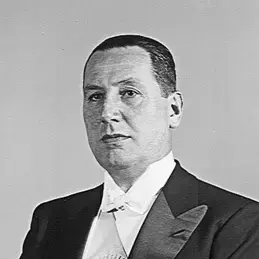
Argentine general and three-time president, founder of Peronism (1895–1974)
Perón led Argentina from 1946 to 1955 and again from 1973 to 1974. He built Justicialism as a Third Position between capitalism and communism, with social rights, state direction of the economy, a social function for property, a Catholic constitution, and a strong presidency with unlimited re-election, and his government pressed the opposition press.
Key figure of
Closest ideologies
Based on the 46 statements where Juan Perón has a known position.
- Peronism (90% match)
- Arab socialism (90% match)
- African socialism (89% match)
- Patria Grande (89% match)
- Arab nationalism (88% match)
Similar people
- Mahathir Mohamad (91% alike)
- Nicolás Maduro (91% alike)
- Hosni Mubarak (90% alike)
- Lyndon B. Johnson (88% alike)
- Abraham Lincoln (87% alike)
Known positions
- Strongly: The people in power should decide what the country's news media publish.
- Strongly: Voters themselves should elect the head of state, without an intermediary body selecting the officeholder.
- Strongly: A national emergency sometimes justifies temporarily withdrawing normal legal safeguards against people the government regards as internal enemies, such as protections against detention without trial.
- Strongly: A president should be free to stand for re-election as many times as they like.
- Strongly: The law should make earning a living or doing other work compulsory for anyone capable of working.
- Strongly: Besides its directly elected parliament, a legislature should have a second chamber, such as a senate.
- Strongly: Society should follow a third course beyond capitalism and communism.
- Strongly: The government should steer investment into industries it sees as key to the country's future.
- Strongly: Elected politicians should be able to serve any number of terms in any office.
- Strongly: Employers and workers should treat each other as partners whose cooperation comes before conflict, even where their interests differ.
- Strongly: My country should stay neutral and join neither of the opposing great-power alliances.
- Strongly: An electorate should choose the head of state, either directly or through elected representatives.
- Strongly: Students should pay no tuition to attend public higher education institutions.
- Strongly: Countries should start from a policy of staying out of other countries' internal affairs.
- Strongly: Society relies for its well-being on longstanding family arrangements, such as a married mother and father raising their children.
- Strongly: Workers are better off for having labor unions.
- Strongly: Countries that feel dominated by Western powers should band together to resist them.
- Strongly: A people with a shared national identity is entitled to its own self-governing state.
- Strongly: The law should treat everyone as an equal, whatever their birth, sex, race or status.
- Strongly: Owning things privately is justified only if it benefits society as a whole.
- Strongly: A country should reject spending cuts demanded in return for loans and set its own course.
- Strongly: World power should be distributed among several independent major powers, without one dominant power.
- Strongly: Looking after your own interests is not a moral good in itself.
- Strongly: Political independence means little unless the economic and property system is also transformed.
- Strongly: Society needs government of some kind.
- Strongly: Women should be able to vote and stand for office on the same terms as men.
- Strongly: Each country should hold ultimate authority over its natural resources, without foreign interests controlling them.
- Leans: The government should stop its political opponents from organising, speaking or competing for power.
- Leans: Protecting nature can mean accepting less economic growth.
- Leans: Reforms should take existing institutions and their role in society seriously.
- Leans: The national church is recognised in law above other religions.
- Leans: Population growth should be deliberately held down.
- Leans: Many political decisions should rest with national or wider authorities, even where a smaller community could handle them.
- Leans: Changes to society should be introduced a little at a time.
- Leans: A country should not tie itself to other countries through lasting military alliances.
- Leans: Property should belong to many people in small holdings.
- Leans: Industries such as energy, rail and utilities should be owned by the state or public bodies, not private companies.
- Leans: Technology will leave most of humanity's problems unsolved.
- Leans: Owners' rights to their property need not be protected against being overridden for public goals.
- Leans: Political representation should not come through social bodies such as families, local communities and occupational associations instead of political parties.
- Leans: A poor country should develop mainly with its own resources.
- Leans: Constantly seeking additional possessions is harmful overall, despite any benefits it brings.