Political Ideology Atlas · All ideologies · Take the test
Arab nationalism
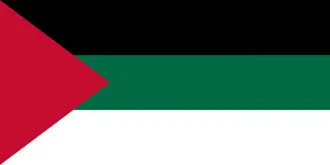
Arab nationalism holds that the Arabs, defined by a shared language, history and culture rather than by religion or descent, form one nation entitled to one independent state from the Atlantic to the Gulf. It treats the existing borders as the work of imperial partition, Zionism and Israel as an imperial implant on Arab land, and revolution and armed struggle as legitimate means to unity and independence. Its secular mainstream honours Islam as the nation's heritage without making it the basis of the state, and its Ba'th and Nasserist strands tie the national cause to a socialist programme.
What it stands for
- Peoples who share an ethnic heritage, such as the Slavic, Arab or Turkic peoples, should come together in one state, even across present borders.
- A people's historical tie to a land does not give it a stronger claim than other peoples living there now.
- A country should press its neighbour to give back land taken from it in an old war.
- Speaking a common language is sufficient for people to constitute one nation.
- Settlers from abroad who displace a land's people and found a state there are carrying out colonialism.
- Seeking equal rights in their countries of residence should take priority over leaving to establish a homeland as the response to persecution.
Key figures
- Michel Aflaq: Co-founder of the Ba'th Party and its chief ideologist
- Sati' al-Husri: Educator whose language-and-history definition of the Arab nation underlies the movement
- Gamal Abdel Nasser: Egyptian president and the leader most identified with pan-Arab politics
Closest ideologies
- Pan-Arabism (95% match)
- Pan-Africanism (91% match)
- Ba'athism (91% match)
- Marhaenism (90% match)
- Third World socialism (89% match)
People closest to it
- Sun Yat-sen (89% alike)
- Maximilien Robespierre (89% alike)
- Aurobindo Ghosh (88% alike)
- Gabriele D'Annunzio (88% alike)
- Bassirou Diomaye Faye (87% alike)
Key positions
- Strongly: Peoples who share an ethnic heritage, such as the Slavic, Arab or Turkic peoples, should come together in one state, even across present borders.
- Strongly: A people's historical tie to a land does not give it a stronger claim than other peoples living there now.
- Strongly: A country should press its neighbour to give back land taken from it in an old war.
- Strongly: Speaking a common language is sufficient for people to constitute one nation.
- Strongly: Settlers from abroad who displace a land's people and found a state there are carrying out colonialism.
- Strongly: Seeking equal rights in their countries of residence should take priority over leaving to establish a homeland as the response to persecution.
- Strongly: The nation has decayed and must be reborn.
- Strongly: The global economic system keeps poorer countries poor by directing their wealth toward richer countries.
- Strongly: Industries such as energy, rail and utilities should be owned by the state or public bodies, not private companies.
- Strongly: Government should serve people's good while respecting each person as more than an instrument of the state or community.
- Strongly: My country should stay neutral and join neither of the opposing great-power alliances.
- Strongly: The government should steer investment into industries it sees as key to the country's future.
- Strongly: A people should have one region of its own rather than being split across several.
- Strongly: A state of their own in the Land of Israel is not something Jews are owed as a people.
- Strongly: Society may be changed in large, rapid steps.
- Strongly: The state should stop foreign buyers from taking over key national businesses.
- Strongly: People who became refugees during a conflict should be permitted to return to the homes they themselves left.
- Strongly: Land that a state declares its own against its people's will is still illegally occupied by that state.
- Strongly: Today's nation is the same people as its ancient and medieval forebears.
- Strongly: Officials decide what gets made and who gets it at least as well as prices and competition do.
- Strongly: Today, nobody is bound by a colonial-era treaty that divided a people without asking them.
- Strongly: A newly independent state should sometimes redraw its inherited colonial borders.
- Strongly: A country may keep a region that wants to leave.
- Strongly: Being free requires having the practical resources to act on one's choices, such as an adequate livelihood.
- Strongly: Political independence means little unless the economic and property system is also transformed.
- Strongly: The nation's cause and the cause of its ordinary working people are one and the same.
- Strongly: A people split by an imposed border should be brought together in a single state.
- Strongly: National policy should give priority to preventing outside powers from splitting the country territorially.
- Strongly: Private ownership is legitimate only insofar as it benefits society.
- Strongly: Very large concentrations of wealth threaten a free society.
- Strongly: Politics should support people's spiritual well-being.
- Strongly: Foreign armies should not be based on the country's territory.
- Strongly: Political violence is sometimes justified.
- Strongly: Income from useful work should be rewarded ahead of income from merely owning property.
- Strongly: A people with a shared national identity is entitled to its own self-governing state.
- Strongly: Political authority does not ultimately come from God.
- Strongly: School history should mostly tell the story of the student's own nation.
- Strongly: A government needs more than fair elections to be democratic.
- Strongly: Belonging to the nation does not go with sharing its religion.
- Strongly: Religion does not offer illusory comfort for material suffering.
- Strongly: At least some revolutions have been justified.
- Strongly: No society has the right to rule another for its supposed improvement, however advanced it is.
- Strongly: Each country should hold ultimate authority over its natural resources, without foreign interests controlling them.
- Strongly: The ruler should be subject to the country's laws.
- Strongly: Overseas territories need not be run mainly for the ruling country's economic benefit.
- Strongly: The holder of the highest state office need not be treated as holy.
- Strongly: State schools need not steer pupils away from belief in God.
- Strongly: Final authority over a state's laws need not belong to its most senior religious scholars.
- Leans: An economy whose production is directed by a central plan is capable of working better than an economy directed by market exchange.
- Leans: The presence of people belonging to the same nation gives a state a legitimate territorial claim outside its borders.
- Leans: Countries should hand part of their decision-making power to a union of nations, such as the European Union.
- Leans: The representative legislature should have the final say on legislation.
- Leans: Countries within one civilization should unite politically.
- Leans: The farmers who work large estates should take ownership from the landowners, with the transfer compulsory if owners refuse.
- Leans: Inherited religious teachings should be understood anew in light of present conditions.
- Leans: Countries that feel dominated by Western powers should band together to resist them.
- Leans: Political decisions should rest with the smallest local community able to handle them, with wider authorities handling matters that need a wider reach.
- Leans: Democracy is best even when voters make poor choices.
- Leans: People should have a direct role in making decisions where they work, live and study, rather than having those decisions made entirely for them.
- Leans: People who give their lives for the nation deserve to be remembered as martyrs, with reverence beyond ordinary thanks.
- Leans: A healthy society depends on the traditional family, such as a married mother and father raising their children.
- Leans: Nobody should hold a special rank by birth, such as a noble title, a hereditary crown or a caste position, or the special rights attached to one.
- Leans: Rulers must act under lasting, publicly known laws administered by recognised courts.
- Leans: Women should be able to vote and stand for office on the same terms as men.
- Leans: Restoring a lost social order does not matter more than pursuing progress.