Political Ideology Atlas · All ideologies · Take the test
Neozapatismo
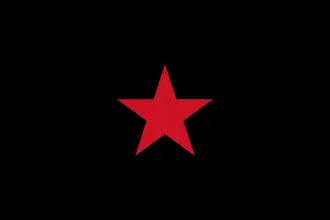
Neozapatismo is the political outlook of the Zapatista Army of National Liberation and its Maya base communities in Chiapas, blending Marxist influence, indigenous Maya practice and the legacy of Emiliano Zapata. It is anti-capitalist and anti-neoliberal, defends indigenous autonomy and land held by those who work it, and governs through community assemblies on the principle of commanding by obeying. It declines to seek state power or lead from a vanguard, and since 1994 has pursued civil and peaceful rather than offensive armed struggle.
What it stands for
- Owners' profit is value taken from workers' labor.
- Cooperation between employers and workers should not come before conflict where their interests differ.
- Those who elected someone should be able to remove them before their term ends, whenever they choose.
- Major laws should be decided by citizens voting on them themselves.
- Capitalism did not build the productive power and wealth that a better society can rest on.
- The farmers who work large estates should take ownership from the landowners, with the transfer compulsory if owners refuse.
Key figures
- Emiliano Zapata: Mexican Revolution leader whose land-reform cause the movement claims as its inheritance.
- Subcomandante Marcos: Best-known spokesperson of the EZLN (later Subcomandante Galeano).
Closest ideologies
- Jineology (93% match)
- Anti-globalization movement (93% match)
- Democratic Confederalism (92% match)
- Ecofeminism (90% match)
- Eco-Socialism (89% match)
People closest to it
- Nestor Makhno (87% alike)
- William Morris (87% alike)
- Noam Chomsky (87% alike)
- Helen Keller (86% alike)
- Catherine Connolly (85% alike)
Key positions
- Strongly: Owners' profit is value taken from workers' labor.
- Strongly: Cooperation between employers and workers should not come before conflict where their interests differ.
- Strongly: Those who elected someone should be able to remove them before their term ends, whenever they choose.
- Strongly: Major laws should be decided by citizens voting on them themselves.
- Strongly: Capitalism did not build the productive power and wealth that a better society can rest on.
- Strongly: The farmers who work large estates should take ownership from the landowners, with the transfer compulsory if owners refuse.
- Strongly: Employees should have voting rights in the management of large companies.
- Strongly: Those who hold public office should be paid no more than an average worker.
- Strongly: Businesses should belong to the people who work in them, for example as cooperatives.
- Strongly: Governments may refuse permission for new oil, gas and coal extraction.
- Strongly: Laws, institutions and customs still favor men over women.
- Strongly: Areas where an ethnic minority makes up most of the population should be able to run many of their own affairs within the state.
- Strongly: My country may keep a military no stronger than its rivals'.
- Strongly: Defeating communism should not take priority over coexistence with it.
- Strongly: A president should be limited in how many times he or she may stand for re-election.
- Strongly: Political decisions should rest with the smallest local community able to handle them, with wider authorities handling matters that need a wider reach.
- Strongly: Indigenous peoples should control their traditional territories.
- Strongly: Without workers' own political power, state ownership is not socialism.
- Strongly: Real command of the military may rest with someone other than the head of state.
- Strongly: Society should take active steps to make up for the harm done by past racial injustices.
- Strongly: Genetically engineered crops need not be welcomed as a tool for sustainable farming.
- Strongly: Workers' solidarity with workers in other countries should count at least as much as solidarity with their own nation.
- Strongly: Free trade does not benefit everyone in the long run.
- Strongly: Public institutions should help minority languages be used in public life, for example through teaching or services in those languages.
- Strongly: Ordinary legal protections, such as the right not to be held without trial, should stay in force even in a national emergency.
- Strongly: Voters should be able to remove elected officials before their terms end.
- Strongly: A country can get through deadlock among its institutions without a leader who overrides them.
- Strongly: You can't reach a free, fair society by unfree or unfair means.
- Strongly: People are entitled to resist a ruler's unconstitutional exercise of power.
- Strongly: Owners' rights to their property need not be protected against being overridden for public goals.
- Strongly: The law should impose no restrictions on strikes.
- Strongly: A country should not be ready to use military force abroad without UN Security Council authorization.
- Strongly: Officials decide what gets made and who gets it at least as well as prices and competition do.
- Strongly: Ethnic diversity does not weaken a society's ability to hold together.
- Strongly: People should have a direct role in making decisions where they work, live and study, rather than having those decisions made entirely for them.
- Strongly: In law, a country's traditional national church should rank no higher than other religious bodies.
- Strongly: A country should reject spending cuts demanded in return for loans and set its own course.
- Strongly: Being free requires having the practical resources to act on one's choices, such as an adequate livelihood.
- Strongly: The general public should have at least as much say in policy as experts.
- Strongly: Political independence means little unless the economic and property system is also transformed.
- Strongly: Nobody should hold a special rank by birth, such as a noble title, a hereditary crown or a caste position, or the special rights attached to one.
- Strongly: A nation does not need one main ethnic group: it can be made up of people of many ancestries.
- Strongly: Wages need not be set through negotiating bodies that the state officially recognizes.
- Strongly: Meeting poor people's needs should be the first consideration in public policy.
- Strongly: Publicly honouring a national leader as the personification of the nation is not acceptable.
- Strongly: My country can do without nuclear weapons that it alone controls.
- Strongly: Spouses should make marital decisions as equals.
- Strongly: No one is better suited by nature to govern than anyone else.
- Strongly: Women should have an equal right to participate in Indigenous self-government from its establishment.
- Strongly: Other things drive humanity forward at least as much as rivalry and conflict between peoples.
- Strongly: Rulers have a right to rule only because the people they rule have agreed to it.
- Strongly: Even a purely ceremonial head of state should not hold the position by birth.
- Strongly: Racism is still the main obstacle to the advancement of disadvantaged racial groups.
- Strongly: Art should not be censored for its effect on people's moral character.
- Strongly: Most people in political office look after themselves first and the public second.
- Strongly: The law should not assign different roles in public life on the basis of sex.
- Strongly: Very large concentrations of wealth threaten a free society.
- Strongly: An economy directed by a central plan is not capable of working better than one directed by market exchange.
- Strongly: The political left should give cultural identity issues at least as much attention as workers' material interests.
- Strongly: Whatever their circumstances, everyone should be able to count on the state for enough to live decently, through benefits, pensions or public services.
- Strongly: War does not strengthen a nation's character.
- Strongly: Income from useful work should be rewarded ahead of income from merely owning property.
- Strongly: Being powerful does not mean a country should bring more land within its borders.
- Strongly: The government should let its political opponents organise, speak and compete for power.
- Strongly: Rapid economic development does not justify temporary restrictions on political freedom.
- Strongly: Protecting the constitution should be left to civilian institutions, not the armed forces.
- Strongly: A national development strategy should not accept some regions growing wealthy ahead of the rest.
- Strongly: Political authority does not ultimately come from God.
- Strongly: A socialist state with hostile neighbours need not build up its state power.
- Strongly: A people's connection to its ancestral land is spiritual, beyond practical interests or ordinary affection.
- Strongly: A country may leave other nations to choose their own political systems.
- Strongly: Businesses gain too much influence over government policy from their lobbying.
- Strongly: Groups have rights of their own.
- Strongly: The law should treat everyone as an equal, whatever their birth, sex, race or status.
- Strongly: A government needs more than fair elections to be democratic.
- Strongly: Belonging to the nation does not go with sharing its religion.
- Strongly: Workers do not need a disciplined revolutionary party to lead them.
- Strongly: Laws should not be required to follow religious texts.
- Strongly: The state should not steer people of the majority group toward settling in regions where minorities predominate.
- Strongly: Looking after your own interests is not a moral good in itself.
- Strongly: At least some revolutions have been justified.
- Strongly: News media should decide for themselves what they publish, whoever holds power.
- Strongly: No party's ideology should give it an exclusive right to lead the state.
- Strongly: We have a duty to leave the planet in good condition for those who come after us.
- Strongly: Religious conversion should be free of legal restriction.
- Strongly: Population growth does not mainly drive lasting poverty.
- Strongly: No state may force a minority out of the country, however hostile it judges that minority to be.
- Strongly: Some areas of life should remain outside state direction.
- Strongly: Private owners' choice of whom they deal with should be subject to some restrictions.
- Strongly: No society has the right to rule another for its supposed improvement, however advanced it is.
- Strongly: Each country should hold ultimate authority over its natural resources, without foreign interests controlling them.
- Strongly: Women should be able to vote and stand for office on the same terms as men.
- Strongly: The vote keeps a government in check at least as well as being able to leave the country does.
- Strongly: A market economy is incompatible with socialism under communist-party leadership.
- Strongly: A workers' state does not need to suppress the old ruling class, even for a time.
- Strongly: The slaughter of cattle should be legal.
- Strongly: The ruler should be subject to the country's laws.
- Strongly: Government should have other tasks besides protecting people from physical violence.
- Strongly: Collecting taxes does not in itself amount to stealing people's money.
- Strongly: Public policy should not be used to reduce the passing on of inherited disabilities.
- Strongly: Political authority need not rest on oaths of loyalty sworn to a lord.
- Strongly: Voting should not be limited to members of one ethnic group.
- Strongly: Killing another person can be right in self-defence or in defence of others.
- Strongly: Overseas territories need not be run mainly for the ruling country's economic benefit.
- Strongly: The holder of the highest state office need not be treated as holy.
- Strongly: Taking part in politics is at least as good a way to live as living privately away from public affairs.
- Strongly: People without property should also have the right to vote.
- Strongly: Public spaces such as schools and facilities should not be separated by race under the law.
- Strongly: Women may go out in public without any legal duty to cover fully.
- Strongly: Courts need not be handed over to private businesses.
- Strongly: Final authority over a state's laws need not belong to its most senior religious scholars.
- Strongly: People must be free to leave their religion without legal penalty.
- Strongly: Museums, libraries and other inherited culture should not be destroyed, even when they stand in the way of new creation.
- Strongly: Humanity would gain nothing by going back to living off hunting and gathering.
- Strongly: Farmers should have the legal freedom to leave the estates they work.
- Leans: Small, informal, trust-based groups are the right form for political action, not lasting parties, unions or federations.
- Leans: Farms, factories and utilities belong to the town or city that uses them.
- Leans: Farming should be organized as joint cultivation by groups of farmers instead of separate individual farm operations.
- Leans: The leader should bypass parties and organised interest groups in dealing with the people.
- Leans: History is mainly driven by conflict between economic classes.
- Leans: Towns and cities should link through councils whose delegates coordinate and administer what local assemblies decide, without making policy themselves.
- Leans: Society should aim for people to end up with broadly equal material conditions.
- Leans: People should lose their right to a plot of land when they no longer use it.
- Leans: People should live and work in communities that own land and goods together and govern themselves.
- Leans: Binding composition rules should ensure that public bodies have approximately equal numbers of women and men.
- Leans: A healthy society does not depend on the traditional family, such as a married mother and father raising their children.
- Leans: Laws, police and government mainly serve the interests of whoever owns the economy and holds power.
- Leans: The subordination of women is connected to human domination of the natural world.
- Leans: Communities should be free to choose their own economic arrangements, and a free society has no fixed blueprint for its economy.
- Leans: Wars between great powers are an unavoidable consequence of capitalism.
- Leans: Government should depend more on leaders setting a good example than on enforcing laws with penalties.
- Leans: In the society we should aim for, a person's needs should determine their share of goods.
- Leans: People should work mainly out of responsibility to society and a shared purpose, with personal material rewards playing a secondary role.
- Leans: People seeking political change should act directly—for example, with strikes, boycotts or occupations—instead of pursuing change through elections and parliaments.
- Leans: A people's historical tie to a land does not give it a stronger claim than other peoples living there now.
- Leans: A country's constitution should not automatically take precedence over international law.
- Leans: Dividing politics into left and right no longer makes sense.
- Leans: An assembly elected by the people for that purpose should draft the constitution.
- Leans: Tackling oppression requires a combined approach to its overlapping forms, such as racism, sexism and class oppression.
- Leans: Marriage, inheritance and family law may differ between religious communities.
- Leans: Force is for self-defence alone.
- Leans: A national minority should run its own schools, language and cultural institutions inside the state it lives in.
- Leans: Those who inherit a large fortune should hand over a big share of it in tax.
- Leans: Military service should always be voluntary.
- Leans: Governments should answer in law for past abuses by their security forces, including unlawful killings.
- Leans: The state should not give families money to encourage them to have more children.
- Leans: Industries such as energy, rail and utilities do not need to be publicly owned.
- Leans: Schools should teach pupils about sex.
- Leans: Government should maintain a strict institutional separation from religion.
- Leans: The state should not restrict money that foreign donors give to charities, campaign groups, the press and universities.
- Leans: The nation does not need a radical rebirth to overcome decadence.
- Leans: Working together internationally should count at least as much as my country's own priorities.
- Leans: Politics should give compromises among competing groups at least as much weight as a single common good identified by reasoning.
- Leans: The state should offer public work to anyone who wants a job and cannot find one.
- Leans: Religious values and institutions should not have a major part in shaping laws, schools and public life.
- Leans: State schools should not teach religion.
- Leans: Settlers from abroad who displace a land's people and found a state there are carrying out colonialism.
- Leans: Seeking equal rights in their countries of residence should take priority over leaving to establish a homeland as the response to persecution.
- Leans: Women's subordination is tied to how the economy is organised, so reform of laws and attitudes is not enough.
- Leans: Having wealth does not by itself create a duty to help those who are worse off.
- Leans: A general collapse of capitalism is unavoidable.
- Leans: A country should seek ties with the United States at least as close as its ties with China.
- Leans: Society should follow a third course beyond capitalism and communism.
- Leans: A country does not have the right to stop a region becoming independent by using its military.
- Leans: Full-time work at the legal wage floor should pay enough to meet basic living costs.
- Leans: The global economic system keeps poorer countries poor by directing their wealth toward richer countries.
- Leans: People outside state forces should also be allowed to bear arms.
- Leans: Countries that feel dominated by Western powers should band together to resist them.
- Leans: Government should serve people's good while respecting each person as more than an instrument of the state or community.
- Leans: The foreign debts of poor countries should be written off, ending their obligation to repay them.
- Leans: Democracy is best even when voters make poor choices.
- Leans: The economy should not combine mainly private markets with government support for people who cannot meet their basic needs.
- Leans: Joining a larger state should leave a region free to keep its existing economic arrangements.
- Leans: Non-citizens should also be eligible for welfare benefits.
- Leans: Workers may be represented through the parties already in place.
- Leans: Recreational drugs should be illegal for adults.
- Leans: Political freedom can last without economic freedom.
- Leans: Society may be changed in large, rapid steps.
- Leans: Countries within one civilization may remain politically separate.
- Leans: People who became refugees during a conflict should be permitted to return to the homes they themselves left.
- Leans: Another body may have the final say over what the legislature passes.
- Leans: Nature matters for its own sake, not only because it is useful to people.
- Leans: Land that a state declares its own against its people's will is still illegally occupied by that state.
- Leans: Recruitment to the civil service should not depend on competitive examinations.
- Leans: Religious institutions should be independent of government direction in their internal affairs.
- Leans: Workers are better off for having labor unions.
- Leans: Where they conflict, religious faith should count for at least as much as evidence and reasoning.
- Leans: Politics is not best understood as a contest between spiritual good and evil.
- Leans: Political institutions developed in the West are not a suitable model for every civilization.
- Leans: A country may keep all its decisions in its own hands rather than pooling them with other nations.
- Leans: Political representation should not come through social bodies such as families, local communities and occupational associations instead of political parties.
- Leans: Private charity does not help people in poverty better than government programs do.
- Leans: The nation's cause and the cause of its ordinary working people are one and the same.
- Leans: Some decisions should bind people who have not consented to them.
- Leans: The state should guarantee health care to everyone, whether it runs the services itself or pays for them.
- Leans: Restoring a lost social order does not matter more than pursuing progress.
- Leans: Population growth may be left to run its course.
- Leans: Trade, finance and debt rules should be changed to give poorer countries a fairer share.
- Leans: The armed forces may be controlled by someone other than the governing party's leadership.
- Leans: Private ownership is legitimate only insofar as it benefits society.
- Leans: Member states should keep the final decision on whether to follow UN decisions.
- Leans: The holy scripture of one's faith is not God's own error-free word.
- Leans: Leading roles in a country's economy should not depend on belonging to the majority national group.
- Leans: At most half of workers in wealthy countries benefit from the exploitation of poorer countries.
- Leans: Political violence is sometimes justified.
- Leans: A people with a shared national identity is entitled to its own self-governing state.
- Leans: Religion does not offer illusory comfort for material suffering.
- Leans: An armed minority's actions are incapable of bringing about the conditions for a broader revolutionary uprising.
- Leans: A mother country and its colonies may trade with the outside world.
- Leans: Being the first to use force can be right, depending on what it is meant to achieve.
- Leans: Governments should give no subsidies, licences or protections that favour firms close to them.