Political Ideology Atlas · All people · Take the test
Europe · born 1888, historical
Nestor Makhno
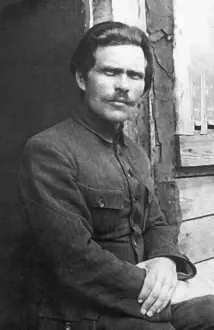
Ukrainian anarchist insurgent commander and exile writer
Makhno advocated a stateless communist society administered by workers and peasants through free councils and federations. He combined opposition to party dictatorship with support for disciplined, voluntary revolutionary armies; wartime policies also imposed coercive penalties on counterrevolutionaries.
Closest ideologies
Based on the 67 statements where Nestor Makhno has a known position.
- Intercommunalism (89% match)
- Makhnovshchina (88% match)
- Neozapatismo (87% match)
- Jineology (87% match)
- Left communism in China (86% match)
Similar people
- William Morris (91% alike)
- Antonio Gramsci (89% alike)
- Ted Kaczynski (87% alike)
- Fred Hampton (85% alike)
- Helen Keller (85% alike)
Known positions
- Strongly: Society would be better off without governments at all.
- Strongly: Police forces should be abolished and replaced with other ways of keeping people safe.
- Strongly: Political power should rest on councils elected in workplaces in place of parliaments.
- Strongly: History is mainly driven by conflict between economic classes.
- Strongly: Political change should replace the existing administrative and coercive institutions with new forms of organization, rather than put new leaders in charge of the old apparatus.
- Strongly: Society should aim for people to end up with broadly equal material conditions.
- Strongly: The fact that something is law is not, by itself, a moral reason to obey it.
- Strongly: People should lose their right to a plot of land when they no longer use it.
- Strongly: People should live and work in communities that own land and goods together and govern themselves.
- Strongly: Laws, police and government mainly serve the interests of whoever owns the economy and holds power.
- Strongly: Owners' profit is value taken from workers' labor.
- Strongly: In the society we should aim for, a person's needs should determine their share of goods.
- Strongly: Cooperation between employers and workers should not come before conflict where their interests differ.
- Strongly: People seeking political change should act directly—for example, with strikes, boycotts or occupations—instead of pursuing change through elections and parliaments.
- Strongly: Democracy is not the best form of government when voters choose badly.
- Strongly: The farmers who work large estates should take ownership from the landowners, with the transfer compulsory if owners refuse.
- Strongly: The Soviet economy was capitalist under state ownership, with the state taking the place of private capitalists.
- Strongly: Employees should have voting rights in the management of large companies.
- Strongly: Trade unions should control their own affairs without state direction.
- Strongly: Property need not be spread among many small owners.
- Strongly: Businesses should belong to the people who work in them, for example as cooperatives.
- Strongly: What things are worth comes from the work put into them.
- Strongly: Production should be organised to provide what people need, instead of being organised around what yields a profit.
- Strongly: People outside state forces should also be allowed to bear arms.
- Strongly: Industries such as energy, rail and utilities should be owned by the state or public bodies, not private companies.
- Strongly: Political decisions should rest with the smallest local community able to handle them, with wider authorities handling matters that need a wider reach.
- Strongly: Without workers' own political power, state ownership is not socialism.
- Strongly: Formal press freedom is hollow when wealth decides who can actually be heard.
- Strongly: After members debate and adopt a party decision, every member should have to help implement it, including those who opposed it.
- Strongly: Society may be changed in large, rapid steps.
- Strongly: Workers' solidarity with workers in other countries should count at least as much as solidarity with their own nation.
- Strongly: A country can get through deadlock among its institutions without a leader who overrides them.
- Strongly: A person loses freedom from being at another person's mercy, even if that power is never exercised.
- Strongly: Owners' rights to their property need not be protected against being overridden for public goals.
- Strongly: Workers are better off for having labor unions.
- Strongly: People should have a direct role in making decisions where they work, live and study, rather than having those decisions made entirely for them.
- Strongly: No one is better suited by nature to govern than anyone else.
- Strongly: Even a purely ceremonial head of state should not hold the position by birth.
- Strongly: Most people in political office look after themselves first and the public second.
- Strongly: Very large concentrations of wealth threaten a free society.
- Strongly: The holy scripture of one's faith is not God's own error-free word.
- Strongly: Political violence is sometimes justified.
- Strongly: Income from useful work should be rewarded ahead of income from merely owning property.
- Strongly: Political authority does not ultimately come from God.
- Strongly: Being the first to use force can be right, depending on what it is meant to achieve.
- Strongly: Laws should not be required to follow religious texts.
- Strongly: At least some revolutions have been justified.
- Strongly: News media should decide for themselves what they publish, whoever holds power.
- Strongly: No party's ideology should give it an exclusive right to lead the state.
- Strongly: A state with a state-owned planned economy should not be defended against capitalist restoration under a ruling bureaucracy.
- Strongly: Small, informal, trust-based groups should not take the place of lasting parties, unions and federations in political action.
- Strongly: The armed forces may be controlled by someone other than the governing party's leadership.
- Strongly: Some areas of life should remain outside state direction.
- Strongly: Killing another person can be right in self-defence or in defence of others.
- Strongly: The holder of the highest state office need not be treated as holy.
- Strongly: Final authority over a state's laws need not belong to its most senior religious scholars.
- Leans: Workers require political leadership from a tightly organised revolutionary party.
- Leans: Farming should be organized as joint cultivation by groups of farmers instead of separate individual farm operations.
- Leans: Towns and cities should link through councils whose delegates coordinate and administer what local assemblies decide, without making policy themselves.
- Leans: Defense should rest with armed ordinary citizens, not a standing force.
- Leans: Keeping a nation's inherited culture alive, including its language, customs and traditions, matters.