Political Ideology Atlas · All ideologies · Take the test
Democratic Confederalism
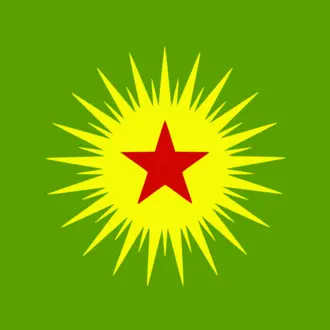
Democratic confederalism, developed by Abdullah Öcalan under the influence of Murray Bookchin, seeks a stateless, grass-roots democracy of local assemblies federated into larger councils, replacing the nation-state rather than capturing it. It puts women's liberation, ecology and a multi-ethnic, multi-religious society alongside a cooperative economy aimed at need rather than profit, and it holds self-defence to be a communal right.
What it stands for
- Towns and cities should link through councils whose delegates coordinate and administer what local assemblies decide, without making policy themselves.
- Long-term residents without citizenship have a say in the places where they live.
- People should live and work in communities that own land and goods together and govern themselves.
- Schools should not cultivate patriotic feeling, meaning loyalty to and pride in the nation.
- Binding composition rules should ensure that public bodies have approximately equal numbers of women and men.
- The subordination of women is connected to human domination of the natural world.
Key figures
- Abdullah Öcalan: Originator of the concept and leader of the PKK.
- Murray Bookchin: Social ecologist whose libertarian municipalism most influenced Öcalan.
Closest ideologies
- Jineology (95% match)
- Anti-globalization movement (93% match)
- Neozapatismo (92% match)
- Ecofeminism (92% match)
- Green municipalism (92% match)
People closest to it
- Noam Chomsky (89% alike)
- Theodor W. Adorno (88% alike)
- William Morris (87% alike)
- Albert Einstein (86% alike)
- Catherine Connolly (86% alike)
Key positions
- Strongly: Towns and cities should link through councils whose delegates coordinate and administer what local assemblies decide, without making policy themselves.
- Strongly: Long-term residents without citizenship have a say in the places where they live.
- Strongly: People should live and work in communities that own land and goods together and govern themselves.
- Strongly: Schools should not cultivate patriotic feeling, meaning loyalty to and pride in the nation.
- Strongly: Binding composition rules should ensure that public bodies have approximately equal numbers of women and men.
- Strongly: The subordination of women is connected to human domination of the natural world.
- Strongly: A nation's identity does not run in unbroken continuity from its ancient origins to the present.
- Strongly: Each main community should have a guaranteed place in government, even against a numerical majority.
- Strongly: Government bodies should be specifically responsible for advancing gender equality.
- Strongly: Regions should not be merged to give a people one region of its own.
- Strongly: Capitalism did not build the productive power and wealth that a better society can rest on.
- Strongly: A national minority should run its own schools, language and cultural institutions inside the state it lives in.
- Strongly: Belonging to the nation does not tie a person's life to a sacred community that goes on after their death.
- Strongly: The nation does not need a radical rebirth to overcome decadence.
- Strongly: The state should be barred from executing people convicted of the gravest crimes, such as terrorism.
- Strongly: Working together internationally should count at least as much as my country's own priorities.
- Strongly: Seeking equal rights in their countries of residence should take priority over leaving to establish a homeland as the response to persecution.
- Strongly: Women's subordination is tied to how the economy is organised, so reform of laws and attitudes is not enough.
- Strongly: Children of citizens are not the only ones who should be citizens at birth.
- Strongly: Laws, institutions and customs still favor men over women.
- Strongly: People outside state forces should also be allowed to bear arms.
- Strongly: My country may keep a military no stronger than its rivals'.
- Strongly: Political decisions should rest with the smallest local community able to handle them, with wider authorities handling matters that need a wider reach.
- Strongly: The state should treat all streams and interpretations of a religion equally under the law.
- Strongly: A country may accept its present border with a neighbour even if it lost land in an old war.
- Strongly: Real command of the military may rest with someone other than the head of state.
- Strongly: A government should officially declare that the past mass killing of a people was genocide.
- Strongly: Workers' solidarity with workers in other countries should count at least as much as solidarity with their own nation.
- Strongly: Immigrants should not be expected to replace their original culture with the national culture.
- Strongly: Public institutions should help minority languages be used in public life, for example through teaching or services in those languages.
- Strongly: A country can get through deadlock among its institutions without a leader who overrides them.
- Strongly: The state should not make one language the only common language of government, schooling and public life at the cost of limiting others.
- Strongly: Officials decide what gets made and who gets it at least as well as prices and competition do.
- Strongly: Ethnic diversity does not weaken a society's ability to hold together.
- Strongly: People should have a direct role in making decisions where they work, live and study, rather than having those decisions made entirely for them.
- Strongly: A wife should be able to end the marriage even when her husband refuses.
- Strongly: In law, a country's traditional national church should rank no higher than other religious bodies.
- Strongly: The general public should have at least as much say in policy as experts.
- Strongly: Nobody should hold a special rank by birth, such as a noble title, a hereditary crown or a caste position, or the special rights attached to one.
- Strongly: A nation does not need one main ethnic group: it can be made up of people of many ancestries.
- Strongly: Young people should not be organised into uniformed, drilled groups that prepare them to serve the nation.
- Strongly: My country can do without nuclear weapons that it alone controls.
- Strongly: Spouses should make marital decisions as equals.
- Strongly: No one is better suited by nature to govern than anyone else.
- Strongly: The presence of people of its nationality does not give a state a rightful claim to land beyond its borders.
- Strongly: Other things drive humanity forward at least as much as rivalry and conflict between peoples.
- Strongly: Rulers have a right to rule only because the people they rule have agreed to it.
- Strongly: Even a purely ceremonial head of state should not hold the position by birth.
- Strongly: A national language may keep the foreign loanwords it has.
- Strongly: Art should not be censored for its effect on people's moral character.
- Strongly: The law should not assign different roles in public life on the basis of sex.
- Strongly: Leading roles in a country's economy should not depend on belonging to the majority national group.
- Strongly: An economy directed by a central plan is not capable of working better than one directed by market exchange.
- Strongly: The political left should give cultural identity issues at least as much attention as workers' material interests.
- Strongly: War does not strengthen a nation's character.
- Strongly: Income from useful work should be rewarded ahead of income from merely owning property.
- Strongly: Being powerful does not mean a country should bring more land within its borders.
- Strongly: The government should let its political opponents organise, speak and compete for power.
- Strongly: Rapid economic development does not justify temporary restrictions on political freedom.
- Strongly: Protecting the constitution should be left to civilian institutions, not the armed forces.
- Strongly: Political authority does not ultimately come from God.
- Strongly: Naturalized citizens may hold public office as well as people born in the country.
- Strongly: A socialist state with hostile neighbours need not build up its state power.
- Strongly: A country may leave other nations to choose their own political systems.
- Strongly: State pensions funded by current workers' contributions should stay in place rather than be replaced by privately managed individual accounts.
- Strongly: Businesses gain too much influence over government policy from their lobbying.
- Strongly: The law should treat everyone as an equal, whatever their birth, sex, race or status.
- Strongly: Belonging to the nation does not go with sharing its religion.
- Strongly: Most of the average difference in ability between racial groups does not come from genes.
- Strongly: Someone who actually governs a state should not hand that power on to their own child.
- Strongly: Workers do not need a disciplined revolutionary party to lead them.
- Strongly: Minority groups are not, as groups, secretly plotting to harm the nation.
- Strongly: Laws should not be required to follow religious texts.
- Strongly: The state should not steer people of the majority group toward settling in regions where minorities predominate.
- Strongly: Looking after your own interests is not a moral good in itself.
- Strongly: News media should decide for themselves what they publish, whoever holds power.
- Strongly: Daughters and widows should inherit and own land on the same terms as sons and husbands.
- Strongly: No party's ideology should give it an exclusive right to lead the state.
- Strongly: We have a duty to leave the planet in good condition for those who come after us.
- Strongly: Religious conversion should be free of legal restriction.
- Strongly: The armed forces may be controlled by someone other than the governing party's leadership.
- Strongly: Population growth does not mainly drive lasting poverty.
- Strongly: Publicly insulting a religion's sacred beliefs should be left outside the criminal law.
- Strongly: No state may force a minority out of the country, however hostile it judges that minority to be.
- Strongly: Some areas of life should remain outside state direction.
- Strongly: Private owners' choice of whom they deal with should be subject to some restrictions.
- Strongly: No society has the right to rule another for its supposed improvement, however advanced it is.
- Strongly: Women should be able to vote and stand for office on the same terms as men.
- Strongly: The vote keeps a government in check at least as well as being able to leave the country does.
- Strongly: A market economy is incompatible with socialism under communist-party leadership.
- Strongly: A workers' state does not need to suppress the old ruling class, even for a time.
- Strongly: Adults may marry across religions without legal restriction.
- Strongly: Countries should keep their armed forces.
- Strongly: The ruler should be subject to the country's laws.
- Strongly: The state should not be managed the way a well-run business is.
- Strongly: Government should have other tasks besides protecting people from physical violence.
- Strongly: Collecting taxes does not in itself amount to stealing people's money.
- Strongly: Public policy should not be used to reduce the passing on of inherited disabilities.
- Strongly: Belonging to a religious minority is no ground for shoppers to stay away from a shop.
- Strongly: Great powers should have no right to send troops against allied governments' wishes for the purpose of preserving those countries' political systems.
- Strongly: Political authority need not rest on oaths of loyalty sworn to a lord.
- Strongly: Voting should not be limited to members of one ethnic group.
- Strongly: Killing another person can be right in self-defence or in defence of others.
- Strongly: Overseas territories need not be run mainly for the ruling country's economic benefit.
- Strongly: Failure to govern under religious law does not justify armed overthrow of a ruler.
- Strongly: Taking part in politics is at least as good a way to live as living privately away from public affairs.
- Strongly: People without property should also have the right to vote.
- Strongly: State schools need not steer pupils away from belief in God.
- Strongly: Public spaces such as schools and facilities should not be separated by race under the law.
- Strongly: Courts need not be handed over to private businesses.
- Strongly: Final authority over a state's laws need not belong to its most senior religious scholars.
- Strongly: People must be free to leave their religion without legal penalty.
- Strongly: Suspected drug dealers should never be put to death without a trial.
- Strongly: Humanity would gain nothing by going back to living off hunting and gathering.
- Strongly: Farmers should have the legal freedom to leave the estates they work.
- Leans: Society would be better off without governments at all.
- Leans: Industrial society has done more harm than good to humanity.
- Leans: Keeping a nation's inherited culture alive, including its language, customs and traditions, is not important.
- Leans: Farms, factories and utilities belong to the town or city that uses them.
- Leans: Farming should be organized as joint cultivation by groups of farmers instead of separate individual farm operations.
- Leans: A citizen should be permitted to choose someone else to cast that citizen's votes in a policy area, with separate choices for different areas.
- Leans: A people's connection to its ancestral land is not spiritual.
- Leans: Having a shared national identity does not by itself entitle a people to its own self-governing state.
- Leans: Protecting nature can mean accepting less economic growth.
- Leans: People should lose their right to a plot of land when they no longer use it.
- Leans: A people divided by an imposed border may remain in separate states.
- Leans: Communities should be free to choose their own economic arrangements, and a free society has no fixed blueprint for its economy.
- Leans: Owners' profit is value taken from workers' labor.
- Leans: In the society we should aim for, a person's needs should determine their share of goods.
- Leans: Cultures do not rank above one another in overall worth.
- Leans: Defense should rest with armed ordinary citizens, not a standing force.
- Leans: A nation should revive its culture first and build its state afterward.
- Leans: A country's constitution should not automatically take precedence over international law.
- Leans: Ideas of what men and women are like come mostly from culture, not biology.
- Leans: Tackling oppression requires a combined approach to its overlapping forms, such as racism, sexism and class oppression.
- Leans: A state need not make a faded national language its official language again.
- Leans: Land claimed as a historic homeland may be given up in exchange for peace.
- Leans: The government may leave it to investors to decide which industries receive investment.
- Leans: Major laws should be decided by citizens voting on them themselves.
- Leans: Individual rights matter at least as much as what citizens owe their community.
- Leans: Force is for self-defence alone.
- Leans: Delegates selected by councils at one level should select officeholders at higher levels.
- Leans: Government should maintain a strict institutional separation from religion.
- Leans: Religious values and institutions should not have a major part in shaping laws, schools and public life.
- Leans: Employees should have voting rights in the management of large companies.
- Leans: Wage work cuts people off from the meaning and creativity of what they make.
- Leans: Government should be bound by written guarantees of basic rights protected against easy amendment by ordinary majorities.
- Leans: Entertainment produced for mass audiences tends to weaken people's willingness to challenge the established social order.
- Leans: Businesses should belong to the people who work in them, for example as cooperatives.
- Leans: Political power should be split among separate branches and levels that can each limit the others.
- Leans: A general collapse of capitalism is unavoidable.
- Leans: The directly elected parliament should be a legislature's only chamber.
- Leans: Sharing a language is not sufficient for people to constitute one nation.
- Leans: Society should follow a third course beyond capitalism and communism.
- Leans: Production should be organised to provide what people need, instead of being organised around what yields a profit.
- Leans: The global economic system keeps poorer countries poor by directing their wealth toward richer countries.
- Leans: Areas where an ethnic minority makes up most of the population should be able to run many of their own affairs within the state.
- Leans: The goods people consume should mainly come from nearby producers.
- Leans: Industries such as energy, rail and utilities should be owned by the state or public bodies, not private companies.
- Leans: Government should serve people's good while respecting each person as more than an instrument of the state or community.
- Leans: Whether a policy fits an ideology should count independently of its results.
- Leans: Whoever uses land or resources owes the rest of society a share of their value.
- Leans: Democracy is best even when voters make poor choices.
- Leans: A head of state may take a side in party politics.
- Leans: The national legislature should not be able to take back powers given to regions on its own.
- Leans: Non-citizens should also be eligible for welfare benefits.
- Leans: Climate change calls for drastic action by governments.
- Leans: Political freedom can last without economic freedom.
- Leans: Countries within one civilization may remain politically separate.
- Leans: Parties and offices should cut across religious lines.
- Leans: Government should impose strict rules on how corporations operate.
- Leans: Ordinary legal protections, such as the right not to be held without trial, should stay in force even in a national emergency.
- Leans: Nature matters for its own sake, not only because it is useful to people.
- Leans: You can't reach a free, fair society by unfree or unfair means.
- Leans: A person loses freedom from being at another person's mercy, even if that power is never exercised.
- Leans: How someone turns out is shaped more by upbringing, society and experience than by the traits they are born with.
- Leans: Owners' rights to their property need not be protected against being overridden for public goals.
- Leans: Basic local services, such as water, hospitals and local transport, should be publicly owned and run.
- Leans: Government should rely at least as much on legal enforcement as on its rulers' moral example.
- Leans: The best constitution does not combine rule by the few with rule by the many.
- Leans: A newly independent state should sometimes redraw its inherited colonial borders.
- Leans: People who give their lives for the nation deserve to be remembered as martyrs, with reverence beyond ordinary thanks.
- Leans: Politics is not best understood as a contest between spiritual good and evil.
- Leans: Peoples who share an ethnic heritage, such as the Slavic peoples, should not come together in one state.
- Leans: A country may keep a region that wants to leave.
- Leans: Being free requires having the practical resources to act on one's choices, such as an adequate livelihood.
- Leans: Political independence means little unless the economic and property system is also transformed.
- Leans: Rulers must act under lasting, publicly known laws administered by recognised courts.
- Leans: Constantly seeking additional possessions is harmful overall, despite any benefits it brings.
- Leans: Public schooling money may go straight to schools instead of to parents as vouchers.
- Leans: Restoring a lost social order does not matter more than pursuing progress.
- Leans: Other forces move history at least as much as conflict between classes does.
- Leans: Private ownership is legitimate only insofar as it benefits society.
- Leans: Racial groups should not each organise to defend distinct political interests of their own.
- Leans: Very large concentrations of wealth threaten a free society.
- Leans: Small, informal, trust-based groups should not take the place of lasting parties, unions and federations in political action.
- Leans: Political violence is sometimes justified.
- Leans: Religion does not offer illusory comfort for material suffering.
- Leans: An armed minority's actions are incapable of bringing about the conditions for a broader revolutionary uprising.
- Leans: A government needs more than fair elections to be democratic.
- Leans: Groups have rights of their own.