Political Ideology Atlas · All people · Take the test
Europe · born 1891, historical
Antonio Gramsci
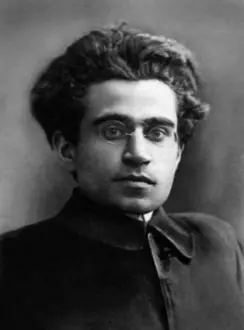
Italian Marxist theorist and co-founder and leader of the Italian Communist Party (1891–1937)
Gramsci was a Marxist and Leninist revolutionary who argued that workers should build councils in factories and villages as the base of a new proletarian state, led by a disciplined communist party allied with the peasantry. He opposed fascism, liberal parliamentarism and the Vatican's influence, and in his prison notebooks analysed how ruling classes hold power through consent and cultural hegemony as well as force.
Closest ideologies
Based on the 78 statements where Antonio Gramsci has a known position.
- Intercommunalism (92% match)
- Trotskyism (90% match)
- Marxism (89% match)
- Dictatorship of the proletariat (89% match)
- Left communism in China (89% match)
Similar people
- Fred Hampton (91% alike)
- Nestor Makhno (89% alike)
- William Morris (88% alike)
- Karl Marx (88% alike)
- Nikolai Bukharin (88% alike)
Known positions
- Strongly: A workers' state must suppress the old ruling class for a time.
- Strongly: Political power should rest on councils elected in workplaces in place of parliaments.
- Strongly: Workers require political leadership from a tightly organised revolutionary party.
- Strongly: History is mainly driven by conflict between economic classes.
- Strongly: Political change should replace the existing administrative and coercive institutions with new forms of organization, rather than put new leaders in charge of the old apparatus.
- Strongly: Laws, police and government mainly serve the interests of whoever owns the economy and holds power.
- Strongly: Wars between great powers are an unavoidable consequence of capitalism.
- Strongly: Owners' profit is value taken from workers' labor.
- Strongly: Cooperation between employers and workers should not come before conflict where their interests differ.
- Strongly: Communist parties should not necessarily determine their strategies independently of foreign parties.
- Strongly: Workers should form a party of their own, separate from the parties already in place.
- Strongly: Delegates selected by councils at one level should select officeholders at higher levels.
- Strongly: Working together internationally should count at least as much as my country's own priorities.
- Strongly: Society does not need a third course beyond capitalism and communism.
- Strongly: Religious values and institutions should not have a major part in shaping laws, schools and public life.
- Strongly: Employees should have voting rights in the management of large companies.
- Strongly: Businesses should belong to the people who work in them, for example as cooperatives.
- Strongly: The ruling class stays in power mainly through people going along with its ideas.
- Strongly: The Soviet economy was not capitalism under state ownership with the state in place of private capitalists.
- Strongly: Defeating communism should not take priority over coexistence with it.
- Strongly: Within a country, the richer regions grew rich by draining the poorer ones, much as colonial powers drained their colonies.
- Strongly: Without workers' own political power, state ownership is not socialism.
- Strongly: After members debate and adopt a party decision, every member should have to help implement it, including those who opposed it.
- Strongly: Society may be changed in large, rapid steps.
- Strongly: Workers' solidarity with workers in other countries should count at least as much as solidarity with their own nation.
- Strongly: You can't reach a free, fair society by unfree or unfair means.
- Strongly: Owners' rights to their property need not be protected against being overridden for public goals.
- Strongly: Officials decide what gets made and who gets it at least as well as prices and competition do.
- Strongly: People should have a direct role in making decisions where they work, live and study, rather than having those decisions made entirely for them.
- Strongly: Restoring a lost social order does not matter more than pursuing progress.
- Strongly: Other things drive humanity forward at least as much as rivalry and conflict between peoples.
- Strongly: Most people in political office look after themselves first and the public second.
- Strongly: Political violence is sometimes justified.
- Strongly: Income from useful work should be rewarded ahead of income from merely owning property.
- Strongly: The leader should not bypass political intermediaries in dealing with the people.
- Strongly: Being the first to use force can be right, depending on what it is meant to achieve.
- Strongly: Most of the average difference in ability between racial groups does not come from genes.
- Strongly: An armed minority's actions are incapable of bringing about the conditions for a broader revolutionary uprising.
- Strongly: At least some revolutions have been justified.
- Strongly: Small, informal, trust-based groups should not take the place of lasting parties, unions and federations in political action.
- Strongly: Public school science classes may teach evolution on its own.
- Strongly: Population growth does not mainly drive lasting poverty.
- Strongly: Government should have other tasks besides protecting people from physical violence.
- Strongly: Killing another person can be right in self-defence or in defence of others.
- Strongly: Taking part in politics is at least as good a way to live as living privately away from public affairs.
- Strongly: People without property should also have the right to vote.
- Leans: When rival great powers go to war, workers should work to make their own state lose.
- Leans: One ideologically correct party should hold state leadership without competing parties having a right to replace it.
- Leans: Farming should be organized as joint cultivation by groups of farmers instead of separate individual farm operations.
- Leans: Society should aim for people to end up with broadly equal material conditions.
- Leans: People seeking political change should act directly—for example, with strikes, boycotts or occupations—instead of pursuing change through elections and parliaments.
- Leans: Defense should rest with armed ordinary citizens, not a standing force.
- Leans: What gets treated as fact or expert knowledge reflects the interests of whoever has power, not a neutral search for truth.
- Leans: Democracy is not the best form of government when voters choose badly.
- Leans: The farmers who work large estates should take ownership from the landowners, with the transfer compulsory if owners refuse.
- Leans: State schools should not teach religion.
- Leans: Wage work cuts people off from the meaning and creativity of what they make.
- Leans: Entertainment produced for mass audiences tends to weaken people's willingness to challenge the established social order.
- Leans: What things are worth comes from the work put into them.
- Leans: Production should be organised to provide what people need, instead of being organised around what yields a profit.
- Leans: Workers in the same industry should organise together regardless of their particular trade, replacing separate craft unions.
- Leans: Industries such as energy, rail and utilities should be owned by the state or public bodies, not private companies.
- Leans: Capitalism built the productive power and wealth that later and better societies rest on.
- Leans: Formal press freedom is hollow when wealth decides who can actually be heard.
- Leans: Workers' pay should be settled in collective bargaining between their union and their employer.
- Leans: How someone turns out is shaped more by upbringing, society and experience than by the traits they are born with.
- Leans: Workers are better off for having labor unions.
- Leans: Historical change does not come mainly from changes in how society produces and exchanges goods.
- Leans: Work may stay divided into separate specialized jobs held by different people.
- Leans: No one is better suited by nature to govern than anyone else.
- Leans: Rulers have a right to rule only because the people they rule have agreed to it.
- Leans: At most half of workers in wealthy countries benefit from the exploitation of poorer countries.
- Leans: Looking after your own interests is not a moral good in itself.
- Leans: A government needs more than fair elections to be democratic.