Political Ideology Atlas · All people · Take the test
North America · born 1942, historical
Ted Kaczynski
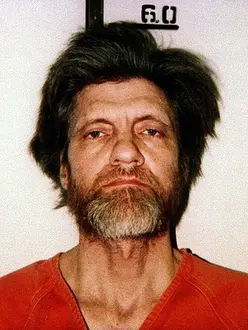
American mathematician and anti-technology writer; the 'Unabomber' (1942-2023)
He argued that industrial-technological society cannot be reformed, that it destroys human autonomy, dignity and wild nature, and that it must be brought down by a revolution aimed at technology and the economy rather than at governments. He rejected the left as a movement driven by inferiority feelings and oversocialization and refused collaboration with it, and he defended revolutionary violence, which he carried out in a 1978-1995 mail-bomb campaign that killed three people. On most conventional questions (economy, immigration, social issues) he took no recorded position.
Closest ideologies
Based on the 52 statements where Ted Kaczynski has a known position.
- Left communism in China (88% match)
- Makhnovshchina (88% match)
- Syndicalism (87% match)
- Platformism (87% match)
- Jineology (86% match)
Similar people
- Fred Hampton (89% alike)
- William Morris (88% alike)
- Nestor Makhno (87% alike)
- Antonio Gramsci (86% alike)
- Malcolm X (85% alike)
Known positions
- Strongly: Industrial society has done more harm than good to humanity.
- Strongly: Modern technology and revived ancestral values need not go together.
- Strongly: Society should not aim to minimise necessary working hours using automation.
- Strongly: Individual rights matter at least as much as what citizens owe their community.
- Strongly: Adults' use of technology to improve their bodies and minds may be limited.
- Strongly: Government should not back the building of new nuclear power plants.
- Strongly: Government surveillance is not acceptable, even to prevent terrorism.
- Strongly: Technology will not solve most of humanity's problems.
- Strongly: Government should serve people's good while respecting each person as more than an instrument of the state or community.
- Strongly: Political decisions should rest with the smallest local community able to handle them, with wider authorities handling matters that need a wider reach.
- Strongly: Genetically engineered crops need not be welcomed as a tool for sustainable farming.
- Strongly: Society may hold back technological change that would overturn established institutions.
- Strongly: Society may be changed in large, rapid steps.
- Strongly: Nature matters for its own sake, not only because it is useful to people.
- Strongly: A nation does not need one main ethnic group: it can be made up of people of many ancestries.
- Strongly: Constantly seeking additional possessions is harmful overall, despite any benefits it brings.
- Strongly: Racial groups should not each organise to defend distinct political interests of their own.
- Strongly: Political violence is sometimes justified.
- Strongly: Being the first to use force can be right, depending on what it is meant to achieve.
- Strongly: At least some revolutions have been justified.
- Strongly: Human officials should retain final approval over every government decision involving AI.
- Strongly: People of different races should not be discouraged from forming a family together, including through marriage and children.
- Strongly: Public spaces such as schools and facilities should not be separated by race under the law.
- Leans: Humanity would be better off living as hunter-gatherers again.
- Leans: An armed minority's actions are capable of bringing about conditions that enable a broader revolutionary uprising.
- Leans: Protecting nature can mean accepting less economic growth.
- Leans: Historical change comes mainly from changes in how society produces and exchanges goods.
- Leans: People should be encouraged to live in ways that differ from social custom.
- Leans: Where they conflict, evidence and reasoning should count for more than faith, God, revelation or scripture.
- Leans: People seeking political change should act directly—for example, with strikes, boycotts or occupations—instead of pursuing change through elections and parliaments.
- Leans: Innate nature shapes a person's character at least as much as their environment does.
- Leans: A free, fair society can be reached through methods that fall short of being free and fair.
- Leans: People with advanced schooling are cut off from how ordinary people live and work.
- Leans: Entertainment produced for mass audiences tends to weaken people's willingness to challenge the established social order.
- Leans: Countries should maintain only the weapons needed for national safety.
- Leans: The goods people consume should mainly come from nearby producers.
- Leans: People should want as few material things as possible.
- Leans: Formal press freedom is hollow when wealth decides who can actually be heard.
- Leans: Some knowledge is neutral.
- Leans: Hate speech should be legal.
- Leans: A person loses freedom from being at another person's mercy, even if that power is never exercised.
- Leans: Owners' rights to their property need not be protected against being overridden for public goals.
- Leans: Collecting taxes does not in itself amount to stealing people's money.
- Leans: A healthy society depends on the traditional family, such as a married mother and father raising their children.
- Leans: The general public should have at least as much say in policy as experts.
- Leans: Population growth may be left to run its course.
- Leans: Most people in political office look after themselves first and the public second.
- Leans: Small, informal, trust-based groups should not take the place of lasting parties, unions and federations in political action.
- Leans: We have a duty to leave the planet in good condition for those who come after us.
- Leans: An economy directed by a central plan is not capable of working better than one directed by market exchange.