Political Ideology Atlas · All people · Take the test
South & Southeast Asia · born 1877, historical
Muhammad Iqbal
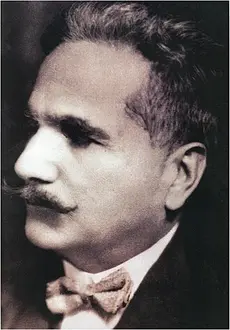
Poet-philosopher and Muslim League president (1930), Punjab Legislative Council member (1927–1930)
Poet and philosopher of colonial India who argued that Islam is a unity of religion and polity, wanted its law reinterpreted by elected Muslim assemblies rather than the ulema, and criticized both Western nationalism and atheistic socialism. Politically he demanded cultural autonomy, separate electorates and a consolidated Muslim state in north-west India within a federation, and self-government from British rule.
Closest ideologies
Based on the 35 statements where Muhammad Iqbal has a known position.
- Pan-Africanism (93% match)
- Muslim nationalism in South Asia (93% match)
- African socialism (93% match)
- Pochvennichestvo (92% match)
- Poporanism (91% match)
Similar people
- Hassan Sheikh Mohamud (92% alike)
- Naveen Jindal (92% alike)
- Bassirou Diomaye Faye (92% alike)
- Sun Yat-sen (91% alike)
- Aurobindo Ghosh (91% alike)
Known positions
- Strongly: Voters of each religious community should choose their representatives in elections held separately from other communities.
- Strongly: Belonging to the nation goes with sharing its religion.
- Strongly: Inherited religious teachings should be understood anew in light of present conditions.
- Strongly: A national minority should run its own schools, language and cultural institutions inside the state it lives in.
- Strongly: Some institutional ties between government and religion are acceptable.
- Strongly: Each generation should have the final say over which inherited customs it follows.
- Strongly: Areas where an ethnic minority makes up most of the population should be able to run many of their own affairs within the state.
- Strongly: Religious values and institutions should shape laws, schools and public life.
- Strongly: Where they conflict, religious faith should count for at least as much as evidence and reasoning.
- Strongly: Making progress deserves at least as much weight as reviving an earlier way of organizing society.
- Strongly: Politics should support people's spiritual well-being.
- Strongly: Groups have rights of their own.
- Strongly: The reassurance people draw from faith in the face of material hardship need not be founded on false hopes.
- Strongly: No society has the right to rule another for its supposed improvement, however advanced it is.
- Strongly: The ruler should be subject to the country's laws.
- Strongly: The holder of the highest state office need not be treated as holy.
- Strongly: Taking part in politics is at least as good a way to live as living privately away from public affairs.
- Strongly: Final authority over a state's laws need not belong to its most senior religious scholars.
- Leans: Laws should follow religious texts.
- Leans: Marriage, inheritance and family law may differ between religious communities.
- Leans: Countries within one civilization should unite politically.
- Leans: Society should follow a third course beyond capitalism and communism.
- Leans: What you owe your community matters more than your personal rights.
- Leans: Technology will leave most of humanity's problems unsolved.
- Leans: The national legislature should not be able to take back powers given to regions on its own.
- Leans: An electorate should choose the head of state, either directly or through elected representatives.
- Leans: A nation can be made up of several ethnic groups with none forming most of its people.
- Leans: Some areas of life should remain outside state direction.
- Leans: Some cultures are superior to others.
- Leans: Nobody should hold a special rank by birth, such as a noble title, a hereditary crown or a caste position, or the special rights attached to one.
- Leans: Rulers have a right to rule only because the people they rule have agreed to it.
- Leans: A people with a shared national identity is entitled to its own self-governing state.
- Leans: Political institutions developed in the West are not a suitable model for every civilization.
- Leans: Constantly seeking additional possessions is harmful overall, despite any benefits it brings.
- Leans: Someone who actually governs a state should not hand that power on to their own child.