Political Ideology Atlas · All ideologies · Take the test
Pan-Africanism
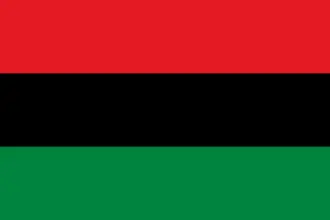
Pan-Africanism holds that Africans and people of African descent form one people with a common cause: ending colonial rule, racism and neo-colonial control, winning self-government for African peoples, and uniting the continent politically. The Pan-African Congresses (1900-1945), Nkrumah's call for a union government, the OAU and the African Union state this cause; its economics and domestic politics vary by strand, and its documents say little on social and moral questions.
What it stands for
- Members of every racial group should organise politically around interests specific to their group.
- Countries should hand part of their decision-making power to a union of nations, such as the European Union.
- Countries are better off sharing one currency than each having its own.
- The global economic system keeps poorer countries poor by directing their wealth toward richer countries.
- Countries that feel dominated by Western powers should band together to resist them.
- My country should stay neutral and join neither of the opposing great-power alliances.
Key figures
- Kwame Nkrumah: Ghana's first president; leading advocate of a continental union government and founder of the OAU
- W. E. B. Du Bois: Organiser of the Pan-African Congresses, called the father of Pan-Africanism
- Marcus Garvey: Leader of the UNIA whose 'Africa for the Africans' cry spread Pan-African ideas
Closest ideologies
- Arab nationalism (91% match)
- Afrocentrism (90% match)
- Pan-Arabism (90% match)
- Ba'athism (89% match)
- Black nationalism (88% match)
People closest to it
- Aurobindo Ghosh (93% alike)
- Bassirou Diomaye Faye (90% alike)
- Rajiv Gandhi (89% alike)
- George Orwell (89% alike)
- Sun Yat-sen (89% alike)
Key positions
- Strongly: Members of every racial group should organise politically around interests specific to their group.
- Strongly: Countries should hand part of their decision-making power to a union of nations, such as the European Union.
- Strongly: Countries are better off sharing one currency than each having its own.
- Strongly: The global economic system keeps poorer countries poor by directing their wealth toward richer countries.
- Strongly: Countries that feel dominated by Western powers should band together to resist them.
- Strongly: My country should stay neutral and join neither of the opposing great-power alliances.
- Strongly: No nuclear weapons, ours or an ally's, should be stationed here.
- Strongly: Workers are better off for having labor unions.
- Strongly: It is legitimate to take pride in the racial group one belongs to.
- Strongly: Rulers have a right to rule only because the people they rule have agreed to it.
- Strongly: Foreign armies should not be based on the country's territory.
- Strongly: Political violence is sometimes justified.
- Strongly: A people with a shared national identity is entitled to its own self-governing state.
- Strongly: School history should mostly tell the story of the student's own nation.
- Strongly: The law should treat everyone as an equal, whatever their birth, sex, race or status.
- Strongly: At least some revolutions have been justified.
- Strongly: Keeping a nation's inherited culture alive, including its language, customs and traditions, matters.
- Strongly: No society has the right to rule another for its supposed improvement, however advanced it is.
- Strongly: Each country should hold ultimate authority over its natural resources, without foreign interests controlling them.
- Strongly: Women should be able to vote and stand for office on the same terms as men.
- Strongly: Voting should not be limited to members of one ethnic group.
- Strongly: Overseas territories need not be run mainly for the ruling country's economic benefit.
- Strongly: People without property should also have the right to vote.
- Strongly: Public spaces such as schools and facilities should not be separated by race under the law.
- Strongly: Farmers should have the legal freedom to leave the estates they work.
- Leans: In regions where an indigenous people were originally the majority, the authorities should put limits on outsiders moving in to settle.
- Leans: Countries within one civilization should unite politically.
- Leans: The state should offer public work to anyone who wants a job and cannot find one.
- Leans: Trade unions should control their own affairs without state direction.
- Leans: Allies are bound to defend one another against armed attack.
- Leans: Farmers should get price floors, state buying or cheap credit to keep them secure.
- Leans: High earners and the very rich should pay tax at a much higher rate than everyone else.
- Leans: Production should be organised to provide what people need, instead of being organised around what yields a profit.
- Leans: Industries such as energy, rail and utilities should be owned by the state or public bodies, not private companies.
- Leans: Foreign powers sometimes have a right to intervene in a country's internal affairs.
- Leans: Military intervention abroad is sometimes necessary to protect human rights.
- Leans: Indigenous peoples should control their traditional territories.
- Leans: Democracy is best even when voters make poor choices.
- Leans: Basic local services, such as water, hospitals and local transport, should be publicly owned and run.
- Leans: People belonging to a nation but living abroad should be entitled to settle in that nation's ancestral homeland.
- Leans: Political institutions developed in the West are not a suitable model for every civilization.
- Leans: A country may keep a region that wants to leave.
- Leans: Political independence means little unless the economic and property system is also transformed.
- Leans: The state should guarantee health care to everyone, whether it runs the services itself or pays for them.
- Leans: Trade, finance and debt rules should be changed to give poorer countries a fairer share.
- Leans: Very large concentrations of wealth threaten a free society.