Political Ideology Atlas · All people · Take the test
South & Southeast Asia · born 1872, historical
Aurobindo Ghosh
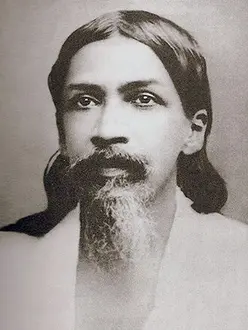
Indian nationalist leader (1905-1910), later yogi and philosopher (1872-1950)
Aurobindo was an early leader of the Indian nationalist movement who demanded complete autonomy, boycott and passive resistance (with armed revolt among the legitimate options), and after 1910 withdrew to Pondicherry to develop Integral Yoga. His political writings describe nationalism as a spiritual calling, warn against totalitarian collectivism and the sufficiency of reason, favour free self-determination of nations within an eventual world-union, and support the Allied cause in the Second World War.
Closest ideologies
Based on the 38 statements where Aurobindo Ghosh has a known position.
- Pan-Africanism (93% match)
- Afrocentrism (91% match)
- Black nationalism (90% match)
- Green Zionism (90% match)
- Poporanism (90% match)
Similar people
- Rajiv Gandhi (90% alike)
- Bassirou Diomaye Faye (90% alike)
- George Orwell (90% alike)
- Frantz Fanon (89% alike)
- Robert F. Kennedy (88% alike)
Known positions
- Strongly: Belonging to the nation ties a person's life to a sacred community that goes on after their death.
- Strongly: The state should not make one language the only common language of government, schooling and public life at the cost of limiting others.
- Strongly: Where they conflict, religious faith should count for at least as much as evidence and reasoning.
- Strongly: A people split by an imposed border should be brought together in a single state.
- Strongly: Constantly seeking additional possessions is harmful overall, despite any benefits it brings.
- Strongly: Restoring a lost social order does not matter more than pursuing progress.
- Strongly: Politics should support people's spiritual well-being.
- Strongly: A people with a shared national identity is entitled to its own self-governing state.
- Strongly: The government should let its political opponents organise, speak and compete for power.
- Strongly: A people's connection to its ancestral land is spiritual, beyond practical interests or ordinary affection.
- Strongly: News media should decide for themselves what they publish, whoever holds power.
- Strongly: Keeping a nation's inherited culture alive, including its language, customs and traditions, matters.
- Strongly: Some areas of life should remain outside state direction.
- Strongly: No society has the right to rule another for its supposed improvement, however advanced it is.
- Strongly: A workers' state does not need to suppress the old ruling class, even for a time.
- Strongly: Voters of different religious communities may all vote in the same elections.
- Strongly: Overseas territories need not be run mainly for the ruling country's economic benefit.
- Strongly: Final authority over a state's laws need not belong to its most senior religious scholars.
- Leans: The UN should have authority to compel member states to comply with its decisions.
- Leans: Countries should hand part of their decision-making power to a union of nations, such as the European Union.
- Leans: At its core, politics is a struggle between spiritual good and evil.
- Leans: My country may join a military alliance led by one of the great powers.
- Leans: Taxes on imports should shield domestic producers from foreign competition.
- Leans: The nation has decayed and must be reborn.
- Leans: Laws, institutions and customs still favor men over women.
- Leans: Government should serve people's good while respecting each person as more than an instrument of the state or community.
- Leans: Free trade does not benefit everyone in the long run.
- Leans: A country may keep a region that wants to leave.
- Leans: Historical change does not come mainly from changes in how society produces and exchanges goods.
- Leans: Other forces move history at least as much as conflict between classes does.
- Leans: Very large concentrations of wealth threaten a free society.
- Leans: At least some revolutions have been justified.
- Leans: Political violence is sometimes justified.
- Leans: Laws should not be required to follow religious texts.
- Leans: Belonging to the nation does not go with sharing its religion.