Political Ideology Atlas · All people · Take the test
Middle East & North Africa · born 1985
Mohammed bin Salman Al Saud
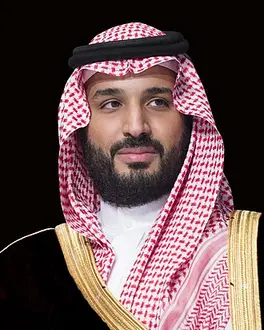
Crown Prince and Prime Minister of Saudi Arabia (crown prince since 2017, prime minister since 2022); de facto ruler
Mohammed bin Salman leads Saudi Arabia as an authoritarian monarchy while driving economic diversification through Vision 2030, privatisation and the Public Investment Fund. He has cut the powers of the religious police and clerics, ended the driving ban and loosened guardianship, while keeping Islam as the constitutional basis and jailing critics. In foreign policy he is hostile to Iran, close to the US, open to Israeli normalisation tied to a Palestinian state, and says Saudi Arabia would seek nuclear weapons if Iran did.
Closest ideologies
Based on the 52 statements where Mohammed bin Salman Al Saud has a known position.
- Russian imperialism (92% match)
- Sinocentrism (90% match)
- Cameralism (88% match)
- Japanese nationalism (88% match)
- İttihadism (88% match)
Similar people
- Catherine II of Russia (94% alike)
- Toussaint Louverture (91% alike)
- Vladislav Surkov (88% alike)
- Oliver Cromwell (88% alike)
- Alexander I of Yugoslavia (88% alike)
Known positions
- Strongly: Someone who actually governs a state may hand that power on to their own child, whether as a king or as a republic's leader.
- Strongly: The government should stop its political opponents from organising, speaking or competing for power.
- Strongly: One spouse may have more authority than the other within a marriage.
- Strongly: Special ranks held by birth, such as noble titles and hereditary crowns, may continue to exist.
- Strongly: The government should have authority over religious institutions' internal affairs.
- Strongly: The head of state should not have to be chosen by election.
- Strongly: The country may allow more immigration than strict limits would permit.
- Strongly: Inherited religious teachings should be understood anew in light of present conditions.
- Strongly: Allies are bound to defend one another against armed attack.
- Strongly: The worst crimes can be punished by death.
- Strongly: Some institutional ties between government and religion are acceptable.
- Strongly: The government should steer investment into industries it sees as key to the country's future.
- Strongly: A country may join permanent military alliances.
- Strongly: Recreational drugs should be illegal for adults.
- Strongly: The head of state should not be elected directly by the voters.
- Strongly: A healthy society depends on the traditional family, such as a married mother and father raising their children.
- Strongly: Keeping a nation's inherited culture alive, including its language, customs and traditions, matters.
- Strongly: Countries should keep their armed forces.
- Strongly: Failure to govern under religious law does not justify armed overthrow of a ruler.
- Strongly: Women may go out in public without any legal duty to cover fully.
- Strongly: Final authority over a state's laws need not belong to its most senior religious scholars.
- Leans: Laws should follow religious texts.
- Leans: Belonging to the nation goes with sharing its religion.
- Leans: Temporary limits on political freedom are justified to achieve rapid economic development.
- Leans: My country should possess its own nuclear arsenal with independent authority over its use.
- Leans: Voluntary charitable help does a better job of helping people in poverty than government aid does.
- Leans: Countries should hand part of their decision-making power to a union of nations, such as the European Union.
- Leans: A wife should not be able to end the marriage when her husband refuses.
- Leans: Basic local services, such as water, hospitals and local transport, may be privately owned and run.
- Leans: At least some basic necessities should be subject to consumption taxes.
- Leans: Publicly funded services such as hospitals and schools should be run by private companies and charities as well as the state.
- Leans: Universal social programmes should give way to programmes restricted to the poorest people, with eligibility based on financial need.
- Leans: My country may join a military alliance led by one of the great powers.
- Leans: My country's military strength should exceed that of its rivals.
- Leans: Industries such as energy, rail and utilities do not need to be publicly owned.
- Leans: New oil and gas wells and coal mines should be permitted.
- Leans: Religious values and institutions should not have a major part in shaping laws, schools and public life.
- Leans: A country should seek ties with the United States at least as close as its ties with China.
- Leans: Being a foreigner should not by itself bar someone from owning land in the country.
- Leans: Past abuses by a state's security forces may be put behind it without anyone answering for them in court.
- Leans: Students should pay no tuition to attend public higher education institutions.
- Leans: Owners' rights to their property need not be protected against being overridden for public goals.
- Leans: Society should use modern technology together with revived values inherited from its ancestors.
- Leans: Women should be able to vote and stand for office on the same terms as men.
- Leans: Each country should hold ultimate authority over its natural resources, without foreign interests controlling them.
- Leans: Meeting poor people's needs should be the first consideration in public policy.
- Leans: The law should not assign different roles in public life on the basis of sex.
- Leans: Economic growth should not be limited for the sake of the environment.