Political Ideology Atlas · All people · Take the test
Europe · born 1847, historical
Annie Besant
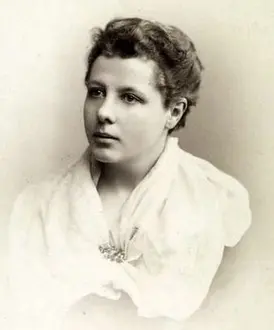
British reformer and Indian National Congress president (1917)
Besant campaigned for women’s political rights and organised with workers in Britain, where she wrote in favour of Fabian socialism. After embracing Theosophy she promoted religious education and campaigned for Indian self-government.
Closest ideologies
Based on the 93 statements where Annie Besant has a known position.
- Pan-Africanism (93% match)
- Pochvennichestvo (93% match)
- Poporanism (92% match)
- African socialism (91% match)
- Progressivism (90% match)
Similar people
- Muhammad Iqbal (91% alike)
- Naveen Jindal (90% alike)
- Aurobindo Ghosh (90% alike)
- Harry S. Truman (90% alike)
- John Maynard Keynes (89% alike)
Known positions
- Strongly: Behind their different forms, the great religions point to one shared truth.
- Strongly: Specialists should have more weight in decisions than public opinion.
- Strongly: A country can move toward socialism by winning elections and governing through parliament.
- Strongly: Not everyone able to work has a duty to do physical labour.
- Strongly: Countries should hand part of their decision-making power to a union of nations, such as the European Union.
- Strongly: Changes to society should be introduced a little at a time.
- Strongly: State schools may teach pupils a religious faith, for example through lessons in its beliefs and practice.
- Strongly: Allies are bound to defend one another against armed attack.
- Strongly: The state should be barred from executing people convicted of the gravest crimes, such as terrorism.
- Strongly: Prisons should mainly help offenders rejoin society.
- Strongly: Government should be bound by written guarantees of basic rights protected against easy amendment by ordinary majorities.
- Strongly: Political power should be split among separate branches and levels that can each limit the others.
- Strongly: Being part of the nation gives a person's life meaning beyond their own lifetime through a bond held sacred across generations.
- Strongly: A country may join permanent military alliances.
- Strongly: Either spouse can leave a marriage without showing wrongdoing by the other.
- Strongly: People able to work should get welfare benefits only in return for some work, such as a job or a work scheme.
- Strongly: Direct action does not have to take the place of elections and parliament as the way to achieve political change.
- Strongly: Industries such as energy, rail and utilities should be owned by the state or public bodies, not private companies.
- Strongly: Rich people have an obligation to help those worse off than they are.
- Strongly: Officials decide what gets made and who gets it at least as well as prices and competition do.
- Strongly: Religious values and institutions should shape laws, schools and public life.
- Strongly: Owners' rights to their property need not be protected against being overridden for public goals.
- Strongly: Political decisions should rest with the smallest local community able to handle them, with wider authorities handling matters that need a wider reach.
- Strongly: Basic local services, such as water, hospitals and local transport, should be publicly owned and run.
- Strongly: Production should be organised to provide what people need, instead of being organised around what yields a profit.
- Strongly: The law should allow people outside state forces to possess weapons.
- Strongly: Society relies for its well-being on longstanding family arrangements, such as a married mother and father raising their children.
- Strongly: A society is able to become socialist without an armed revolution.
- Strongly: A person loses freedom from being at another person's mercy, even if that power is never exercised.
- Strongly: Spouses should make marital decisions as equals.
- Strongly: The state should not give all adults a regular payment unconditionally.
- Strongly: Workers are better off for having labor unions.
- Strongly: Rulers have a right to rule only because the people they rule have agreed to it.
- Strongly: A wife should be able to end the marriage even when her husband refuses.
- Strongly: A people with a shared national identity is entitled to its own self-governing state.
- Strongly: Political institutions developed in the West are not a suitable model for every civilization.
- Strongly: Meeting poor people's needs should be the first consideration in public policy.
- Strongly: The law should treat everyone as an equal, whatever their birth, sex, race or status.
- Strongly: Owning things privately is justified only if it benefits society as a whole.
- Strongly: The holy scripture of one's faith is not God's own error-free word.
- Strongly: Income from useful work should be rewarded ahead of income from merely owning property.
- Strongly: Animals can suffer, and that suffering counts in how we treat them.
- Strongly: In a war between great powers, workers need not seek their own government's defeat.
- Strongly: Marriage should retain legal recognition.
- Strongly: Keeping a nation's inherited culture alive, including its language, customs and traditions, matters.
- Strongly: No society has the right to rule another for its supposed improvement, however advanced it is.
- Strongly: Society needs government of some kind.
- Strongly: Publicly insulting a religion's sacred beliefs should be left outside the criminal law.
- Strongly: Women should be able to vote and stand for office on the same terms as men.
- Strongly: Countries should keep their armed forces.
- Strongly: Voters of different religious communities may all vote in the same elections.
- Strongly: Voting should not be limited to members of one ethnic group.
- Strongly: Government should have other tasks besides protecting people from physical violence.
- Strongly: State schools need not steer pupils away from belief in God.
- Strongly: Overseas territories need not be run mainly for the ruling country's economic benefit.
- Leans: It is acceptable for a monarch who inherits the throne to be the country's symbolic head while others govern.
- Leans: Reforms should take existing institutions and their role in society seriously.
- Leans: Where they conflict, evidence and reasoning should count for more than faith, God, revelation or scripture.
- Leans: The head of state should not have to be chosen by election.
- Leans: Businesses need not belong to the people who work in them.
- Leans: Local governments should run businesses alongside private firms.
- Leans: Killing animals for food remains morally unacceptable even with suffering minimised.
- Leans: An assembly elected by the people for that purpose should draft the constitution.
- Leans: In the society we should aim for, a person's needs should determine their share of goods.
- Leans: Business owners make their profit by taking for themselves part of the value their employees create, which is exploitation.
- Leans: A nation should revive its culture first and build its state afterward.
- Leans: Marriage, inheritance and family law may differ between religious communities.
- Leans: Besides its directly elected parliament, a legislature should have a second chamber, such as a senate.
- Leans: Working together internationally should count at least as much as my country's own priorities.
- Leans: Democracy is not the best form of government when voters choose badly.
- Leans: The government should steer investment into industries it sees as key to the country's future.
- Leans: A head of state should have the power to dissolve parliament.
- Leans: At least one other factor does as much to keep people in poverty as population growth does.
- Leans: What you owe your community matters more than your personal rights.
- Leans: Living in the countryside does more for a person's moral wellbeing than living in a city.
- Leans: Politics should prioritise a single common good identified by reasoning over compromises among organised interests.
- Leans: Employers and workers should treat each other as partners whose cooperation comes before conflict, even where their interests differ.
- Leans: Capitalism built the productive power and wealth that later and better societies rest on.
- Leans: Being the law gives a rule a moral claim to be obeyed.
- Leans: Automation should be directed towards making the time people need to spend working as short as feasible.
- Leans: Firms in a market economy need not be owned by the people who work in them.
- Leans: Countries should accept binding international arbitration of their disputes.
- Leans: Governments should give no subsidies, licences or protections that favour firms close to them.
- Leans: An elected legislature must approve the government's budget before the government spends public money.
- Leans: The head of state should not be elected directly by the voters.
- Leans: Work may stay divided into separate specialized jobs held by different people.
- Leans: Groups have rights of their own.
- Leans: Local community ownership of the means of production should not replace private or state ownership.
- Leans: Society should use modern technology together with revived values inherited from its ancestors.
- Leans: Owning a gun should not face strict legal limits.
- Leans: Whatever their circumstances, everyone should be able to count on the state for enough to live decently, through benefits, pensions or public services.
- Leans: Laws should not be required to follow religious texts.