Political Ideology Atlas · All ideologies · Take the test
Distributism
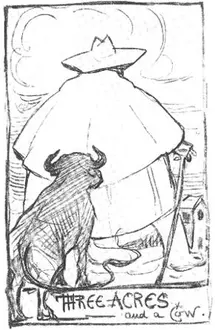
Distributism holds that productive property such as land, tools and workshops should be owned by as many families as possible rather than by a few capitalists or by the state. It condemns both capitalism and socialism as concentrating power, and draws on Catholic social teaching, subsidiarity, guilds, cooperatives and the family as the basic social unit.
What it stands for
- People should gain political representation through social bodies such as families, local communities and occupational associations instead of political parties.
- A wife should not be able to end the marriage when her husband refuses.
- Businesses should be legally barred from agreements with competitors to suppress competition, such as fixing prices.
- Property should belong to many people in small holdings.
- Society should follow a third course beyond capitalism and communism.
- Abortion should be illegal in most cases.
Key figures
- Hilaire Belloc: Author of The Servile State and chief theorist of the distributive state.
- G. K. Chesterton: Writer who popularised distributism, including the slogan of three acres and a cow.
- Pope Leo XIII: Author of Rerum novarum, the founding text of the Catholic social teaching behind distributism.
Closest ideologies
- Christian corporatism (91% match)
- Christian Democracy (90% match)
- Zionism (88% match)
- Catholic social teaching (87% match)
- Integral humanism (87% match)
People closest to it
- G. K. Chesterton (92% alike)
- Robert Barron (89% alike)
- Imran Khan (88% alike)
- John Paul II (88% alike)
- Pius XII (88% alike)
Key positions
- Strongly: People should gain political representation through social bodies such as families, local communities and occupational associations instead of political parties.
- Strongly: A wife should not be able to end the marriage when her husband refuses.
- Strongly: Businesses should be legally barred from agreements with competitors to suppress competition, such as fixing prices.
- Strongly: Property should belong to many people in small holdings.
- Strongly: Society should follow a third course beyond capitalism and communism.
- Strongly: Abortion should be illegal in most cases.
- Strongly: The goods people consume should mainly come from nearby producers.
- Strongly: Government should serve people's good while respecting each person as more than an instrument of the state or community.
- Strongly: Political decisions should rest with the smallest local community able to handle them, with wider authorities handling matters that need a wider reach.
- Strongly: One worker's pay should cover the living needs of that worker's family, including the worker.
- Strongly: Human rights come from the nature that all human beings share.
- Strongly: Some things are right or wrong for everyone, in every culture and era.
- Strongly: Employers and workers should treat each other as partners whose cooperation comes before conflict, even where their interests differ.
- Strongly: Religious institutions should be independent of government direction in their internal affairs.
- Strongly: A healthy society depends on the traditional family, such as a married mother and father raising their children.
- Strongly: The law should not extend marriage to same-sex couples.
- Strongly: Constantly seeking additional possessions is harmful overall, despite any benefits it brings.
- Strongly: Families may keep the main responsibility for housework and childcare.
- Strongly: A person's right to hold land need not end when they stop using it.
- Strongly: Other things drive humanity forward at least as much as rivalry and conflict between peoples.
- Strongly: Other forces move history at least as much as conflict between classes does.
- Strongly: Private ownership is legitimate only insofar as it benefits society.
- Strongly: Very large concentrations of wealth threaten a free society.
- Strongly: Politics should support people's spiritual well-being.
- Strongly: An economy directed by a central plan is not capable of working better than one directed by market exchange.
- Strongly: The leader should not bypass political intermediaries in dealing with the people.
- Strongly: Businesses gain too much influence over government policy from their lobbying.
- Strongly: Groups have rights of their own.
- Strongly: Governments should give no subsidies, licences or protections that favour firms close to them.
- Strongly: Individual farms should not give way to joint cultivation by groups of farmers.
- Strongly: Workers do not need a disciplined revolutionary party to lead them.
- Strongly: Minority groups are not, as groups, secretly plotting to harm the nation.
- Strongly: Religion does not offer illusory comfort for material suffering.
- Strongly: No party's ideology should give it an exclusive right to lead the state.
- Strongly: A state with a state-owned planned economy should not be defended against capitalist restoration under a ruling bureaucracy.
- Strongly: In the long run people should still produce and share using money.
- Strongly: Some areas of life should remain outside state direction.
- Strongly: Marriage should retain legal recognition.
- Strongly: A market economy is incompatible with socialism under communist-party leadership.
- Strongly: A workers' state does not need to suppress the old ruling class, even for a time.
- Strongly: Society needs government of some kind.
- Strongly: The ruler should be subject to the country's laws.
- Strongly: The state should not be managed the way a well-run business is.
- Strongly: Government should have other tasks besides protecting people from physical violence.
- Strongly: Collecting taxes does not in itself amount to stealing people's money.
- Strongly: Public policy should not be used to reduce the passing on of inherited disabilities.
- Strongly: State schools need not steer pupils away from belief in God.
- Strongly: Courts need not be handed over to private businesses.
- Strongly: Humanity would gain nothing by going back to living off hunting and gathering.
- Strongly: Farmers should have the legal freedom to leave the estates they work.
- Leans: Whoever first settles and works unowned land becomes its rightful owner.
- Leans: A person's sex should affect the public roles legally assigned to them.
- Leans: Credit should come from banks owned by their users, charging only the costs of running the service, in place of profit-making banks.
- Leans: Officially recognized bodies representing employers and workers should negotiate wages together.
- Leans: People should work mainly out of responsibility to society and a shared purpose, with personal material rewards playing a secondary role.
- Leans: Owners' rights to their property should almost never be overridden, even for public goals.
- Leans: Capitalism did not build the productive power and wealth that a better society can rest on.
- Leans: Whoever takes natural resources for their own use does not owe compensation to everyone else.
- Leans: The farmers who work large estates should take ownership from the landowners, with the transfer compulsory if owners refuse.
- Leans: The political goal should be victory over communism ahead of accommodation with it.
- Leans: Industries such as energy, rail and utilities do not need to be publicly owned.
- Leans: Wage work cuts people off from the meaning and creativity of what they make.
- Leans: Trade unions should control their own affairs without state direction.
- Leans: Businesses should belong to the people who work in them, for example as cooperatives.
- Leans: Rich people have an obligation to help those worse off than they are.
- Leans: The ruling class stays in power mainly through people going along with its ideas.
- Leans: A general collapse of capitalism is unavoidable.
- Leans: Religious values and institutions should shape laws, schools and public life.
- Leans: Politics should prioritise a single common good identified by reasoning over compromises among organised interests.
- Leans: High earners and the very rich should pay tax at a much higher rate than everyone else.
- Leans: Ending a marriage should not be possible without proving fault.
- Leans: Full-time work at the legal wage floor should pay enough to meet basic living costs.
- Leans: Some institutional ties between government and religion are acceptable.
- Leans: People should want as few material things as possible.
- Leans: Technology will not solve most of humanity's problems.
- Leans: Heirs to large fortunes may keep most of what they inherit.
- Leans: Democracy is best even when voters make poor choices.
- Leans: The state need not top up low-paid workers' incomes through tax credits.
- Leans: People must be free to leave their religion without legal penalty.
- Leans: Final authority over a state's laws need not belong to its most senior religious scholars.
- Leans: Workers' pay should be settled in collective bargaining between their union and their employer.
- Leans: Society may hold back technological change that would overturn established institutions.
- Leans: Government should impose strict rules on how corporations operate.
- Leans: Another body may have the final say over what the legislature passes.
- Leans: Whether a distribution of wealth is just does not depend only on how it came about.
- Leans: Political authority need not rest on oaths of loyalty sworn to a lord.
- Leans: The law should impose no restrictions on strikes.
- Leans: In the society we should aim for, a person's share of goods may depend on things besides their needs.
- Leans: Officials decide what gets made and who gets it at least as well as prices and competition do.
- Leans: Profit made from owning businesses does not come from exploiting the workers who produce it.
- Leans: Workers are better off for having labor unions.
- Leans: People should have a direct role in making decisions where they work, live and study, rather than having those decisions made entirely for them.
- Leans: Where they conflict, religious faith should count for at least as much as evidence and reasoning.
- Leans: The slaughter of cattle should be legal.
- Leans: The people who own the economy and hold power are not the ones the state mainly serves.
- Leans: A country may keep all its decisions in its own hands rather than pooling them with other nations.
- Leans: Meeting poor people's needs should be the first consideration in public policy.
- Leans: Historical change does not come mainly from changes in how society produces and exchanges goods.
- Leans: There is no deliberate plan behind immigration aimed at replacing the native population.
- Leans: Population growth does not mainly drive lasting poverty.
- Leans: Work may stay divided into separate specialized jobs held by different people.
- Leans: The state may restrict what adults do for reasons other than preventing harm to others.
- Leans: Equality of outcomes should not be society's goal.
- Leans: The existing governing institutions should be retained, even if their personnel, policies or procedures change.
- Leans: The great religions need not share a single underlying truth.
- Leans: Class struggle does not continue under socialism.
- Leans: Political power may rest on something other than workplace-elected councils.
- Leans: Looking after your own interests is not a moral good in itself.
- Leans: Income from useful work should be rewarded ahead of income from merely owning property.
- Leans: Local community ownership of the means of production should not replace private or state ownership.
- Leans: Lending money at interest should be legal.
- Leans: Being the first to use force can be right, depending on what it is meant to achieve.