Political Ideology Atlas · All ideologies · Take the test
Constitutionalism
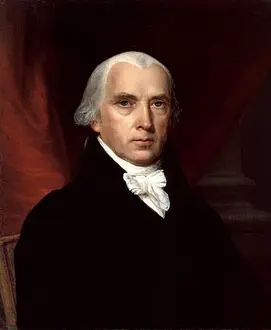
Constitutionalism holds that government authority derives from and is bounded by fundamental law, so officials must act within entrenched limits and prescribed procedures. It favors the rule of law, separation of powers with mutual checks, protected rights including those of minorities, and legitimacy resting on consent. It says little about economic or cultural policy, which it leaves to ordinary politics within those limits.
What it stands for
- Political power should be split among separate branches and levels that can each limit the others.
- A country can get through deadlock among its institutions without a leader who overrides them.
- People are entitled to resist a ruler's unconstitutional exercise of power.
- Government should rely at least as much on legal enforcement as on its rulers' moral example.
- Rulers must act under lasting, publicly known laws administered by recognised courts.
- Public institutions should have the power to constrain a national majority's decisions in a liberal democracy.
Key figures
- James Madison: Principal American theorist of separated powers and checks, as in the Federalist.
- John Locke: Theorist of consent, limited legislative power and resistance to rulers who break their trust.
Closest ideologies
- Procedural democracy (94% match)
- Liberal democracy (90% match)
- Islamic modernism (90% match)
- Iberism (90% match)
- Social credit (90% match)
People closest to it
- James Madison (89% alike)
- Atal Bihari Vajpayee (88% alike)
- John Quincy Adams (88% alike)
- Hannah Arendt (88% alike)
- Bill Kristol (88% alike)
Key positions
- Strongly: Political power should be split among separate branches and levels that can each limit the others.
- Strongly: A country can get through deadlock among its institutions without a leader who overrides them.
- Strongly: People are entitled to resist a ruler's unconstitutional exercise of power.
- Strongly: Government should rely at least as much on legal enforcement as on its rulers' moral example.
- Strongly: Rulers must act under lasting, publicly known laws administered by recognised courts.
- Strongly: Public institutions should have the power to constrain a national majority's decisions in a liberal democracy.
- Strongly: Rulers have a right to rule only because the people they rule have agreed to it.
- Strongly: The existing governing institutions should be retained, even if their personnel, policies or procedures change.
- Strongly: The government should let its political opponents organise, speak and compete for power.
- Strongly: The law should treat everyone as an equal, whatever their birth, sex, race or status.
- Strongly: Workers do not need a disciplined revolutionary party to lead them.
- Strongly: Minority groups are not, as groups, secretly plotting to harm the nation.
- Strongly: News media should decide for themselves what they publish, whoever holds power.
- Strongly: Political power may rest on something other than workplace-elected councils.
- Strongly: No party's ideology should give it an exclusive right to lead the state.
- Strongly: The armed forces may be controlled by someone other than the governing party's leadership.
- Strongly: People of different races should not be discouraged from forming a family together, including through marriage and children.
- Strongly: No state may force a minority out of the country, however hostile it judges that minority to be.
- Strongly: Some areas of life should remain outside state direction.
- Strongly: Society needs government of some kind.
- Strongly: The ruler should be subject to the country's laws.
- Strongly: Public policy should not be used to reduce the passing on of inherited disabilities.
- Strongly: Political authority need not rest on oaths of loyalty sworn to a lord.
- Strongly: Voting should not be limited to members of one ethnic group.
- Strongly: The holder of the highest state office need not be treated as holy.
- Strongly: Public spaces such as schools and facilities should not be separated by race under the law.
- Strongly: Final authority over a state's laws need not belong to its most senior religious scholars.
- Strongly: People must be free to leave their religion without legal penalty.
- Strongly: Suspected drug dealers should never be put to death without a trial.
- Strongly: Farmers should have the legal freedom to leave the estates they work.
- Leans: It is acceptable for a monarch who inherits the throne to be the country's symbolic head while others govern.
- Leans: Owners' rights to their property should almost never be overridden, even for public goals.
- Leans: Changes to society should be introduced a little at a time.
- Leans: An assembly elected by the people for that purpose should draft the constitution.
- Leans: Individual rights matter at least as much as what citizens owe their community.
- Leans: The nation's figurehead should be non-partisan and belong to everyone.
- Leans: Governments should answer in law for past abuses by their security forces, including unlawful killings.
- Leans: Government should maintain a strict institutional separation from religion.
- Leans: The nation does not need a radical rebirth to overcome decadence.
- Leans: Politics should give compromises among competing groups at least as much weight as a single common good identified by reasoning.
- Leans: Besides its directly elected parliament, a legislature should have a second chamber, such as a senate.
- Leans: Government should be bound by written guarantees of basic rights protected against easy amendment by ordinary majorities.
- Leans: A person's body belongs entirely to that person.
- Leans: A president should be limited in how many times he or she may stand for re-election.
- Leans: Government should serve people's good while respecting each person as more than an instrument of the state or community.
- Leans: Democracy is best even when voters make poor choices.
- Leans: Real command of the military may rest with someone other than the head of state.
- Leans: Major laws should not be decided by direct votes of citizens.
- Leans: Human rights come from the nature that all human beings share.
- Leans: Ordinary legal protections, such as the right not to be held without trial, should stay in force even in a national emergency.
- Leans: Failure to govern under religious law does not justify armed overthrow of a ruler.
- Leans: Some things are right or wrong for everyone, in every culture and era.
- Leans: Elected representatives may serve out their terms without voters being able to remove them early.
- Leans: A person loses freedom from being at another person's mercy, even if that power is never exercised.
- Leans: An elected legislature must approve the government's budget before the government spends public money.
- Leans: Killing another person can be right in self-defence or in defence of others.
- Leans: Direct action does not have to take the place of elections and parliament as the way to achieve political change.
- Leans: When people's freedom to do something harms the environment, protecting the environment should not take priority over that freedom.
- Leans: An electorate should choose the head of state, either directly or through elected representatives.
- Leans: Collecting taxes does not in itself amount to stealing people's money.
- Leans: Ethnic diversity does not weaken a society's ability to hold together.
- Leans: Politics is not best understood as a contest between spiritual good and evil.
- Leans: The people who own the economy and hold power are not the ones the state mainly serves.
- Leans: Political representation should not come through social bodies such as families, local communities and occupational associations instead of political parties.
- Leans: Some decisions should bind people who have not consented to them.
- Leans: Publicly insulting a religion's sacred beliefs should be left outside the criminal law.
- Leans: No one is better suited by nature to govern than anyone else.
- Leans: Being the law gives a rule a moral claim to be obeyed.
- Leans: Equality of outcomes should not be society's goal.
- Leans: Art should not be censored for its effect on people's moral character.
- Leans: Religious conversion should be free of legal restriction.
- Leans: The law should not punish consenting adults for same-sex relations.
- Leans: Leading roles in a country's economy should not depend on belonging to the majority national group.
- Leans: At least some revolutions have been justified.
- Leans: Political violence is sometimes justified.
- Leans: Laws should not be required to follow religious texts.
- Leans: Rapid economic development does not justify temporary restrictions on political freedom.
- Leans: Protecting the constitution should be left to civilian institutions, not the armed forces.
- Leans: Political authority does not ultimately come from God.
- Leans: An armed minority's actions are incapable of bringing about the conditions for a broader revolutionary uprising.
- Leans: A government needs more than fair elections to be democratic.