Political Ideology Atlas · All people · Take the test
Africa · born 1981
Julius Malema
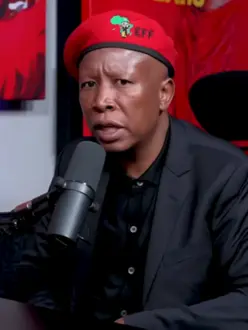
Economic Freedom Fighters leader (2013–present); South African parliamentarian
Malema advocates economic emancipation through land redistribution, strategic nationalisation and expanded public services. He combines African integration and social-rights commitments with militant rhetoric, including statements the Equality Court found to incite retaliatory violence.
Closest ideologies
Based on the 82 statements where Julius Malema has a known position.
- Pan-Africanism (86% match)
- Ba'athism (86% match)
- Bolivarian Socialism (85% match)
- Labor Zionism (84% match)
- Arab nationalism (83% match)
Similar people
- Subhas Chandra Bose (88% alike)
- Hugo Chávez (87% alike)
- Zohran Mamdani (84% alike)
- George Orwell (83% alike)
- Nicolás Maduro (83% alike)
Known positions
- Strongly: Traditional chiefs should have a formal place in advising on the laws a country makes.
- Strongly: The country's majority national group should have the leading role in controlling economic life.
- Strongly: People should lose their right to a plot of land when they no longer use it.
- Strongly: Binding composition rules should ensure that public bodies have approximately equal numbers of women and men.
- Strongly: Transgender people's legal gender should match their gender identity.
- Strongly: Strict legal limits should apply to owning a gun.
- Strongly: The law limits how much landlords can charge where homes are scarce.
- Strongly: Government bodies should be specifically responsible for advancing gender equality.
- Strongly: Adults can legally sell sexual services to other consenting adults.
- Strongly: Tackling oppression requires a combined approach to its overlapping forms, such as racism, sexism and class oppression.
- Strongly: Those who inherit a large fortune should hand over a big share of it in tax.
- Strongly: The farmers who work large estates should take ownership from the landowners, with the transfer compulsory if owners refuse.
- Strongly: Schools should teach pupils about sex.
- Strongly: Women can legally choose to end most pregnancies.
- Strongly: The state should be barred from executing people convicted of the gravest crimes, such as terrorism.
- Strongly: Businesses should be legally barred from agreements with competitors to suppress competition, such as fixing prices.
- Strongly: Governments should limit how money and investment can be moved across borders.
- Strongly: Taxes on imports should shield domestic producers from foreign competition.
- Strongly: Government should support building nuclear power plants.
- Strongly: Women's subordination is tied to how the economy is organised, so reform of laws and attitudes is not enough.
- Strongly: Prisons should mainly help offenders rejoin society.
- Strongly: High earners and the very rich should pay tax at a much higher rate than everyone else.
- Strongly: Full-time work at the legal wage floor should pay enough to meet basic living costs.
- Strongly: Laws, institutions and customs still favor men over women.
- Strongly: The goods people consume should mainly come from nearby producers.
- Strongly: Industries such as energy, rail and utilities should be owned by the state or public bodies, not private companies.
- Strongly: The government should steer investment into industries it sees as key to the country's future.
- Strongly: Society should take active steps to make up for the harm done by past racial injustices.
- Strongly: Non-citizens should also be eligible for welfare benefits.
- Strongly: Students should pay no tuition to attend public higher education institutions.
- Strongly: Workers' pay should be settled in collective bargaining between their union and their employer.
- Strongly: Owners' rights to their property need not be protected against being overridden for public goals.
- Strongly: Workers are better off for having labor unions.
- Strongly: People should have a direct role in making decisions where they work, live and study, rather than having those decisions made entirely for them.
- Strongly: A newly independent state should sometimes redraw its inherited colonial borders.
- Strongly: Being free requires having the practical resources to act on one's choices, such as an adequate livelihood.
- Strongly: Political independence means little unless the economic and property system is also transformed.
- Strongly: Women should have an equal right to participate in Indigenous self-government from its establishment.
- Strongly: The state should guarantee health care to everyone, whether it runs the services itself or pays for them.
- Strongly: Most people in political office look after themselves first and the public second.
- Strongly: Foreign armies should not be based on the country's territory.
- Strongly: Whatever their circumstances, everyone should be able to count on the state for enough to live decently, through benefits, pensions or public services.
- Strongly: Political violence is sometimes justified.
- Strongly: Elected governments need not leave monetary policy to central banks acting on their own.
- Strongly: Businesses gain too much influence over government policy from their lobbying.
- Strongly: At least some revolutions have been justified.
- Strongly: The law should not punish consenting adults for same-sex relations.
- Strongly: The armed forces may be controlled by someone other than the governing party's leadership.
- Strongly: Central banks should keep a role in controlling the money supply.
- Strongly: Each country should hold ultimate authority over its natural resources, without foreign interests controlling them.
- Strongly: Government should have other tasks besides protecting people from physical violence.
- Leans: AI systems should make some government decisions without a human official approving each decision.
- Leans: In the long run people should be free to live and work in any country.
- Leans: An economy whose production is directed by a central plan is capable of working better than an economy directed by market exchange.
- Leans: Society should aim for people to end up with broadly equal material conditions.
- Leans: Housework and childcare should be provided as public services in place of being done within families.
- Leans: Countries should hand part of their decision-making power to a union of nations, such as the European Union.
- Leans: Currency trades and similar international financial deals should carry a small tax of their own.
- Leans: At least some public monuments to widely condemned historical figures should be removed from public display.
- Leans: Major laws should be decided by citizens voting on them themselves.
- Leans: The country may allow more immigration than strict limits would permit.
- Leans: My country may join a military alliance led by one of the great powers.
- Leans: New oil and gas wells and coal mines should be permitted.
- Leans: Land stays in the hands of citizens; foreigners may not buy it.
- Leans: A country should seek closer ties with China than with the United States.
- Leans: Businesses should belong to the people who work in them, for example as cooperatives.
- Leans: Political power should be split among separate branches and levels that can each limit the others.
- Leans: The state should stop foreign buyers from taking over key national businesses.
- Leans: Public institutions should help minority languages be used in public life, for example through teaching or services in those languages.
- Leans: Purchases of basic necessities should carry no consumption tax.
- Leans: Firms in a market economy need not be owned by the people who work in them.
- Leans: The people living in a disputed territory should choose by voting which country it joins.
- Leans: Officials decide what gets made and who gets it at least as well as prices and competition do.
- Leans: It is legitimate to take pride in the racial group one belongs to.
- Leans: Inventions and creative works should remain legally ownable, as under patents and copyrights.
- Leans: Some areas of life should remain outside state direction.
- Leans: Public institutions should have the power to constrain a national majority's decisions in a liberal democracy.
- Leans: Keeping a nation's inherited culture alive, including its language, customs and traditions, matters.
- Leans: Poor countries should retain economic ties with rich countries.