Political Ideology Atlas · All people · Take the test
Europe · born 1903, historical
George Orwell
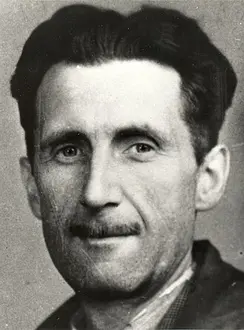
English writer and essayist (1903-1950)
Orwell described himself as a democratic socialist who opposed totalitarianism of left and right. He favoured nationalising major industry, capping incomes and ending class and hereditary privilege, backed revolution understood as a shift of power rather than a class dictatorship, and rejected pacifism, imperialism and nationalism while defending a patriotism tied to English life.
Closest ideologies
Based on the 47 statements where George Orwell has a known position.
- Pashtun nationalism (91% match)
- Andalusian nationalism (91% match)
- Radical democracy (90% match)
- Katarism (90% match)
- Labor Zionism (90% match)
Similar people
- Frantz Fanon (92% alike)
- Rajiv Gandhi (90% alike)
- Abdul El-Sayed (90% alike)
- Jesse Jackson (90% alike)
- Aurobindo Ghosh (90% alike)
Known positions
- Strongly: All land should be owned by the state.
- Strongly: A majority of workers in rich countries gain material benefits from exploitation of poorer countries.
- Strongly: Countries should hand part of their decision-making power to a union of nations, such as the European Union.
- Strongly: High earners and the very rich should pay tax at a much higher rate than everyone else.
- Strongly: Industries such as energy, rail and utilities should be owned by the state or public bodies, not private companies.
- Strongly: Officials decide what gets made and who gets it at least as well as prices and competition do.
- Strongly: The nation's cause and the cause of its ordinary working people are one and the same.
- Strongly: Nobody should hold a special rank by birth, such as a noble title, a hereditary crown or a caste position, or the special rights attached to one.
- Strongly: Publicly honouring a national leader as the personification of the nation is not acceptable.
- Strongly: Very large concentrations of wealth threaten a free society.
- Strongly: Political violence is sometimes justified.
- Strongly: Income from useful work should be rewarded ahead of income from merely owning property.
- Strongly: Being powerful does not mean a country should bring more land within its borders.
- Strongly: The government should let its political opponents organise, speak and compete for power.
- Strongly: The law should treat everyone as an equal, whatever their birth, sex, race or status.
- Strongly: Minority groups are not, as groups, secretly plotting to harm the nation.
- Strongly: Soldiers and conscripts need not refuse to fight when their state goes to war.
- Strongly: At least some revolutions have been justified.
- Strongly: News media should decide for themselves what they publish, whoever holds power.
- Strongly: No party's ideology should give it an exclusive right to lead the state.
- Strongly: In a war between great powers, workers need not seek their own government's defeat.
- Strongly: Some areas of life should remain outside state direction.
- Strongly: A workers' state does not need to suppress the old ruling class, even for a time.
- Strongly: Society needs government of some kind.
- Strongly: Countries should keep their armed forces.
- Strongly: Government should have other tasks besides protecting people from physical violence.
- Strongly: Overseas territories need not be run mainly for the ruling country's economic benefit.
- Strongly: Public spaces such as schools and facilities should not be separated by race under the law.
- Leans: An economy whose production is directed by a central plan is capable of working better than an economy directed by market exchange.
- Leans: Society should aim for people to end up with broadly equal material conditions.
- Leans: The state should be barred from executing people convicted of the gravest crimes, such as terrorism.
- Leans: Working together internationally should count at least as much as my country's own priorities.
- Leans: Production should be organised to provide what people need, instead of being organised around what yields a profit.
- Leans: Technology will not solve most of humanity's problems.
- Leans: The government should be able to require citizens to serve in the military.
- Leans: My country should stay neutral and join neither of the opposing great-power alliances.
- Leans: Democracy is best even when voters make poor choices.
- Leans: Society may hold back technological change that would overturn established institutions.
- Leans: Society may be changed in large, rapid steps.
- Leans: Working for wages should remain a normal way for people to earn a living.
- Leans: Owners' rights to their property need not be protected against being overridden for public goals.
- Leans: Workers are better off for having labor unions.
- Leans: No society has the right to rule another for its supposed improvement, however advanced it is.
- Leans: In the long run people should still produce and share using money.
- Leans: Rulers have a right to rule only because the people they rule have agreed to it.
- Leans: Other forces move history at least as much as conflict between classes does.
- Leans: Keeping a nation's inherited culture alive, including its language, customs and traditions, matters.