Political Ideology Atlas · All people · Take the test
Europe · born 1925, historical
Frantz Fanon
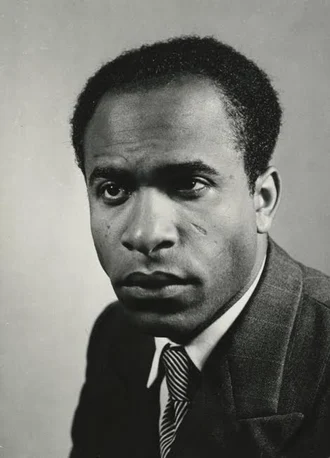
Martinican-French psychiatrist and anticolonial theorist; FLN member in the Algerian war (1925-1961)
Fanon argued that colonialism is sustained by violence and that decolonization is necessarily a violent, total transformation led by the peasant masses rather than the urban elite. He criticised the post-independence national bourgeoisie, single-party rule and leader worship, and demanded economic transformation, redistribution from former colonial powers, and Third World and African solidarity outside the cold-war blocs.
Closest ideologies
Based on the 41 statements where Frantz Fanon has a known position.
- Anti-imperialism (92% match)
- Sandinista ideology (91% match)
- Zapatismo (91% match)
- Katarism (91% match)
- Radical democracy (91% match)
Similar people
- George Orwell (92% alike)
- Aurobindo Ghosh (89% alike)
- Frederick Douglass (89% alike)
- Rajiv Gandhi (89% alike)
- Maximilien Robespierre (89% alike)
Known positions
- Strongly: Countries that had colonies should compensate the countries they colonized.
- Strongly: Settlers from abroad who displace a land's people and found a state there are carrying out colonialism.
- Strongly: Distance and nationality do not weaken the duty of the rich to help the poor abroad.
- Strongly: The global economic system keeps poorer countries poor by directing their wealth toward richer countries.
- Strongly: Countries that feel dominated by Western powers should band together to resist them.
- Strongly: How someone turns out is shaped more by upbringing, society and experience than by the traits they are born with.
- Strongly: Political independence means little unless the economic and property system is also transformed.
- Strongly: Publicly honouring a national leader as the personification of the nation is not acceptable.
- Strongly: Most people in political office look after themselves first and the public second.
- Strongly: Political violence is sometimes justified.
- Strongly: A people with a shared national identity is entitled to its own self-governing state.
- Strongly: The law should treat everyone as an equal, whatever their birth, sex, race or status.
- Strongly: Most of the average difference in ability between racial groups does not come from genes.
- Strongly: At least some revolutions have been justified.
- Strongly: No society has the right to rule another for its supposed improvement, however advanced it is.
- Strongly: Each country should hold ultimate authority over its natural resources, without foreign interests controlling them.
- Strongly: Public spaces such as schools and facilities should not be separated by race under the law.
- Leans: An armed minority's actions are capable of bringing about conditions that enable a broader revolutionary uprising.
- Leans: Laws, police and government mainly serve the interests of whoever owns the economy and holds power.
- Leans: Cooperation between employers and workers should not come before conflict where their interests differ.
- Leans: Cultures do not rank above one another in overall worth.
- Leans: People seeking political change should act directly—for example, with strikes, boycotts or occupations—instead of pursuing change through elections and parliaments.
- Leans: People with advanced schooling are cut off from how ordinary people live and work.
- Leans: The farmers who work large estates should take ownership from the landowners, with the transfer compulsory if owners refuse.
- Leans: Industries such as energy, rail and utilities should be owned by the state or public bodies, not private companies.
- Leans: Indigenous peoples should control their traditional territories.
- Leans: A country can get through deadlock among its institutions without a leader who overrides them.
- Leans: Owners' rights to their property need not be protected against being overridden for public goals.
- Leans: Workers are better off for having labor unions.
- Leans: A country may keep a region that wants to leave.
- Leans: The nation's cause and the cause of its ordinary working people are one and the same.
- Leans: A nation does not need one main ethnic group: it can be made up of people of many ancestries.
- Leans: Private ownership is legitimate only insofar as it benefits society.
- Leans: Keeping a nation's inherited culture alive, including its language, customs and traditions, matters.
- Leans: World power should be distributed among several independent major powers, without one dominant power.
- Leans: No party's ideology should give it an exclusive right to lead the state.
- Leans: Being the first to use force can be right, depending on what it is meant to achieve.