Political Ideology Atlas · All ideologies · Take the test
Platonism
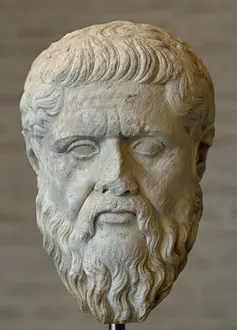
Platonism holds that reality's true objects are unchanging Forms, crowned by the Form of the Good, knowable by reason rather than the senses. Its political implications, as scholars draw them from the Republic and Laws, are that justice means each part of the city and soul doing its proper task, that those who know the good should rule, and that education and law should aim at the virtue of citizens. It is hostile to democracy as rule by the unlearned and favours regulation of wealth and culture.
What it stands for
- The state should punish people who publicly insult what a religion holds sacred.
- Art, poetry and stories that harm people's moral character should be censored.
- Some people are better suited by nature to govern.
- Specialists should have more weight in decisions than public opinion.
- People do not need a direct role in making decisions where they work, live and study.
- People should work mainly out of responsibility to society and a shared purpose, with personal material rewards playing a secondary role.
Key figures
- Plato: Founder of the Academy and author of the Republic and Laws
Closest ideologies
- Statism (87% match)
- Person Dignity Theory (86% match)
- Russian imperialism (86% match)
- German nationalism (86% match)
- Pahlavism (85% match)
People closest to it
- Plato (90% alike)
- Mohammed bin Salman Al Saud (86% alike)
- Bashar al-Assad (86% alike)
- Haile Selassie I (86% alike)
- Oliver Cromwell (85% alike)
Key positions
- Strongly: The state should punish people who publicly insult what a religion holds sacred.
- Strongly: Art, poetry and stories that harm people's moral character should be censored.
- Strongly: Some people are better suited by nature to govern.
- Strongly: Specialists should have more weight in decisions than public opinion.
- Strongly: People do not need a direct role in making decisions where they work, live and study.
- Strongly: People should work mainly out of responsibility to society and a shared purpose, with personal material rewards playing a secondary role.
- Strongly: Civil servants should be recruited according to their performance in competitive examinations.
- Strongly: Democracy is not the best form of government when voters choose badly.
- Strongly: Politics should prioritise a single common good identified by reasoning over compromises among organised interests.
- Strongly: Major laws should not be decided by direct votes of citizens.
- Strongly: Workers may be represented through the parties already in place.
- Strongly: Some knowledge is neutral.
- Strongly: Human rights come from the nature that all human beings share.
- Strongly: Some things are right or wrong for everyone, in every culture and era.
- Strongly: Whether a distribution of wealth is just does not depend only on how it came about.
- Strongly: Employers and workers should treat each other as partners whose cooperation comes before conflict, even where their interests differ.
- Strongly: It is not true that communities should be free to choose their own economic arrangements with no fixed blueprint for a free society's economy.
- Strongly: The people who own the economy and hold power are not the ones the state mainly serves.
- Strongly: Society need not promote ways of living that differ from custom.
- Strongly: Historical change does not come mainly from changes in how society produces and exchanges goods.
- Strongly: The state may restrict what adults do for reasons other than preventing harm to others.
- Strongly: Other forces move history at least as much as conflict between classes does.
- Strongly: Private ownership is legitimate only insofar as it benefits society.
- Strongly: Very large concentrations of wealth threaten a free society.
- Strongly: A government needs more than fair elections to be democratic.
- Strongly: Being the first to use force can be right, depending on what it is meant to achieve.
- Strongly: Work may stay divided into separate specialized jobs held by different people.
- Strongly: There is no deliberate plan behind immigration aimed at replacing the native population.
- Strongly: Some decisions should bind people who have not consented to them.
- Strongly: A workers' state does not need to suppress the old ruling class, even for a time.
- Strongly: Society needs government of some kind.
- Strongly: Countries should keep their armed forces.
- Strongly: Government should have other tasks besides protecting people from physical violence.
- Strongly: Political authority need not rest on oaths of loyalty sworn to a lord.
- Strongly: Killing another person can be right in self-defence or in defence of others.
- Strongly: State schools need not steer pupils away from belief in God.
- Strongly: Courts need not be handed over to private businesses.
- Leans: Public policy, such as sterilization or incentives, should reduce the passing on of inherited disabilities.
- Leans: Temporary rule by a more developed society is justified when it helps the ruled to progress.
- Leans: Every part of life should be subject to state direction.
- Leans: Charging interest on loans is banned by law.
- Leans: Belonging to the nation goes with sharing its religion.
- Leans: Common ownership of production need not leave personal belongings private.
- Leans: The law may treat people differently according to such things as birth, sex, race and status.
- Leans: The mother country and its colonies should meet their economic needs within their own bloc instead of trading with the outside world.
- Leans: The military should have a political role in protecting the constitution and public order, stepping in when they are threatened.
- Leans: Consent of the governed is not the only basis of legitimate political authority.
- Leans: Housework and childcare should be provided as public services in place of being done within families.
- Leans: A healthy society does not depend on the traditional family, such as a married mother and father raising their children.
- Leans: Where they conflict, evidence and reasoning should count for more than faith, God, revelation or scripture.
- Leans: The national church is recognised in law above other religions.
- Leans: The best government combines a governing role for a few with a governing role for the wider population.
- Leans: The government should have authority over religious institutions' internal affairs.
- Leans: The head of state should not have to be chosen by election.
- Leans: Changes to society should be introduced a little at a time.
- Leans: Ideas of what men and women are like come mostly from culture, not biology.
- Leans: The national parliament stays the final authority and can take powers back from the regions.
- Leans: A society can be socialist without the working class itself holding political power.
- Leans: Whether citizens may see government information can be left to the government to decide.
- Leans: Collective goals can justify treating a person merely as a tool.
- Leans: The farmers who work large estates should take ownership from the landowners, with the transfer compulsory if owners refuse.
- Leans: Land stays in the hands of citizens; foreigners may not buy it.
- Leans: Besides its directly elected parliament, a legislature should have a second chamber, such as a senate.
- Leans: Governments should limit how money and investment can be moved across borders.
- Leans: Those who hold public office should be paid no more than an average worker.
- Leans: Entertainment produced for mass audiences tends to weaken people's willingness to challenge the established social order.
- Leans: Women's subordination is tied to how the economy is organised, so reform of laws and attitudes is not enough.
- Leans: Trade unions may be subject to state direction of their affairs.
- Leans: Political power should be split among separate branches and levels that can each limit the others.
- Leans: Prisons should mainly help offenders rejoin society.
- Leans: State schools may teach pupils a religious faith, for example through lessons in its beliefs and practice.
- Leans: Religious values and institutions should shape laws, schools and public life.
- Leans: Some institutional ties between government and religion are acceptable.
- Leans: People should want as few material things as possible.
- Leans: Humanity would gain nothing by going back to living off hunting and gathering.
- Leans: The government should be able to require citizens to serve in the military.
- Leans: Museums, libraries and other inherited culture should not be destroyed, even when they stand in the way of new creation.
- Leans: Cultural life inside a state should not be placed under the control of each national minority.
- Leans: The law should limit the making or sale of pornography.
- Leans: Serious repeat offenders should not necessarily face mandatory minimum sentences.
- Leans: What you owe your community matters more than your personal rights.
- Leans: Final authority over a state's laws need not belong to its most senior religious scholars.
- Leans: Public spaces such as schools and facilities should not be separated by race under the law.
- Leans: People without property should also have the right to vote.
- Leans: Taking part in politics is at least as good a way to live as living privately away from public affairs.
- Leans: The government should have the ability to identify the participants in every payment.
- Leans: Religious minorities should not be exempt from general laws that burden their practice.
- Leans: Women and men should face identical draft obligations, including no obligations for either group when the draft is abolished.
- Leans: Another body may have the final say over what the legislature passes.
- Leans: University-educated people are not especially out of touch with the realities of ordinary life.
- Leans: Elected representatives may serve out their terms without voters being able to remove them early.
- Leans: Voters of different religious communities may all vote in the same elections.
- Leans: Owners' rights to their property need not be protected against being overridden for public goals.
- Leans: The head of state should not be elected directly by the voters.
- Leans: Basic local services, such as water, hospitals and local transport, should be publicly owned and run.
- Leans: The ruler should be subject to the country's laws.
- Leans: People who give their lives for the nation deserve to be remembered as martyrs, with reverence beyond ordinary thanks.
- Leans: Conclusions from groups of citizens chosen at random should not contribute to decisions on major public issues.
- Leans: Schools should cultivate patriotic feeling: loyalty to and pride in the nation, expressed for example through respect for its flag and anthem.
- Leans: Nobody should hold a special rank by birth, such as a noble title, a hereditary crown or a caste position, or the special rights attached to one.
- Leans: Spreading democracy does not bring peace.
- Leans: Rulers must act under lasting, publicly known laws administered by recognised courts.
- Leans: The vote keeps a government in check at least as well as being able to leave the country does.
- Leans: Marriage should retain legal recognition.
- Leans: Constantly seeking additional possessions is harmful overall, despite any benefits it brings.
- Leans: Public schooling money may go straight to schools instead of to parents as vouchers.
- Leans: Public institutions should have the power to constrain a national majority's decisions in a liberal democracy.
- Leans: Being the law gives a rule a moral claim to be obeyed.
- Leans: Equality of outcomes should not be society's goal.
- Leans: Other things drive humanity forward at least as much as rivalry and conflict between peoples.
- Leans: The law should not assign different roles in public life on the basis of sex.
- Leans: Land does not belong to whoever first puts it to use.
- Leans: Politics should support people's spiritual well-being.
- Leans: The holy scripture of one's faith is not God's own error-free word.
- Leans: Political violence is sometimes justified.
- Leans: Looking after your own interests is not a moral good in itself.
- Leans: Being powerful does not mean a country should bring more land within its borders.
- Leans: Local community ownership of the means of production should not replace private or state ownership.
- Leans: Laws should not be required to follow religious texts.
- Leans: Religion does not offer illusory comfort for material suffering.
- Leans: A national development strategy should not accept some regions growing wealthy ahead of the rest.
- Leans: Someone who actually governs a state should not hand that power on to their own child.
- Leans: Individual farms should not give way to joint cultivation by groups of farmers.