Political Ideology Atlas · All ideologies · Take the test
Neo-scholasticism
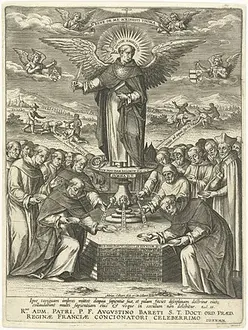
Neo-Thomism is the revival of Thomas Aquinas's philosophy that Leo XIII launched in 1879, and its political side rests on natural law, a common good ordered by reason, and the dignity of the person. Its adherents defend private property and the family against socialism, urge cooperation between capital and labour, and hold that authority comes ultimately from God and is limited by law. In Maritain's version it supports a pluralist democracy with human rights and cooperation between Church and state in separate spheres.
What it stands for
- The right to govern traces back to God, even when people confer it on their leaders.
- A business owner can earn a profit without taking unfair advantage of employees.
- A woman who has sex outside marriage is doing something wrong.
- The state has no single leading function, or its leading function is something other than preserving the ruling class's power.
- Government should serve people's good while respecting each person as more than an instrument of the state or community.
- The existing governing institutions should be retained, even if their personnel, policies or procedures change.
Closest ideologies
- Christian corporatism (92% match)
- Christian democracy (92% match)
- Catholic social teaching (91% match)
- Cultural conservatism (91% match)
- National conservatism (91% match)
People closest to it
- Robert Barron (93% alike)
- William Howard Taft (91% alike)
- Calvin Coolidge (90% alike)
- John Paul II (90% alike)
- Simone Weil (90% alike)
Key positions
- Strongly: The right to govern traces back to God, even when people confer it on their leaders.
- Strongly: A business owner can earn a profit without taking unfair advantage of employees.
- Strongly: A woman who has sex outside marriage is doing something wrong.
- Strongly: The state has no single leading function, or its leading function is something other than preserving the ruling class's power.
- Strongly: Government should serve people's good while respecting each person as more than an instrument of the state or community.
- Strongly: The existing governing institutions should be retained, even if their personnel, policies or procedures change.
- Strongly: Employers and workers should treat each other as partners whose cooperation comes before conflict, even where their interests differ.
- Strongly: Human rights come from the nature that all human beings share.
- Strongly: Religion has not been a leading cause of women being kept in a lower position.
- Strongly: Being the law gives a rule a moral claim to be obeyed.
- Strongly: A person's right to hold land need not end when they stop using it.
- Strongly: Where they conflict, religious faith should count for at least as much as evidence and reasoning.
- Strongly: Some cultures are superior to others.
- Strongly: The law should not extend marriage to same-sex couples.
- Strongly: The law may forbid medical help for terminally ill adults who want to end their lives.
- Strongly: Society relies for its well-being on longstanding family arrangements, such as a married mother and father raising their children.
- Strongly: Religious institutions should be independent of government direction in their internal affairs.
- Strongly: Some things are right or wrong for everyone, in every culture and era.
- Strongly: People are entitled to resist a ruler's unconstitutional exercise of power.
- Strongly: A law imposes no moral duty to obey it if the law is unjust.
- Strongly: Publicly honouring a national leader as the personification of the nation is not acceptable.
- Strongly: At least one other factor explains as much of history as changes in how economies are organized do.
- Strongly: At least one other influence has shaped history as much as conflict between economic classes has.
- Strongly: Workers do not need a disciplined revolutionary party to lead them.
- Strongly: Minority groups are not, as groups, secretly plotting to harm the nation.
- Strongly: Individual farms should not give way to joint cultivation by groups of farmers.
- Strongly: Families may keep the main responsibility for housework and childcare.
- Strongly: The government should let its political opponents organise, speak and compete for power.
- Strongly: The law should treat everyone as an equal, whatever their birth, sex, race or status.
- Strongly: Political power may rest on something other than workplace-elected councils.
- Strongly: Public institutions should have the power to constrain a national majority's decisions in a liberal democracy.
- Strongly: People of different races should not be discouraged from forming a family together, including through marriage and children.
- Strongly: The great religions need not share a single underlying truth.
- Strongly: No party's ideology should give it an exclusive right to lead the state.
- Strongly: The leader should not bypass political intermediaries in dealing with the people.
- Strongly: Politics should support people's spiritual well-being.
- Strongly: The reassurance people draw from faith in the face of material hardship need not be founded on false hopes.
- Strongly: The armed forces may be controlled by someone other than the governing party's leadership.
- Strongly: In the long run people should still produce and share using money.
- Strongly: News media should decide for themselves what they publish, whoever holds power.
- Strongly: An armed minority's actions are incapable of bringing about the conditions for a broader revolutionary uprising.
- Strongly: A market economy is incompatible with socialism under communist-party leadership.
- Strongly: A workers' state does not need to suppress the old ruling class, even for a time.
- Strongly: In a war between great powers, workers need not seek their own government's defeat.
- Strongly: Police forces should continue to exist.
- Strongly: No state may force a minority out of the country, however hostile it judges that minority to be.
- Strongly: Marriage should retain legal recognition.
- Strongly: Some decisions should bind people who have not consented to them.
- Strongly: Public policy should not be used to reduce the passing on of inherited disabilities.
- Strongly: Some areas of life should remain outside state direction.
- Strongly: Society needs government of some kind.
- Strongly: Countries should keep their armed forces.
- Strongly: The ruler should be subject to the country's laws.
- Strongly: The holder of the highest state office need not be treated as holy.
- Strongly: Collecting taxes does not in itself amount to stealing people's money.
- Strongly: Killing another person can be right in self-defence or in defence of others.
- Strongly: Voting should not be limited to members of one ethnic group.
- Strongly: Public spaces such as schools and facilities should not be separated by race under the law.
- Strongly: Government should have other tasks besides protecting people from physical violence.
- Strongly: Courts need not be handed over to private businesses.
- Strongly: State schools need not steer pupils away from belief in God.
- Strongly: Renting out housing should be permitted in at least some circumstances.
- Strongly: Belonging to a religious minority is no ground for shoppers to stay away from a shop.
- Strongly: Final authority over a state's laws need not belong to its most senior religious scholars.
- Strongly: Overseas territories need not be run mainly for the ruling country's economic benefit.
- Strongly: The Holocaust happened as historians describe it.
- Strongly: Humanity would gain nothing by going back to living off hunting and gathering.
- Strongly: Farmers should have the legal freedom to leave the estates they work.
- Strongly: Suspected drug dealers should never be put to death without a trial.
- Leans: The UN should have authority to compel member states to comply with its decisions.
- Leans: The ideal system gives both a small group and the wider public a share of governing power.
- Leans: Owners' rights to their property should almost never be overridden, even for public goals.
- Leans: Businesses need not belong to the people who work in them.
- Leans: Believers can be excused from rules, such as dress or work-day rules, that conflict with their faith.
- Leans: Large landed estates should not be compulsorily transferred to the people who farm them.
- Leans: State schools may teach pupils a religious faith, for example through lessons in its beliefs and practice.
- Leans: Sex work between consenting adults should be illegal.
- Leans: Democracy is best even when voters make poor choices.
- Leans: Government should be bound by written guarantees of basic rights protected against easy amendment by ordinary majorities.
- Leans: Heirs to large fortunes may keep most of what they inherit.
- Leans: Political power should be split among separate branches and levels that can each limit the others.
- Leans: Communist one-party regimes should be condemned as severely as fascist regimes.
- Leans: Trade unions should control their own affairs without state direction.
- Leans: Property should belong to many people in small holdings.
- Leans: Society should follow a third course beyond capitalism and communism.
- Leans: Some institutional ties between government and religion are acceptable.
- Leans: Distance and nationality do not weaken the duty of the rich to help the poor abroad.
- Leans: A country can get through deadlock among its institutions without a leader who overrides them.
- Leans: Politics should prioritise a single common good identified by reasoning over compromises among organised interests.
- Leans: Rich people have an obligation to help those worse off than they are.
- Leans: Religious values and institutions should shape laws, schools and public life.
- Leans: People may live and work outside communities that own their property together.
- Leans: Political decisions should rest with the smallest local community able to handle them, with wider authorities handling matters that need a wider reach.
- Leans: Grown children owe care to parents who need it.
- Leans: Workers' pay should be settled in collective bargaining between their union and their employer.
- Leans: Looking after your own interests is not a moral good in itself.
- Leans: One worker's pay should cover the living needs of that worker's family, including the worker.
- Leans: A government needs more than fair elections to qualify as democratic.
- Leans: Rapid economic development does not justify temporary restrictions on political freedom.
- Leans: Groups have rights of their own.
- Leans: Local community ownership of the means of production should not replace private or state ownership.
- Leans: The state may restrict what adults do for reasons other than preventing harm to others.
- Leans: Workers are better off for having labor unions.
- Leans: Rulers have a right to rule only because the people they rule have agreed to it.
- Leans: Rulers must act under lasting, publicly known laws administered by recognised courts.
- Leans: Equality of outcomes should not be society's goal.
- Leans: Meeting poor people's needs should be the first consideration in public policy.
- Leans: Owning things privately is justified only if it benefits society as a whole.
- Leans: Constantly seeking additional possessions is harmful overall, despite any benefits it brings.
- Leans: At least one other influence has contributed as much to human progress as rivalry between peoples has.
- Leans: Armed conflict does not generally make a people stronger in character.
- Leans: An economy directed by a central plan is not capable of working better than one directed by market exchange.
- Leans: Laws should not be required to follow religious texts.