Political Ideology Atlas · All ideologies · Take the test
Kokkashugi
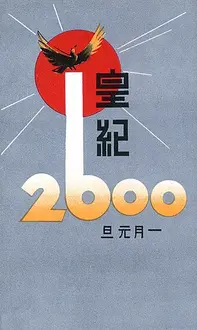
Kokkashugi (Japanese statism) held that the Japanese state is a sacred organic unity centred on the emperor and the kokutai (national polity), standing above class, individual rights and party competition. It favoured state direction of the economy, harmony between employers and workers instead of class struggle, loyal service and filial piety, and military strength and Japanese leadership of Asia. It opposed liberal democracy, socialism and communism.
What it stands for
- The person holding the highest state office should be treated as holy.
- Every part of life should be subject to state direction.
- Someone who actually governs a state may hand that power on to their own child, whether as a king or as a republic's leader.
- Belonging to the nation goes with sharing its religion.
- God is the ultimate source of the right to exercise political authority.
- The government should stop its political opponents from organising, speaking or competing for power.
Key figures
- Kita Ikki: Author of the Outline Plan for the Reorganization of Japan, advocating a coup and nationalization.
- Ōkawa Shūmei: Pan-Asianist who urged a return to the traditional kokutai.
- Sadao Araki: Army and Education Minister who spread spiritual training and Shōwa Restoration ideas.
Closest ideologies
- Ruscism (93% match)
- Italian fascism (90% match)
- Metaxism (89% match)
- Fascist mysticism (88% match)
- Palingenetic ultranationalism (88% match)
People closest to it
- Charlemagne (91% alike)
- Benito Mussolini (90% alike)
- Louis XIV of France (90% alike)
- Henry VIII of England (90% alike)
- Francisco Franco (88% alike)
Key positions
- Strongly: The person holding the highest state office should be treated as holy.
- Strongly: Every part of life should be subject to state direction.
- Strongly: Someone who actually governs a state may hand that power on to their own child, whether as a king or as a republic's leader.
- Strongly: Belonging to the nation goes with sharing its religion.
- Strongly: God is the ultimate source of the right to exercise political authority.
- Strongly: The government should stop its political opponents from organising, speaking or competing for power.
- Strongly: A powerful country should bring more land within its borders.
- Strongly: War develops virtues in a nation, such as courage and discipline.
- Strongly: Art, poetry and stories that harm people's moral character should be censored.
- Strongly: It is acceptable for a monarch who inherits the throne to be the country's symbolic head while others govern.
- Strongly: Consent of the governed is not the only basis of legitimate political authority.
- Strongly: Some people are better suited by nature to govern.
- Strongly: It is acceptable to praise a national leader openly as the one who stands for the whole nation.
- Strongly: Young people should belong to uniformed, drilled organisations that prepare them to serve the nation.
- Strongly: People do not need a direct role in making decisions where they work, live and study.
- Strongly: A country should be ready to use military force abroad on its own judgment, even if the UN Security Council has not authorized it.
- Strongly: The head of state should not have to be chosen by election.
- Strongly: A ruler's unconstitutional acts do not give people a right to resist.
- Strongly: Unused arbitrary power over a person does not itself reduce that person's freedom.
- Strongly: Land that a state declares its own against its people's will is not illegally occupied by that state.
- Strongly: The country would benefit from a strong leader with the power to act despite deadlock among its political institutions.
- Strongly: A national emergency sometimes justifies temporarily withdrawing normal legal safeguards against people the government regards as internal enemies, such as protections against detention without trial.
- Strongly: Workers' solidarity with their own nation should take priority over solidarity with workers across borders.
- Strongly: Countries within one civilization should unite politically.
- Strongly: The nation's figurehead should be non-partisan and belong to everyone.
- Strongly: Real authority to command the military should rest with the head of state.
- Strongly: Democracy is not the best form of government when voters choose badly.
- Strongly: Many political decisions should rest with national or wider authorities, even where a smaller community could handle them.
- Strongly: Collective goals can justify treating a person merely as a tool.
- Strongly: The political goal should be victory over communism ahead of accommodation with it.
- Strongly: My country's military strength should exceed that of its rivals.
- Strongly: People do not have full ownership of their own bodies.
- Strongly: It is acceptable for the government to monitor people when that helps prevent terrorism.
- Strongly: Political power may be concentrated in one body.
- Strongly: Armaments need not be limited to the minimum needed for national safety.
- Strongly: Government should not be bound by a written bill of rights protected against easy amendment by ordinary majorities.
- Strongly: A state founded by settlers who displaced the existing population need not be counted as a colonial project.
- Strongly: State schools may teach pupils a religious faith, for example through lessons in its beliefs and practice.
- Strongly: Politics should prioritise a single common good identified by reasoning over compromises among organised interests.
- Strongly: When national priorities conflict with working together internationally, my country should choose its own priorities.
- Strongly: The nation has decayed and must be reborn.
- Strongly: Some institutional ties between government and religion are acceptable.
- Strongly: Foreign powers sometimes have a right to intervene in a country's internal affairs.
- Strongly: Past abuses by a state's security forces may be put behind it without anyone answering for them in court.
- Strongly: Countries that feel dominated by Western powers should band together to resist them.
- Strongly: The government should be able to require citizens to serve in the military.
- Strongly: Belonging to the nation ties a person's life to a sacred community that goes on after their death.
- Strongly: A government should outlaw political parties that aim to do away with its constitutional order.
- Strongly: Armed forces may sometimes be used for purposes beyond defending the country against attack.
- Strongly: What you owe your community matters more than your personal rights.
- Strongly: Major laws should not be decided by direct votes of citizens.
- Strongly: The government should steer investment into industries it sees as key to the country's future.
- Strongly: Political freedom can last without economic freedom.
- Strongly: Seats may be allocated in ways that do not follow parties' shares of the vote closely.
- Strongly: Countries that had colonies should not have to compensate the countries they colonized.
- Strongly: Another body may have the final say over what the legislature passes.
- Strongly: Some cultures are superior to others.
- Strongly: Employers and workers should treat each other as partners whose cooperation comes before conflict, even where their interests differ.
- Strongly: The head of state should not be elected directly by the voters.
- Strongly: Society should use modern technology together with revived values inherited from its ancestors.
- Strongly: Today's nation is the same people as its ancient and medieval forebears.
- Strongly: In the society we should aim for, a person's share of goods may depend on things besides their needs.
- Strongly: Profit made from owning businesses does not come from exploiting the workers who produce it.
- Strongly: It is not true that communities should be free to choose their own economic arrangements with no fixed blueprint for a free society's economy.
- Strongly: Where they conflict, religious faith should count for at least as much as evidence and reasoning.
- Strongly: People who give their lives for the nation deserve to be remembered as martyrs, with reverence beyond ordinary thanks.
- Strongly: Political institutions developed in the West are not a suitable model for every civilization.
- Strongly: The people who own the economy and hold power are not the ones the state mainly serves.
- Strongly: A healthy society depends on the traditional family, such as a married mother and father raising their children.
- Strongly: A country may keep a region that wants to leave.
- Strongly: A country may keep all its decisions in its own hands rather than pooling them with other nations.
- Strongly: Schools should cultivate patriotic feeling: loyalty to and pride in the nation, expressed for example through respect for its flag and anthem.
- Strongly: Society need not promote ways of living that differ from custom.
- Strongly: Historical change does not come mainly from changes in how society produces and exchanges goods.
- Strongly: Public schooling money may go straight to schools instead of to parents as vouchers.
- Strongly: The state may restrict what adults do for reasons other than preventing harm to others.
- Strongly: Lasting socialism in one country does not require socialist revolutions abroad.
- Strongly: Being the law gives a rule a moral claim to be obeyed.
- Strongly: The existing governing institutions should be retained, even if their personnel, policies or procedures change.
- Strongly: Other forces move history at least as much as conflict between classes does.
- Strongly: Most people in political office look after themselves first and the public second.
- Strongly: Private ownership is legitimate only insofar as it benefits society.
- Strongly: Member states should keep the final decision on whether to follow UN decisions.
- Strongly: Grown children owe care to parents who need it.
- Strongly: Class struggle does not continue under socialism.
- Strongly: Political violence is sometimes justified.
- Strongly: A people's connection to its ancestral land is spiritual, beyond practical interests or ordinary affection.
- Strongly: Elected governments need not leave monetary policy to central banks acting on their own.
- Strongly: Groups have rights of their own.
- Strongly: School history should mostly tell the story of the student's own nation.
- Strongly: A government needs more than fair elections to be democratic.
- Strongly: Being the first to use force can be right, depending on what it is meant to achieve.
- Strongly: Workers do not need a disciplined revolutionary party to lead them.
- Strongly: Religion does not offer illusory comfort for material suffering.
- Strongly: Looking after your own interests is not a moral good in itself.
- Strongly: Soldiers and conscripts need not refuse to fight when their state goes to war.
- Strongly: Political power may rest on something other than workplace-elected councils.
- Strongly: Countries may keep controls on who enters and settles, even in the long run.
- Strongly: Keeping a nation's inherited culture alive, including its language, customs and traditions, matters.
- Strongly: In a war between great powers, workers need not seek their own government's defeat.
- Strongly: The armed forces may be controlled by someone other than the governing party's leadership.
- Strongly: Central banks should keep a role in controlling the money supply.
- Strongly: Work may stay divided into separate specialized jobs held by different people.
- Strongly: In the long run people should still produce and share using money.
- Strongly: Marriage should retain legal recognition.
- Strongly: The vote keeps a government in check at least as well as being able to leave the country does.
- Strongly: Some decisions should bind people who have not consented to them.
- Strongly: A workers' state does not need to suppress the old ruling class, even for a time.
- Strongly: Society needs government of some kind.
- Strongly: Countries should keep their armed forces.
- Strongly: The state should not be managed the way a well-run business is.
- Strongly: Government should have other tasks besides protecting people from physical violence.
- Strongly: Collecting taxes does not in itself amount to stealing people's money.
- Strongly: Killing another person can be right in self-defence or in defence of others.
- Strongly: Taking part in politics is at least as good a way to live as living privately away from public affairs.
- Strongly: State schools need not steer pupils away from belief in God.
- Strongly: Humanity would gain nothing by going back to living off hunting and gathering.
- Leans: One ideologically correct party should hold state leadership without competing parties having a right to replace it.
- Leans: The people in power should decide what the country's news media publish.
- Leans: An armed minority's actions are capable of bringing about conditions that enable a broader revolutionary uprising.
- Leans: The law may treat people differently according to such things as birth, sex, race and status.
- Leans: The military should have a political role in protecting the constitution and public order, stepping in when they are threatened.
- Leans: Temporary limits on political freedom are justified to achieve rapid economic development.
- Leans: An economy whose production is directed by a central plan is capable of working better than an economy directed by market exchange.
- Leans: Recovering how society used to be matters more than moving forward.
- Leans: Officially recognized bodies representing employers and workers should negotiate wages together.
- Leans: Specialists should have more weight in decisions than public opinion.
- Leans: People should gain political representation through social bodies such as families, local communities and occupational associations instead of political parties.
- Leans: At its core, politics is a struggle between spiritual good and evil.
- Leans: Labor unions do not necessarily make workers better off.
- Leans: Government should depend more on leaders setting a good example than on enforcing laws with penalties.
- Leans: There should be legal limits on strike action.
- Leans: People seeking political change should act directly—for example, with strikes, boycotts or occupations—instead of pursuing change through elections and parliaments.
- Leans: No moral truths hold across all cultures.
- Leans: Elected officials should serve out their full terms.
- Leans: Having a human nature in common is not what gives people their rights.
- Leans: Those who inherit a large fortune should hand over a big share of it in tax.
- Leans: Governments may spend well beyond their tax revenue to support a weak economy.
- Leans: Laws, institutions and customs today do not systematically favor men over women.
- Leans: Taxes on imports should shield domestic producers from foreign competition.
- Leans: Businesses need not belong to the people who work in them.
- Leans: Wealthy countries have no duty to give substantial aid to the world's poor abroad.
- Leans: Work under capitalism does not alienate people from their own creative activity.
- Leans: Workers should not have democratic voting rights in the management of large companies.
- Leans: Living in the countryside does more for a person's moral wellbeing than living in a city.
- Leans: Religious values and institutions should shape laws, schools and public life.
- Leans: Society should follow a third course beyond capitalism and communism.
- Leans: Industries such as energy, rail and utilities should be owned by the state or public bodies, not private companies.
- Leans: Whether a policy fits an ideology should count independently of its results.
- Leans: A constitution does not have to be drafted by an assembly elected for that purpose.
- Leans: Final authority over a state's laws need not belong to its most senior religious scholars.
- Leans: Workers may be represented through the parties already in place.
- Leans: The left-right division in politics remains meaningful.
- Leans: Public spaces such as schools and facilities should not be separated by race under the law.
- Leans: Society may be changed in large, rapid steps.
- Leans: A country's constitution should prevail when it conflicts with international legal obligations.
- Leans: Government should impose strict rules on how corporations operate.
- Leans: Religious minorities should not be exempt from general laws that burden their practice.
- Leans: Defense should not rest with armed ordinary citizens in place of a standing force.
- Leans: How someone turns out is shaped more by upbringing, society and experience than by the traits they are born with.
- Leans: Renting out housing should be permitted in at least some circumstances.
- Leans: Owners' rights to their property need not be protected against being overridden for public goals.
- Leans: Officials decide what gets made and who gets it at least as well as prices and competition do.
- Leans: The slaughter of cattle should be legal.
- Leans: Political independence means little unless the economic and property system is also transformed.
- Leans: The nation's cause and the cause of its ordinary working people are one and the same.
- Leans: A market economy is incompatible with socialism under communist-party leadership.
- Leans: People of different races should not be discouraged from forming a family together, including through marriage and children.
- Leans: There is no deliberate plan behind immigration aimed at replacing the native population.
- Leans: Population growth does not mainly drive lasting poverty.
- Leans: Equality of outcomes should not be society's goal.
- Leans: Industrial society has done at least as much good as harm to humanity.
- Leans: Other things drive humanity forward at least as much as rivalry and conflict between peoples.
- Leans: Politics should support people's spiritual well-being.
- Leans: At least some revolutions have been justified.
- Leans: A people with a shared national identity is entitled to its own self-governing state.
- Leans: A national development strategy should not accept some regions growing wealthy ahead of the rest.