Political Ideology Atlas · All people · Take the test
Europe · born 1588, historical
Thomas Hobbes
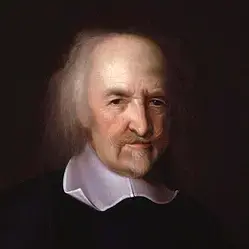
English philosopher, author of Leviathan (1588-1679)
Hobbes argued that life without a sovereign is a war of all against all, so people covenant to give one undivided, absolute power the right to make law, judge, tax and command the army and doctrine. He held that subjects may not resist or divide that power, preferred monarchy with a hereditary succession chosen by the ruler, and put the church under the civil sovereign.
Closest ideologies
Based on the 51 statements where Thomas Hobbes has a known position.
- Xi Jinping Thought (88% match)
- Sovereign democracy (86% match)
- Pahlavism (86% match)
- Kemalism (85% match)
- Rankovićism (85% match)
Similar people
- Mobutu Sese Seko (87% alike)
- Reza Shah (85% alike)
- Xi Jinping (85% alike)
- Vladimir Putin (85% alike)
- Sukarno (85% alike)
Known positions
- Strongly: The ruler should not be bound by the country's laws, including those made by that ruler and by earlier ones.
- Strongly: Someone who actually governs a state may hand that power on to their own child, whether as a king or as a republic's leader.
- Strongly: Unused arbitrary power over a person does not itself reduce that person's freedom.
- Strongly: At least some unjust laws impose a moral duty of obedience.
- Strongly: A ruler's unconstitutional acts do not give people a right to resist.
- Strongly: The government should have authority over religious institutions' internal affairs.
- Strongly: The government may spend public money without first getting its budget approved by an elected legislature.
- Strongly: The head of state should not have to be chosen by election.
- Strongly: Real authority to command the military should rest with the head of state.
- Strongly: The law should make earning a living or doing other work compulsory for anyone capable of working.
- Strongly: Political power may be concentrated in one body.
- Strongly: Government should not be bound by a written bill of rights protected against easy amendment by ordinary majorities.
- Strongly: The worst crimes can be punished by death.
- Strongly: Democracy is not the best form of government when voters choose badly.
- Strongly: The government should be able to require citizens to serve in the military.
- Strongly: People able to work should get welfare benefits only in return for some work, such as a job or a work scheme.
- Strongly: Some institutional ties between government and religion are acceptable.
- Strongly: The existing governing institutions should be retained, even if their personnel, policies or procedures change.
- Strongly: Religious minorities should not be exempt from general laws that burden their practice.
- Strongly: There are morally justified grounds for initiating physical force apart from defence against an attack.
- Strongly: Being the law gives a rule a moral claim to be obeyed.
- Strongly: Owners' rights to their property need not be protected against being overridden for public goals.
- Strongly: Some things are right or wrong for everyone, in every culture and era.
- Strongly: The head of state should not be elected directly by the voters.
- Strongly: A system can be best without reserving governing power for both a select group and the public at large.
- Strongly: Private charity does not help people in poverty better than government programs do.
- Strongly: Rulers have a right to rule only because the people they rule have agreed to it.
- Strongly: Putting an unclaimed plot to work before anyone else need not give you title to it.
- Strongly: The law should treat everyone as an equal, whatever their birth, sex, race or status.
- Strongly: Soldiers and conscripts need not refuse to fight when their state goes to war.
- Strongly: Some decisions should bind people who have not consented to them.
- Strongly: Society needs government of some kind.
- Strongly: Collecting taxes does not in itself amount to stealing people's money.
- Strongly: Killing another person can be right in self-defence or in defence of others.
- Strongly: Government should have other tasks besides protecting people from physical violence.
- Strongly: Courts need not be handed over to private businesses.
- Strongly: Final authority over a state's laws need not belong to its most senior religious scholars.
- Leans: The people in power should decide what the country's news media publish.
- Leans: Lacking the resources to act on a choice does not by itself make you unfree.
- Leans: It is acceptable for the government to monitor people when that helps prevent terrorism.
- Leans: A national emergency sometimes justifies temporarily withdrawing normal legal safeguards against people the government regards as internal enemies, such as protections against detention without trial.
- Leans: The country would benefit from a strong leader with the power to act despite deadlock among its political institutions.
- Leans: Tax rates should not rise steeply with income.
- Leans: A head of state should have the power to dissolve parliament.
- Leans: Politics should prioritise a single common good identified by reasoning over compromises among organised interests.
- Leans: A country should use its armed forces to advance policy goals beyond national self-defence.
- Leans: Governments should give no subsidies, licences or protections that favour firms close to them.
- Leans: Another body may have the final say over what the legislature passes.
- Leans: A national church need not be ruled by its bishops.
- Leans: Most people in political office look after themselves first and the public second.
- Leans: Owning things privately is justified only if it benefits society as a whole.