Political Ideology Atlas · All people · Take the test
Africa · born 1925, historical
Patrice Lumumba
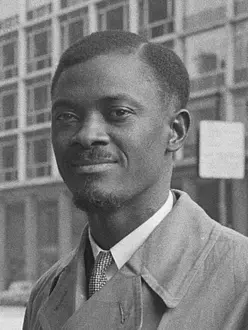
First prime minister of the Republic of the Congo (June-September 1960); leader of the Congolese National Movement
Congolese nationalist and pan-Africanist who led the MNC to independence in 1960 and opposed colonial discrimination and exploitation. He favoured a unitary state, rejected Katanga's secession, practised positive neutrality in the cold war and favoured state-led development. In the crisis he appealed to the UN and the Soviet Union and defended Parliament's authority until his arrest and killing.
Closest ideologies
Based on the 41 statements where Patrice Lumumba has a known position.
- Chinese Dream (93% match)
- Sahrawi nationalism (90% match)
- Pancasila (90% match)
- Ideology of the Chinese Communist Party (90% match)
- Marhaenism (89% match)
Similar people
- Rajiv Gandhi (89% alike)
- John Quincy Adams (89% alike)
- Maximilien Robespierre (89% alike)
- Atal Bihari Vajpayee (89% alike)
- Ulysses S. Grant (88% alike)
Known positions
- Strongly: A country has the right to stop a region becoming independent by using its military.
- Strongly: My country should stay neutral and join neither of the opposing great-power alliances.
- Strongly: A country may keep a region that wants to leave.
- Strongly: A nation does not need one main ethnic group: it can be made up of people of many ancestries.
- Strongly: National policy should give priority to preventing outside powers from splitting the country territorially.
- Strongly: Foreign armies should not be based on the country's territory.
- Strongly: A people with a shared national identity is entitled to its own self-governing state.
- Strongly: The law should treat everyone as an equal, whatever their birth, sex, race or status.
- Strongly: Private owners' choice of whom they deal with should be subject to some restrictions.
- Strongly: No society has the right to rule another for its supposed improvement, however advanced it is.
- Strongly: Each country should hold ultimate authority over its natural resources, without foreign interests controlling them.
- Strongly: Society needs government of some kind.
- Strongly: Countries should keep their armed forces.
- Strongly: Voting should not be limited to members of one ethnic group.
- Strongly: Overseas territories need not be run mainly for the ruling country's economic benefit.
- Strongly: Public spaces such as schools and facilities should not be separated by race under the law.
- Leans: The people in power should decide what the country's news media publish.
- Leans: Countries should hand part of their decision-making power to a union of nations, such as the European Union.
- Leans: The state should keep the colonial-era boundaries it inherits at independence.
- Leans: Voters themselves should elect the head of state, without an intermediary body selecting the officeholder.
- Leans: Cultures do not rank above one another in overall worth.
- Leans: The representative legislature should have the final say on legislation.
- Leans: A national emergency sometimes justifies temporarily withdrawing normal legal safeguards against people the government regards as internal enemies, such as protections against detention without trial.
- Leans: Many political decisions should rest with national or wider authorities, even where a smaller community could handle them.
- Leans: Outside governments have no entitlement to interfere in another country's internal affairs for any purpose.
- Leans: Countries that feel dominated by Western powers should band together to resist them.
- Leans: Defeating communism should not take priority over coexistence with it.
- Leans: Democracy is best even when voters make poor choices.
- Leans: The government should steer investment into industries it sees as key to the country's future.
- Leans: Society should take active steps to make up for the harm done by past racial injustices.
- Leans: Parties and offices should cut across religious lines.
- Leans: Government should have other tasks besides protecting people from physical violence.
- Leans: People who give their lives for the nation deserve to be remembered as martyrs, with reverence beyond ordinary thanks.
- Leans: Political independence means little unless the economic and property system is also transformed.
- Leans: Rulers have a right to rule only because the people they rule have agreed to it.
- Leans: Keeping a nation's inherited culture alive, including its language, customs and traditions, matters.