Political Ideology Atlas · All people · Take the test
Russia & Central Asia · born 1868, historical
Maxim Gorky
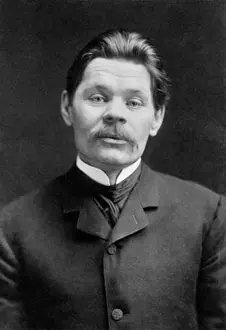
Russian and Soviet writer and public figure (1868-1936)
Gorky was a Marxist-sympathising writer who backed the 1905 revolution, criticised the Bolsheviks sharply in 1917-18, and from the late 1920s publicly defended the Soviet state, the Party's dictatorship and collectivisation against capitalism. He held that class conflict, capitalism and imperialism cause war and decay, and that culture must serve the working class.
Closest ideologies
Based on the 50 statements where Maxim Gorky has a known position.
- Kaysone Phomvihane Thought (92% match)
- Leninism (92% match)
- Bukharinism (91% match)
- Communism (91% match)
- Soviet democracy (91% match)
Similar people
- Kwame Nkrumah (92% alike)
- Mao Zedong (91% alike)
- Ho Chi Minh (91% alike)
- Josip Broz Tito (91% alike)
- Nikita Khrushchev (89% alike)
Known positions
- Strongly: A workers' state must suppress the old ruling class for a time.
- Strongly: One ideologically correct party should hold state leadership without competing parties having a right to replace it.
- Strongly: Farming should be organized as joint cultivation by groups of farmers instead of separate individual farm operations.
- Strongly: History is mainly driven by conflict between economic classes.
- Strongly: Wars between great powers are an unavoidable consequence of capitalism.
- Strongly: Owners' profit is value taken from workers' labor.
- Strongly: In the society we should aim for, a person's needs should determine their share of goods.
- Strongly: Cooperation between employers and workers should not come before conflict where their interests differ.
- Strongly: Working together internationally should count at least as much as my country's own priorities.
- Strongly: Society does not need a third course beyond capitalism and communism.
- Strongly: Living in a city does at least as much for a person's moral wellbeing as living in the countryside.
- Strongly: Entertainment produced for mass audiences tends to weaken people's willingness to challenge the established social order.
- Strongly: Property need not be spread among many small owners.
- Strongly: A general collapse of capitalism is unavoidable.
- Strongly: Communist one-party states should not receive the same condemnation as fascist states.
- Strongly: Industries such as energy, rail and utilities should be owned by the state or public bodies, not private companies.
- Strongly: The Soviet economy was not capitalism under state ownership with the state in place of private capitalists.
- Strongly: Defeating communism should not take priority over coexistence with it.
- Strongly: Society may be changed in large, rapid steps.
- Strongly: Workers' solidarity with workers in other countries should count at least as much as solidarity with their own nation.
- Strongly: Owners' rights to their property need not be protected against being overridden for public goals.
- Strongly: Officials decide what gets made and who gets it at least as well as prices and competition do.
- Strongly: Restoring a lost social order does not matter more than pursuing progress.
- Strongly: Other things drive humanity forward at least as much as rivalry and conflict between peoples.
- Strongly: Even a purely ceremonial head of state should not hold the position by birth.
- Strongly: War does not strengthen a nation's character.
- Strongly: Political violence is sometimes justified.
- Strongly: Being powerful does not mean a country should bring more land within its borders.
- Strongly: Looking after your own interests is not a moral good in itself.
- Strongly: At least some revolutions have been justified.
- Strongly: Industrial society has done at least as much good as harm to humanity.
- Strongly: Population growth does not mainly drive lasting poverty.
- Strongly: No society has the right to rule another for its supposed improvement, however advanced it is.
- Strongly: Society needs government of some kind.
- Strongly: Overseas territories need not be run mainly for the ruling country's economic benefit.
- Strongly: The holder of the highest state office need not be treated as holy.
- Strongly: Farmers should have the legal freedom to leave the estates they work.
- Leans: The people in power should decide what the country's news media publish.
- Leans: Religion gives people a false consolation for hardship in their material lives.
- Leans: Society should aim for people to end up with broadly equal material conditions.
- Leans: Historical change comes mainly from changes in how society produces and exchanges goods.
- Leans: An assembly elected by the people for that purpose should draft the constitution.
- Leans: Science and technology will fix most of what goes wrong for people.
- Leans: The worst crimes can be punished by death.
- Leans: The global economic system keeps poorer countries poor by directing their wealth toward richer countries.
- Leans: Capitalism built the productive power and wealth that later and better societies rest on.
- Leans: How someone turns out is shaped more by upbringing, society and experience than by the traits they are born with.
- Leans: A nation does not need one main ethnic group: it can be made up of people of many ancestries.
- Leans: A people with a shared national identity is entitled to its own self-governing state.
- Leans: The law should treat everyone as an equal, whatever their birth, sex, race or status.