Political Ideology Atlas · All people · Take the test
Latin America & Caribbean · born 1879, historical
Leon Trotsky
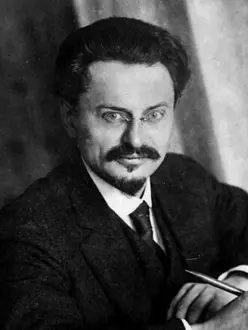
Russian revolutionary, Red Army founder and leader of the Left Opposition and Fourth International (1879-1940)
Trotsky was a Marxist revolutionary who helped lead the October Revolution, built the Red Army and, after losing to Stalin, argued that the USSR was a degenerated workers' state needing a political revolution to restore soviet democracy. He championed permanent revolution, internationalism, planned economy and a vanguard party, defended revolutionary violence and dictatorship of the proletariat in the civil war period, and later demanded soviet pluralism and press freedom.
Closest ideologies
Based on the 108 statements where Leon Trotsky has a known position.
- Marxism–Leninism–Maoism–Prachanda Path (91% match)
- Soviet democracy (91% match)
- Trotskyism (90% match)
- Dictatorship of the proletariat (90% match)
- Taistoism (89% match)
Similar people
- Nikolai Bukharin (94% alike)
- Friedrich Engels (90% alike)
- Karl Marx (87% alike)
- Antonio Gramsci (87% alike)
- W. E. B. Du Bois (87% alike)
Known positions
- Strongly: A workers' state must suppress the old ruling class for a time.
- Strongly: When rival great powers go to war, workers should work to make their own state lose.
- Strongly: A state whose economy is publicly owned and planned should be defended against a return to capitalism even if a bureaucracy rules it.
- Strongly: Political power should rest on councils elected in workplaces in place of parliaments.
- Strongly: Workers require political leadership from a tightly organised revolutionary party.
- Strongly: An economy whose production is directed by a central plan is capable of working better than an economy directed by market exchange.
- Strongly: History is mainly driven by conflict between economic classes.
- Strongly: Housework and childcare should be provided as public services in place of being done within families.
- Strongly: Socialism in a single country will not endure without successful socialist revolutions in other countries.
- Strongly: Historical change comes mainly from changes in how society produces and exchanges goods.
- Strongly: A region should be entitled to leave its current country.
- Strongly: A healthy society does not depend on the traditional family, such as a married mother and father raising their children.
- Strongly: Laws, police and government mainly serve the interests of whoever owns the economy and holds power.
- Strongly: Wars between great powers are an unavoidable consequence of capitalism.
- Strongly: Owners' profit is value taken from workers' labor.
- Strongly: In the society we should aim for, a person's needs should determine their share of goods.
- Strongly: Cooperation between employers and workers should not come before conflict where their interests differ.
- Strongly: No moral truths hold across all cultures.
- Strongly: A national emergency sometimes justifies temporarily withdrawing normal legal safeguards against people the government regards as internal enemies, such as protections against detention without trial.
- Strongly: Workers should form a party of their own, separate from the parties already in place.
- Strongly: The farmers who work large estates should take ownership from the landowners, with the transfer compulsory if owners refuse.
- Strongly: Women can legally choose to end most pregnancies.
- Strongly: Working together internationally should count at least as much as my country's own priorities.
- Strongly: Society does not need a third course beyond capitalism and communism.
- Strongly: Women's subordination is tied to how the economy is organised, so reform of laws and attitudes is not enough.
- Strongly: A general collapse of capitalism is unavoidable.
- Strongly: What things are worth comes from the work put into them.
- Strongly: High earners and the very rich should pay tax at a much higher rate than everyone else.
- Strongly: Production should be organised to provide what people need, instead of being organised around what yields a profit.
- Strongly: The worst crimes can be punished by death.
- Strongly: Communist one-party states should not receive the same condemnation as fascist states.
- Strongly: Industries such as energy, rail and utilities should be owned by the state or public bodies, not private companies.
- Strongly: The Soviet economy was not capitalism under state ownership with the state in place of private capitalists.
- Strongly: The government should be able to require citizens to serve in the military.
- Strongly: Every treaty and agreement between governments should be made public.
- Strongly: Capitalism built the productive power and wealth that later and better societies rest on.
- Strongly: Without workers' own political power, state ownership is not socialism.
- Strongly: The government should steer investment into industries it sees as key to the country's future.
- Strongly: Socialism cannot be reached just by winning elections and governing through parliament.
- Strongly: Society may be changed in large, rapid steps.
- Strongly: Workers' solidarity with workers in other countries should count at least as much as solidarity with their own nation.
- Strongly: A country can get through deadlock among its institutions without a leader who overrides them.
- Strongly: Officials decide what gets made and who gets it at least as well as prices and competition do.
- Strongly: Workers are better off for having labor unions.
- Strongly: Political independence means little unless the economic and property system is also transformed.
- Strongly: Nobody should hold a special rank by birth, such as a noble title, a hereditary crown or a caste position, or the special rights attached to one.
- Strongly: Publicly honouring a national leader as the personification of the nation is not acceptable.
- Strongly: Even a purely ceremonial head of state should not hold the position by birth.
- Strongly: Income-tax percentages may differ between income levels.
- Strongly: Member states should keep the final decision on whether to follow UN decisions.
- Strongly: Political violence is sometimes justified.
- Strongly: A people with a shared national identity is entitled to its own self-governing state.
- Strongly: A mother country and its colonies may trade with the outside world.
- Strongly: Businesses gain too much influence over government policy from their lobbying.
- Strongly: Being the first to use force can be right, depending on what it is meant to achieve.
- Strongly: Most of the average difference in ability between racial groups does not come from genes.
- Strongly: An armed minority's actions are incapable of bringing about the conditions for a broader revolutionary uprising.
- Strongly: Minority groups are not, as groups, secretly plotting to harm the nation.
- Strongly: At least some revolutions have been justified.
- Strongly: News media should decide for themselves what they publish, whoever holds power.
- Strongly: No party's ideology should give it an exclusive right to lead the state.
- Strongly: Central banks should keep a role in controlling the money supply.
- Strongly: Each country should hold ultimate authority over its natural resources, without foreign interests controlling them.
- Strongly: Women should be able to vote and stand for office on the same terms as men.
- Strongly: Society needs government of some kind.
- Strongly: Killing another person can be right in self-defence or in defence of others.
- Leans: A socialist system led by a communist party is able to include a market economy.
- Leans: Eventually people should produce and share without money.
- Leans: Religion gives people a false consolation for hardship in their material lives.
- Leans: Farming should be organized as joint cultivation by groups of farmers instead of separate individual farm operations.
- Leans: All land should be owned by the state.
- Leans: Society should aim for people to end up with broadly equal material conditions.
- Leans: Countries should hand part of their decision-making power to a union of nations, such as the European Union.
- Leans: Where they conflict, evidence and reasoning should count for more than faith, God, revelation or scripture.
- Leans: The government should have authority over religious institutions' internal affairs.
- Leans: People seeking political change should act directly—for example, with strikes, boycotts or occupations—instead of pursuing change through elections and parliaments.
- Leans: Defense should rest with armed ordinary citizens, not a standing force.
- Leans: Those who elected someone should be able to remove them before their term ends, whenever they choose.
- Leans: The system in which people work for wages for an employer should be ended.
- Leans: An assembly elected by the people for that purpose should draft the constitution.
- Leans: Democracy is not the best form of government when voters choose badly.
- Leans: Governments should set legal price ceilings on essential foods when supplies are scarce.
- Leans: A national minority should run its own schools, language and cultural institutions inside the state it lives in.
- Leans: Only the state's armed forces and police should have permission to carry weapons.
- Leans: Either spouse can leave a marriage without showing wrongdoing by the other.
- Leans: The state should offer public work to anyone who wants a job and cannot find one.
- Leans: Seeking equal rights in their countries of residence should take priority over leaving to establish a homeland as the response to persecution.
- Leans: Employees should have voting rights in the management of large companies.
- Leans: Those who hold public office should be paid no more than an average worker.
- Leans: Trade unions may be subject to state direction of their affairs.
- Leans: Laws, institutions and customs still favor men over women.
- Leans: A government should outlaw political parties that aim to do away with its constitutional order.
- Leans: Automation should be directed towards making the time people need to spend working as short as feasible.
- Leans: Public institutions should help minority languages be used in public life, for example through teaching or services in those languages.
- Leans: Voters should be able to remove elected officials before their terms end.
- Leans: Purchases of basic necessities should carry no consumption tax.
- Leans: You can't reach a free, fair society by unfree or unfair means.
- Leans: The state should not make one language the only common language of government, schooling and public life at the cost of limiting others.
- Leans: The people living in a disputed territory should choose by voting which country it joins.
- Leans: Social duty should not take the place of material rewards as the main reason people work.
- Leans: Immigration rules should treat would-be immigrants the same whatever their race.
- Leans: Population growth does not mainly drive lasting poverty.
- Leans: Most people in political office look after themselves first and the public second.
- Leans: Very large concentrations of wealth threaten a free society.
- Leans: The government should let its political opponents organise, speak and compete for power.
- Leans: A socialist state with hostile neighbours need not build up its state power.
- Leans: Poor countries should retain economic ties with rich countries.