Political Ideology Atlas · All people · Take the test
Europe · born 1916, historical
Harold Wilson
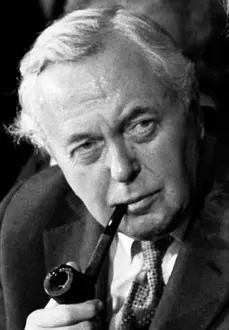
Labour Prime Minister of the United Kingdom (1964-1970, 1974-1976) and Labour leader (1963-1976)
A Labour leader on the party's centre-left who combined planning, selective public ownership (steel, North Sea oil) and redistribution through capital gains, wealth and transfer taxes with a pragmatic, parliamentary style. He defended the NHS, backed comprehensive schools and the Open University, held Britain in NATO while keeping Polaris and withdrawing east of Suez, refused troops for Vietnam and force against Rhodesia, restricted Commonwealth immigration while outlawing racial discrimination, and put EEC membership to a referendum in 1975. He insisted on Parliament's sovereignty over party and referendum pressure, and drew back from strike ballots in In Place of Strife (1969).
Closest ideologies
Based on the 82 statements where Harold Wilson has a known position.
- Browderism (91% match)
- Liberalism in the United States (90% match)
- Clintonism (88% match)
- Labourism (87% match)
- Progressivism (86% match)
Similar people
- Mario Draghi (90% alike)
- B. R. Ambedkar (90% alike)
- François Mitterrand (90% alike)
- Franklin Delano Roosevelt (89% alike)
- Bill Clinton (89% alike)
Known positions
- Strongly: Each main community should have a guaranteed place in government, even against a numerical majority.
- Strongly: The representative legislature should have the final say on legislation.
- Strongly: My country may join a military alliance led by one of the great powers.
- Strongly: The state should be barred from executing people convicted of the gravest crimes, such as terrorism.
- Strongly: High earners and the very rich should pay tax at a much higher rate than everyone else.
- Strongly: Defeating communism should not take priority over coexistence with it.
- Strongly: Democracy is best even when voters make poor choices.
- Strongly: Citizens should have a legal right to see government information.
- Strongly: The government should steer investment into industries it sees as key to the country's future.
- Strongly: A country may join permanent military alliances.
- Strongly: A country may keep a region that wants to leave.
- Strongly: Public schooling money may go straight to schools instead of to parents as vouchers.
- Strongly: The state should guarantee health care to everyone, whether it runs the services itself or pays for them.
- Strongly: Economic growth should not be limited for the sake of the environment.
- Strongly: Whatever their circumstances, everyone should be able to count on the state for enough to live decently, through benefits, pensions or public services.
- Strongly: Income from useful work should be rewarded ahead of income from merely owning property.
- Strongly: State pensions funded by current workers' contributions should stay in place rather than be replaced by privately managed individual accounts.
- Strongly: The law should treat everyone as an equal, whatever their birth, sex, race or status.
- Strongly: No party's ideology should give it an exclusive right to lead the state.
- Strongly: Some areas of life should remain outside state direction.
- Strongly: Private owners' choice of whom they deal with should be subject to some restrictions.
- Strongly: Each country should hold ultimate authority over its natural resources, without foreign interests controlling them.
- Strongly: Countries should keep their armed forces.
- Strongly: Government should have other tasks besides protecting people from physical violence.
- Strongly: Voting should not be limited to members of one ethnic group.
- Strongly: Public spaces such as schools and facilities should not be separated by race under the law.
- Leans: The UN should have authority to compel member states to comply with its decisions.
- Leans: Society should aim for people to end up with broadly equal material conditions.
- Leans: Countries should hand part of their decision-making power to a union of nations, such as the European Union.
- Leans: A former empire may keep a special relationship with its old territories.
- Leans: The state should keep the colonial-era boundaries it inherits at independence.
- Leans: A country should try to sell more abroad than it buys from abroad.
- Leans: There should be legal limits on strike action.
- Leans: The law limits how much landlords can charge where homes are scarce.
- Leans: Speech that attacks groups for who they are can be punished by law.
- Leans: Society should push new technology forward faster, even where it overturns established institutions.
- Leans: Jews, as a people, are entitled to a country of their own in the Land of Israel.
- Leans: After members debate and adopt a party decision, those who opposed it should not have to help implement it.
- Leans: The national parliament stays the final authority and can take powers back from the regions.
- Leans: Private businesses and markets should run most of the economy, while the government supports people who cannot meet their basic needs.
- Leans: Governments should set legal price ceilings on essential foods when supplies are scarce.
- Leans: Those who inherit a large fortune should hand over a big share of it in tax.
- Leans: Businesses should be legally barred from agreements with competitors to suppress competition, such as fixing prices.
- Leans: A country has the right to stop a region becoming independent by using its military.
- Leans: New oil and gas wells and coal mines should be permitted.
- Leans: Besides its directly elected parliament, a legislature should have a second chamber, such as a senate.
- Leans: Governments should limit how money and investment can be moved across borders.
- Leans: Employees should have voting rights in the management of large companies.
- Leans: Distance and nationality do not weaken the duty of the rich to help the poor abroad.
- Leans: Government should support building nuclear power plants.
- Leans: Countries should maintain only the weapons needed for national safety.
- Leans: Allies are bound to defend one another against armed attack.
- Leans: A country with nuclear weapons should keep them for as long as its rivals retain theirs.
- Leans: Areas where an ethnic minority makes up most of the population should be able to run many of their own affairs within the state.
- Leans: Industries such as energy, rail and utilities should be owned by the state or public bodies, not private companies.
- Leans: The country should impose strict limits on immigration.
- Leans: Workers' pay should be settled in collective bargaining between their union and their employer.
- Leans: Universal social programmes should be kept, not replaced by programmes limited to the poorest.
- Leans: The state should stop foreign buyers from taking over key national businesses.
- Leans: Government should impose strict rules on how corporations operate.
- Leans: Owners' rights to their property need not be protected against being overridden for public goals.
- Leans: Employers and workers should treat each other as partners whose cooperation comes before conflict, even where their interests differ.
- Leans: The people living in a disputed territory should choose by voting which country it joins.
- Leans: Basic local services, such as water, hospitals and local transport, should be publicly owned and run.
- Leans: Officials decide what gets made and who gets it at least as well as prices and competition do.
- Leans: Workers are better off for having labor unions.
- Leans: People should have a direct role in making decisions where they work, live and study, rather than having those decisions made entirely for them.
- Leans: Nobody should hold a special rank by birth, such as a noble title, a hereditary crown or a caste position, or the special rights attached to one.
- Leans: Meeting poor people's needs should be the first consideration in public policy.
- Leans: Private ownership is legitimate only insofar as it benefits society.
- Leans: Very large concentrations of wealth threaten a free society.
- Leans: Looking after your own interests is not a moral good in itself.
- Leans: A people with a shared national identity is entitled to its own self-governing state.