Political Ideology Atlas · All people · Take the test
Europe · born 1897, historical
Georges Bataille
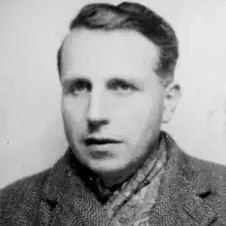
French writer, philosopher and theorist of expenditure and sovereignty (1897–1962)
Bataille combined revolutionary anticapitalism and antifascism with a critique of lives subordinated to production and utility. His later economic work favoured international redistribution and peaceful transformation, while his writing explored sacred experience and the limits of rational mastery.
Closest ideologies
Based on the 30 statements where Georges Bataille has a known position.
- Intercommunalism (91% match)
- Marxism (90% match)
- Dictatorship of the proletariat (90% match)
- Classical Marxism (90% match)
- African feminism (89% match)
Similar people
- Antonio Gramsci (92% alike)
- Bhagat Singh (91% alike)
- Karl Marx (90% alike)
- Friedrich Engels (89% alike)
- Penny Wong (89% alike)
Known positions
- Strongly: Working for a country and advancing the interests of its workers are distinct aims.
- Strongly: A society can thrive without relying on conventional family arrangements as its bedrock.
- Strongly: Cooperation between employers and workers should not come before conflict where their interests differ.
- Strongly: Belonging to a nation does not give people's lives enduring meaning through a sacred tie to earlier and later generations.
- Strongly: Working together internationally should count at least as much as my country's own priorities.
- Strongly: Industries such as energy, rail and utilities should be owned by the state or public bodies, not private companies.
- Strongly: Distance and nationality do not weaken the duty of the rich to help the poor abroad.
- Strongly: Businesses should belong to the people who work in them, for example as cooperatives.
- Strongly: Workers' solidarity with workers in other countries should count at least as much as solidarity with their own nation.
- Strongly: The way paid work is organized under capitalism cuts workers off from shaping what they make and how they make it.
- Strongly: Trade, finance and debt rules should be changed to give poorer countries a fairer share.
- Leans: When rival great powers go to war, workers should work to make their own state lose.
- Leans: A free, fair society can be reached through methods that fall short of being free and fair.
- Leans: Races are not natural scientific divisions of humanity but categories created by society.
- Leans: Conflict between economic classes has done more to determine the course of history than any other influence.
- Leans: Changes in the organization of production and exchange explain the course of history better than any competing factor.
- Leans: In the society we should aim for, a person's needs should determine their share of goods.
- Leans: Government institutions chiefly protect the ruling class's power over the rest of society.
- Leans: Communist one-party states should not receive the same condemnation as fascist states.
- Leans: The worst crimes can be punished by death.
- Leans: Defeating communism should not take priority over coexistence with it.
- Leans: The world's most powerful countries can avoid going to war with one another under capitalism.
- Leans: Officials decide what gets made and who gets it at least as well as prices and competition do.
- Leans: Owners' rights to their property need not be protected against being overridden for public goals.
- Leans: In a capitalist market, what is really a connection among people making and exchanging products looks like a connection among the products themselves.
- Leans: Looking after your own interests is not a moral good in itself.
- Leans: Politics should support people's spiritual well-being.
- Leans: Art should not be censored for its effect on people's moral character.