Political Ideology Atlas · All ideologies · Take the test
Turanism
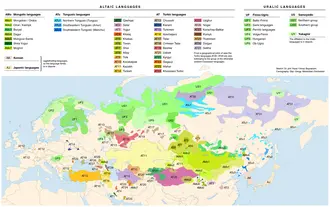
Turanism is the nationalist idea that the Turkic peoples, and in its Hungarian and Finnish strands the supposed Ural-Altaic kin, share an ancestral homeland (Turan) and should be united culturally and, in the long run, politically. Its Turkish mainstream, shaped by Ziya Gökalp, defines the nation by shared language and culture, wants a modern national state with secular law, a protected national economy and a solidarist order between classes, and treats Turan as a distant ideal. Racial, expansionist and militarist versions appeared in its later and Hungarian forms.
What it stands for
- The country's majority national group should have the leading role in controlling economic life.
- The state should make one language the only common language of government, schooling and public life, limiting the use of others.
- Taxes on imports should shield domestic producers from foreign competition.
- Belonging to the nation ties a person's life to a sacred community that goes on after their death.
- What you owe your community matters more than your personal rights.
- Free trade does not benefit everyone in the long run.
Key figures
- Ziya Gökalp: Ottoman-Turkish sociologist who made Turan the ultimate ideal of Turkism
- Enver Pasha: Ottoman war minister who pursued pan-Turanian military schemes in Central Asia
- Ármin Vámbéry: Hungarian orientalist whose work spread Turanist ideas
Closest ideologies
- Pan-Iranism (93% match)
- German nationalism (91% match)
- Right-Wing Populism (90% match)
- Tridemism (90% match)
- Person Dignity Theory (89% match)
People closest to it
- Vinayak Damodar Savarkar (89% alike)
- Niccolò Machiavelli (89% alike)
- William McKinley (89% alike)
- Wang Jingwei (88% alike)
- Theodore Roosevelt (88% alike)
Key positions
- Strongly: The country's majority national group should have the leading role in controlling economic life.
- Strongly: The state should make one language the only common language of government, schooling and public life, limiting the use of others.
- Strongly: Taxes on imports should shield domestic producers from foreign competition.
- Strongly: Belonging to the nation ties a person's life to a sacred community that goes on after their death.
- Strongly: What you owe your community matters more than your personal rights.
- Strongly: Free trade does not benefit everyone in the long run.
- Strongly: Employers and workers should treat each other as partners whose cooperation comes before conflict, even where their interests differ.
- Strongly: Society should use modern technology together with revived values inherited from its ancestors.
- Strongly: Today's nation is the same people as its ancient and medieval forebears.
- Strongly: Profit made from owning businesses does not come from exploiting the workers who produce it.
- Strongly: A newly independent state should sometimes redraw its inherited colonial borders.
- Strongly: The state should make immigrants learn the language of the country they settle in.
- Strongly: The people who own the economy and hold power are not the ones the state mainly serves.
- Strongly: Schools should cultivate patriotic feeling: loyalty to and pride in the nation, expressed for example through respect for its flag and anthem.
- Strongly: A people split by an imposed border should be brought together in a single state.
- Strongly: A state should take responsibility for the welfare of its national communities across neighbouring borders.
- Strongly: Historical change does not come mainly from changes in how society produces and exchanges goods.
- Strongly: Being the law gives a rule a moral claim to be obeyed.
- Strongly: The existing governing institutions should be retained, even if their personnel, policies or procedures change.
- Strongly: Other forces move history at least as much as conflict between classes does.
- Strongly: Private ownership is legitimate only insofar as it benefits society.
- Strongly: Class struggle does not continue under socialism.
- Strongly: Political authority does not ultimately come from God.
- Strongly: A people's connection to its ancestral land is spiritual, beyond practical interests or ordinary affection.
- Strongly: Groups have rights of their own.
- Strongly: School history should mostly tell the story of the student's own nation.
- Strongly: Individual farms should not give way to joint cultivation by groups of farmers.
- Strongly: Workers do not need a disciplined revolutionary party to lead them.
- Strongly: Laws should not be required to follow religious texts.
- Strongly: Local community ownership of the means of production should not replace private or state ownership.
- Strongly: Looking after your own interests is not a moral good in itself.
- Strongly: Keeping a nation's inherited culture alive, including its language, customs and traditions, matters.
- Strongly: Small, informal, trust-based groups should not take the place of lasting parties, unions and federations in political action.
- Strongly: In a war between great powers, workers need not seek their own government's defeat.
- Strongly: Industrial society has done at least as much good as harm to humanity.
- Strongly: Work may stay divided into separate specialized jobs held by different people.
- Strongly: In the long run people should still produce and share using money.
- Strongly: Each country should hold ultimate authority over its natural resources, without foreign interests controlling them.
- Strongly: Marriage should retain legal recognition.
- Strongly: A workers' state does not need to suppress the old ruling class, even for a time.
- Strongly: Society needs government of some kind.
- Strongly: Countries should keep their armed forces.
- Strongly: The ruler should be subject to the country's laws.
- Strongly: Government should have other tasks besides protecting people from physical violence.
- Strongly: Collecting taxes does not in itself amount to stealing people's money.
- Strongly: Killing another person can be right in self-defence or in defence of others.
- Strongly: Failure to govern under religious law does not justify armed overthrow of a ruler.
- Strongly: The holder of the highest state office need not be treated as holy.
- Strongly: Taking part in politics is at least as good a way to live as living privately away from public affairs.
- Strongly: State schools need not steer pupils away from belief in God.
- Strongly: Public spaces such as schools and facilities should not be separated by race under the law.
- Strongly: Courts need not be handed over to private businesses.
- Strongly: Final authority over a state's laws need not belong to its most senior religious scholars.
- Strongly: People must be free to leave their religion without legal penalty.
- Strongly: Museums, libraries and other inherited culture should not be destroyed, even when they stand in the way of new creation.
- Strongly: Humanity would gain nothing by going back to living off hunting and gathering.
- Strongly: Farmers should have the legal freedom to leave the estates they work.
- Leans: War develops virtues in a nation, such as courage and discipline.
- Leans: Foreign loanwords should be removed from the national language and replaced with native words.
- Leans: Rivalry and conflict between nations or peoples do more than anything else to drive humanity forward.
- Leans: The presence of people belonging to the same nation gives a state a legitimate territorial claim outside its borders.
- Leans: Officially recognized bodies representing employers and workers should negotiate wages together.
- Leans: A nation should be mainly one ethnic people.
- Leans: Specialists should have more weight in decisions than public opinion.
- Leans: People should gain political representation through social bodies such as families, local communities and occupational associations instead of political parties.
- Leans: A former empire may keep a special relationship with its old territories.
- Leans: A society holds together less well when its members belong to different ethnic groups.
- Leans: Races are not natural scientific divisions of humanity but categories created by society.
- Leans: The government should have authority over religious institutions' internal affairs.
- Leans: No moral truths hold across all cultures.
- Leans: People with advanced schooling are cut off from how ordinary people live and work.
- Leans: The country would benefit from a strong leader with the power to act despite deadlock among its political institutions.
- Leans: A nation should revive its culture first and build its state afterward.
- Leans: Newcomers should adopt the host nation's culture in place of their original culture.
- Leans: Workers' solidarity with their own nation should take priority over solidarity with workers across borders.
- Leans: Dividing politics into left and right no longer makes sense.
- Leans: A country should press its neighbour to give back land taken from it in an old war.
- Leans: Many political decisions should rest with national or wider authorities, even where a smaller community could handle them.
- Leans: Collective goals can justify treating a person merely as a tool.
- Leans: Science and technology will fix most of what goes wrong for people.
- Leans: Only children of citizens should be citizens at birth: being born in the country should not be enough.
- Leans: Government should maintain a strict institutional separation from religion.
- Leans: Housework and care at home should not be paid with wages.
- Leans: Property need not be spread among many small owners.
- Leans: Inherited religious teachings should be understood anew in light of present conditions.
- Leans: Rich people have an obligation to help those worse off than they are.
- Leans: Businesses need not belong to the people who work in them.
- Leans: Work under capitalism does not alienate people from their own creative activity.
- Leans: Living in the countryside does more for a person's moral wellbeing than living in a city.
- Leans: State schools may teach pupils a religious faith, for example through lessons in its beliefs and practice.
- Leans: Politics should prioritise a single common good identified by reasoning over compromises among organised interests.
- Leans: Society should follow a third course beyond capitalism and communism.
- Leans: When national priorities conflict with working together internationally, my country should choose its own priorities.
- Leans: High earners and the very rich should pay tax at a much higher rate than everyone else.
- Leans: The nation has decayed and must be reborn.
- Leans: Industries such as energy, rail and utilities should be owned by the state or public bodies, not private companies.
- Leans: Countries that feel dominated by Western powers should band together to resist them.
- Leans: Cultural life inside a state should not be placed under the control of each national minority.
- Leans: Armed forces may sometimes be used for purposes beyond defending the country against attack.
- Leans: Marriage, inheritance and family law should be the same for everyone, not set by each religious community.
- Leans: Democracy is best even when voters make poor choices.
- Leans: The government should steer investment into industries it sees as key to the country's future.
- Leans: A country may join permanent military alliances.
- Leans: Land claimed as the historic homeland should not be traded away, even for peace.
- Leans: A national language that people no longer use every day should be brought back as the state's official language.
- Leans: Tackling oppression does not require a combined approach to its overlapping forms, such as racism, sexism and class oppression.
- Leans: Workers may be represented through the parties already in place.
- Leans: Some knowledge is neutral.
- Leans: A poor country should develop mainly with its own resources.
- Leans: Workers' pay should be settled in collective bargaining between their union and their employer.
- Leans: Political freedom can last without economic freedom.
- Leans: Countries within one civilization may remain politically separate.
- Leans: The state should stop foreign buyers from taking over key national businesses.
- Leans: Parties and offices should cut across religious lines.
- Leans: Religious minorities should not be exempt from general laws that burden their practice.
- Leans: A national church need not be ruled by its bishops.
- Leans: How someone turns out is shaped more by upbringing, society and experience than by the traits they are born with.
- Leans: Voting should not be limited to members of one ethnic group.
- Leans: Voters of different religious communities may all vote in the same elections.
- Leans: Some cultures are superior to others.
- Leans: Political authority need not rest on oaths of loyalty sworn to a lord.
- Leans: Owners' rights to their property need not be protected against being overridden for public goals.
- Leans: Deeply divided societies should not guarantee every major community a share of executive power.
- Leans: Gathering all the people in the homeland should have at least as much priority as supporting diaspora culture.
- Leans: In the society we should aim for, a person's share of goods may depend on things besides their needs.
- Leans: Government should rely at least as much on legal enforcement as on its rulers' moral example.
- Leans: Officials decide what gets made and who gets it at least as well as prices and competition do.
- Leans: People belonging to a nation but living abroad should be entitled to settle in that nation's ancestral homeland.
- Leans: Welfare programs should not be replaced by a cash payment that shrinks as earnings rise.
- Leans: Workers are better off for having labor unions.
- Leans: The best constitution does not combine rule by the few with rule by the many.
- Leans: In law, a country's traditional national church should rank no higher than other religious bodies.
- Leans: Where they conflict, religious faith should count for at least as much as evidence and reasoning.
- Leans: Political institutions developed in the West are not a suitable model for every civilization.
- Leans: Public offices may be filled by methods other than drawing lots.
- Leans: A healthy society depends on the traditional family, such as a married mother and father raising their children.
- Leans: A country may keep a region that wants to leave.
- Leans: Being free requires having the practical resources to act on one's choices, such as an adequate livelihood.
- Leans: A country may keep all its decisions in its own hands rather than pooling them with other nations.
- Leans: Private charity does not help people in poverty better than government programs do.
- Leans: Political independence means little unless the economic and property system is also transformed.
- Leans: Women should be able to vote and stand for office on the same terms as men.
- Leans: Meeting poor people's needs should be the first consideration in public policy.
- Leans: Society need not promote ways of living that differ from custom.
- Leans: Some areas of life should remain outside state direction.
- Leans: No state may force a minority out of the country, however hostile it judges that minority to be.
- Leans: Publicly insulting a religion's sacred beliefs should be left outside the criminal law.
- Leans: People of different races should not be discouraged from forming a family together, including through marriage and children.
- Leans: Population growth does not mainly drive lasting poverty.
- Leans: No one is better suited by nature to govern than anyone else.
- Leans: The state may restrict what adults do for reasons other than preventing harm to others.
- Leans: Equality of outcomes should not be society's goal.
- Leans: Restoring a lost social order does not matter more than pursuing progress.
- Leans: Public school science classes may teach evolution on its own.
- Leans: Rulers have a right to rule only because the people they rule have agreed to it.
- Leans: Population growth may be left to run its course.
- Leans: Even a purely ceremonial head of state should not hold the position by birth.
- Leans: The law should not assign different roles in public life on the basis of sex.
- Leans: Land does not belong to whoever first puts it to use.
- Leans: Racial groups should not each organise to defend distinct political interests of their own.
- Leans: A state with a state-owned planned economy should not be defended against capitalist restoration under a ruling bureaucracy.
- Leans: The holy scripture of one's faith is not God's own error-free word.
- Leans: An economy directed by a central plan is not capable of working better than one directed by market exchange.
- Leans: The political left should give cultural identity issues at least as much attention as workers' material interests.
- Leans: Countries may keep controls on who enters and settles, even in the long run.
- Leans: Whatever their circumstances, everyone should be able to count on the state for enough to live decently, through benefits, pensions or public services.
- Leans: Political power may rest on something other than workplace-elected councils.
- Leans: Income from useful work should be rewarded ahead of income from merely owning property.
- Leans: A people with a shared national identity is entitled to its own self-governing state.
- Leans: Religion does not offer illusory comfort for material suffering.
- Leans: Minority groups are not, as groups, secretly plotting to harm the nation.
- Leans: An armed minority's actions are incapable of bringing about the conditions for a broader revolutionary uprising.
- Leans: A country may leave other nations to choose their own political systems.
- Leans: Most of the average difference in ability between racial groups does not come from genes.
- Leans: Belonging to the nation does not go with sharing its religion.
- Leans: Poor countries should retain economic ties with rich countries.
- Leans: The law should treat everyone as an equal, whatever their birth, sex, race or status.