Political Ideology Atlas · All ideologies · Take the test
Naturism
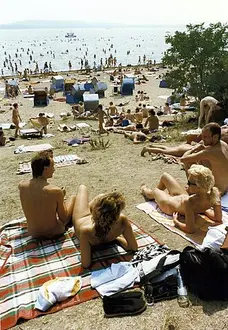
Anarcho-naturism (naturianism, libertarian naturism) fuses anarchism with a return to natural life. Its founders in 1890s Paris rejected every legally established power and politics, accepting only the laws of nature, and condemned industrial civilization, progress and machines as domineering, urging limited needs, self-sufficiency and nudism. It was a loose current that spread to Spain and Cuba, not a systematic programme.
What it stands for
- A country can and should do without a standing military.
- Society would be better off without governments at all.
- Industrial society has done more harm than good to humanity.
- Remembering those who die for the nation need not go beyond ordinary civic thanks.
- Party members should have some freedom to decline to put an internally debated decision into effect once it is adopted.
- Schools should not cultivate patriotic feeling, meaning loyalty to and pride in the nation.
Closest ideologies
- Anarcho-primitivism (91% match)
- Anarcho-pacifism (90% match)
- Tolstoyan movement (89% match)
- Anarchism without adjectives (89% match)
- Anti-patriotism (88% match)
People closest to it
- Leo Tolstoy (85% alike)
- Emma Goldman (83% alike)
- Ted Kaczynski (82% alike)
- Theodor W. Adorno (78% alike)
- Peter Kropotkin (77% alike)
Key positions
- Strongly: A country can and should do without a standing military.
- Strongly: Society would be better off without governments at all.
- Strongly: Industrial society has done more harm than good to humanity.
- Strongly: Remembering those who die for the nation need not go beyond ordinary civic thanks.
- Strongly: Party members should have some freedom to decline to put an internally debated decision into effect once it is adopted.
- Strongly: Schools should not cultivate patriotic feeling, meaning loyalty to and pride in the nation.
- Strongly: A nation may trace its roots to antiquity without having existed as the same people throughout that time.
- Strongly: The government may spend public money without first getting its budget approved by an elected legislature.
- Strongly: Other peoples who live on the land today do not have a lesser claim on account of that group's historical connection.
- Strongly: The nation does not need a radical rebirth to overcome decadence.
- Strongly: Society should not aim to minimise necessary working hours using automation.
- Strongly: The fact that something is law is not, by itself, a moral reason to obey it.
- Strongly: Religious values and institutions should not have a major part in shaping laws, schools and public life.
- Strongly: Capitalism did not build the productive power and wealth that a better society can rest on.
- Strongly: A country's constitution should not automatically take precedence over international law.
- Strongly: Having wealth does not by itself create a duty to help those who are worse off.
- Strongly: Industries such as energy, rail and utilities do not need to be publicly owned.
- Strongly: The government may leave it to investors to decide which industries receive investment.
- Strongly: The state need not guarantee work to everyone who wants a job.
- Strongly: Workers may be represented through the parties already in place.
- Strongly: Parties that seek to abolish a country's constitutional order should be free to organize.
- Strongly: Military service should always be voluntary.
- Strongly: Belonging to a nation does not give people's lives enduring meaning through a sacred tie to earlier and later generations.
- Strongly: The state should be barred from executing people convicted of the gravest crimes, such as terrorism.
- Strongly: Countries within one civilization may remain politically separate.
- Strongly: The directly elected parliament should be a legislature's only chamber.
- Strongly: The state should not restrict money that foreign donors give to charities, campaign groups, the press and universities.
- Strongly: Officeholders at higher levels may be chosen by means other than delegates picked by lower councils.
- Strongly: The economy should not combine mainly private markets with government support for people who cannot meet their basic needs.
- Strongly: Peoples who share an ethnic heritage, such as the Slavic peoples, should not come together in one state.
- Strongly: A country may accept its present border with a neighbour even if it lost land in an old war.
- Strongly: Allied countries are free to decide for themselves whether to help one that is attacked.
- Strongly: My country may keep a military no stronger than its rivals'.
- Strongly: Society may hold back technological change that would overturn established institutions.
- Strongly: Defeating communism should not take priority over coexistence with it.
- Strongly: Politics is not best understood as a contest between spiritual good and evil.
- Strongly: Governments may refuse permission for new oil, gas and coal extraction.
- Strongly: Government borrowing should be free of binding legal limits.
- Strongly: A country can get through deadlock among its institutions without a leader who overrides them.
- Strongly: Tariffs should not be used to protect domestic industry from foreign competition.
- Strongly: Living in the countryside does more for a person's moral wellbeing than living in a city.
- Strongly: People should want as few material things as possible.
- Strongly: Technology will leave most of humanity's problems unsolved.
- Strongly: Civilization's main goals may lie elsewhere than in spreading into space.
- Strongly: Governments need not restrict how money and investment move across borders.
- Strongly: The state need not top up low-paid workers' incomes through tax credits.
- Strongly: Political representation should not come through social bodies such as families, local communities and occupational associations instead of political parties.
- Strongly: Government surveillance is not acceptable, even to prevent terrorism.
- Strongly: Advancing gender equality need not be the specific job of any government body.
- Strongly: In law, a country's traditional national church should rank no higher than other religious bodies.
- Strongly: Recruitment to the civil service should not depend on competitive examinations.
- Strongly: Another body may have the final say over what the legislature passes.
- Strongly: The law should allow people outside state forces to possess weapons.
- Strongly: Nobody should hold a special rank by birth, such as a noble title, a hereditary crown or a caste position, or the special rights attached to one.
- Strongly: A law imposes no moral duty to obey it if the law is unjust.
- Strongly: Those who govern can have a legitimate claim to power without a divine mandate.
- Strongly: Economic accounts should exclude ecosystems from capital valuation.
- Strongly: People need not organize along racial lines to stand up for the concerns of their group.
- Strongly: The general public should have at least as much say in policy as experts.
- Strongly: The law should impose no restrictions on strikes.
- Strongly: Wages need not be set through negotiating bodies that the state officially recognizes.
- Strongly: Leading roles in a country's economy should not depend on belonging to the majority national group.
- Strongly: Minority groups are not, as groups, secretly plotting to harm the nation.
- Strongly: Someone who lacks a natural talent for ruling could still become a capable ruler.
- Strongly: Member states should keep the final decision on whether to follow UN decisions.
- Strongly: Genes are not the main cause of differences in average ability across racial groups.
- Strongly: Countries should undertake military action overseas only with authorization from the UN Security Council.
- Strongly: A former empire should claim no special ties, leadership or sphere of influence in its old territories.
- Strongly: A national language may keep the foreign loanwords it has.
- Strongly: An economy directed by a central plan is not capable of working better than one directed by market exchange.
- Strongly: Laws should not be required to follow religious texts.
- Strongly: Welfare programs should not be replaced by a cash payment that shrinks as earnings rise.
- Strongly: Someone who actually governs a state should not hand that power on to their own child.
- Strongly: Armed conflict does not generally make a people stronger in character.
- Strongly: Constantly seeking additional possessions is harmful overall, despite any benefits it brings.
- Strongly: Belonging to the nation does not go with sharing its religion.
- Strongly: The holy scripture of one's faith is not God's own error-free word.
- Strongly: Art should not be censored for its effect on people's moral character.
- Strongly: Public institutions should have the power to constrain a national majority's decisions in a liberal democracy.
- Strongly: The great religions need not share a single underlying truth.
- Strongly: There is no deliberate plan behind immigration aimed at replacing the native population.
- Strongly: No party's ideology should give it an exclusive right to lead the state.
- Strongly: My country should not send weapons to foreign insurgents, whatever it thinks of the governments they fight.
- Strongly: Islam is compatible with Western values.
- Strongly: Naturalized citizens may hold public office as well as people born in the country.
- Strongly: A market economy is incompatible with socialism under communist-party leadership.
- Strongly: A country may leave other nations to choose their own political systems.
- Strongly: Public policy should not be used to reduce the passing on of inherited disabilities.
- Strongly: No society has the right to rule another for its supposed improvement, however advanced it is.
- Strongly: Publicly insulting a religion's sacred beliefs should be left outside the criminal law.
- Strongly: The state should not be managed the way a well-run business is.
- Strongly: Religious conversion should be free of legal restriction.
- Strongly: The holder of the highest state office need not be treated as holy.
- Strongly: Public school science classes may teach evolution on its own.
- Strongly: Voters of different religious communities may all vote in the same elections.
- Strongly: Political authority need not rest on oaths of loyalty sworn to a lord.
- Strongly: Government should have other tasks besides protecting people from physical violence.
- Strongly: State schools need not steer pupils away from belief in God.
- Strongly: People must be free to leave their religion without legal penalty.
- Strongly: Belonging to a religious minority is no ground for shoppers to stay away from a shop.
- Strongly: Final authority over a state's laws need not belong to its most senior religious scholars.
- Strongly: Failure to govern under religious law does not justify armed overthrow of a ruler.
- Strongly: People without property should also have the right to vote.
- Strongly: Farmers should have the legal freedom to leave the estates they work.
- Leans: Humanity would be better off living as hunter-gatherers again.
- Leans: Police forces should be abolished and replaced with other ways of keeping people safe.
- Leans: Modern technology and revived ancestral values need not go together.
- Leans: People seeking political change should act directly—for example, with strikes, boycotts or occupations—instead of pursuing change through elections and parliaments.
- Leans: Government institutions chiefly protect the ruling class's power over the rest of society.
- Leans: Democracy is not the best form of government when voters choose badly.
- Leans: Government should serve people's good while respecting each person as more than an instrument of the state or community.
- Leans: Where they conflict, religious faith should count for at least as much as evidence and reasoning.
- Leans: We have a duty to leave the planet in good condition for those who come after us.
- Leans: A person loses freedom from being at another person's mercy, even if that power is never exercised.
- Leans: Very large concentrations of wealth threaten a free society.
- Leans: Nature matters for its own sake, not only because it is useful to people.
- Leans: You can't reach a free, fair society by unfree or unfair means.