Political Ideology Atlas · All ideologies · Take the test
Legitimists
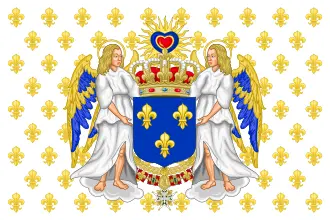
Legitimists hold that the French crown belongs by hereditary right to the senior Bourbon line, overthrown in 1830, and reject both the Orleanist monarchy and the Republic. They are counter-revolutionary Catholic monarchists who favour hereditary kingship, Church influence, local liberties through administrative decentralisation, and, in the social Catholic strand, corporate bodies and class cooperation rather than liberal individualism or socialism.
What it stands for
- Someone who actually governs a state may hand that power on to their own child, whether as a king or as a republic's leader.
- God is the ultimate source of the right to exercise political authority.
- Consent of the governed is not the only basis of legitimate political authority.
- Recovering how society used to be matters more than moving forward.
- Some people are better suited by nature to govern.
- Special ranks held by birth, such as noble titles and hereditary crowns, may continue to exist.
Key figures
- Henri, Count of Chambord: Legitimist claimant as Henri V, author of the 1871 white flag manifesto
- Charles X of France: Last king the Legitimists recognise, overthrown in 1830
- Albert de Mun: Legitimist counter-revolutionary and founder of social Catholic workers' circles
Closest ideologies
- Carlism (93% match)
- Traditionalism (Spain) (93% match)
- High Tory (90% match)
- Integralism (89% match)
- Ultramontanism (89% match)
People closest to it
- Jair Bolsonaro (85% alike)
- Arthur Balfour (84% alike)
- Sayyid Qutb (84% alike)
- Nicholas II of Russia (84% alike)
- Charles-Maurice de Talleyrand-Périgord (84% alike)
Key positions
- Strongly: Someone who actually governs a state may hand that power on to their own child, whether as a king or as a republic's leader.
- Strongly: God is the ultimate source of the right to exercise political authority.
- Strongly: Consent of the governed is not the only basis of legitimate political authority.
- Strongly: Recovering how society used to be matters more than moving forward.
- Strongly: Some people are better suited by nature to govern.
- Strongly: Special ranks held by birth, such as noble titles and hereditary crowns, may continue to exist.
- Strongly: People should gain political representation through social bodies such as families, local communities and occupational associations instead of political parties.
- Strongly: The head of state should not have to be chosen by election.
- Strongly: The national church should have episcopal government, with its bishops holding governing authority.
- Strongly: Real authority to command the military should rest with the head of state.
- Strongly: Democracy is not the best form of government when voters choose badly.
- Strongly: The state may give legal precedence to one stream of a religion over the others.
- Strongly: Rich people have an obligation to help those worse off than they are.
- Strongly: Inherited religious teachings may stay as handed down, without being rethought for present conditions.
- Strongly: State schools may teach pupils a religious faith, for example through lessons in its beliefs and practice.
- Strongly: Religious values and institutions should shape laws, schools and public life.
- Strongly: Ending a marriage should not be possible without proving fault.
- Strongly: Abortion should be illegal in most cases.
- Strongly: Some institutional ties between government and religion are acceptable.
- Strongly: Large landed estates should not be compulsorily transferred to the people who farm them.
- Strongly: Heirs to large fortunes may keep most of what they inherit.
- Strongly: Major laws should not be decided by direct votes of citizens.
- Strongly: A constitution does not have to be drafted by an assembly elected for that purpose.
- Strongly: At least some religious leadership offices should have different eligibility rules for women than for men.
- Strongly: Human rights come from the nature that all human beings share.
- Strongly: A democratic constitution need not be founded on an explicit rejection of fascism.
- Strongly: Another body may have the final say over what the legislature passes.
- Strongly: Some things are right or wrong for everyone, in every culture and era.
- Strongly: Elected representatives may serve out their terms without voters being able to remove them early.
- Strongly: Employers and workers should treat each other as partners whose cooperation comes before conflict, even where their interests differ.
- Strongly: The head of state should not be elected directly by the voters.
- Strongly: Religious institutions should be independent of government direction in their internal affairs.
- Strongly: Profit made from owning businesses does not come from exploiting the workers who produce it.
- Strongly: Where they conflict, religious faith should count for at least as much as evidence and reasoning.
- Strongly: Conclusions from groups of citizens chosen at random should not contribute to decisions on major public issues.
- Strongly: The people who own the economy and hold power are not the ones the state mainly serves.
- Strongly: The law should not extend marriage to same-sex couples.
- Strongly: The state may restrict what adults do for reasons other than preventing harm to others.
- Strongly: Families may keep the main responsibility for housework and childcare.
- Strongly: Equality of outcomes should not be society's goal.
- Strongly: The existing governing institutions should be retained, even if their personnel, policies or procedures change.
- Strongly: Other forces move history at least as much as conflict between classes does.
- Strongly: The great religions need not share a single underlying truth.
- Strongly: Politics should support people's spiritual well-being.
- Strongly: An economy directed by a central plan is not capable of working better than one directed by market exchange.
- Strongly: Class struggle does not continue under socialism.
- Strongly: Groups have rights of their own.
- Strongly: Individual farms should not give way to joint cultivation by groups of farmers.
- Strongly: A government needs more than fair elections to be democratic.
- Strongly: Workers do not need a disciplined revolutionary party to lead them.
- Strongly: Religion does not offer illusory comfort for material suffering.
- Strongly: Political power may rest on something other than workplace-elected councils.
- Strongly: No party's ideology should give it an exclusive right to lead the state.
- Strongly: Keeping a nation's inherited culture alive, including its language, customs and traditions, matters.
- Strongly: In a war between great powers, workers need not seek their own government's defeat.
- Strongly: Work may stay divided into separate specialized jobs held by different people.
- Strongly: In the long run people should still produce and share using money.
- Strongly: Some areas of life should remain outside state direction.
- Strongly: A workers' state does not need to suppress the old ruling class, even for a time.
- Strongly: Public offices may be filled by methods other than drawing lots.
- Strongly: Police forces should continue to exist.
- Strongly: Society needs government of some kind.
- Strongly: Government should have other tasks besides protecting people from physical violence.
- Strongly: Collecting taxes does not in itself amount to stealing people's money.
- Strongly: Public policy should not be used to reduce the passing on of inherited disabilities.
- Strongly: Renting out housing should be permitted in at least some circumstances.
- Strongly: State schools need not steer pupils away from belief in God.
- Strongly: Courts need not be handed over to private businesses.
- Strongly: Museums, libraries and other inherited culture should not be destroyed, even when they stand in the way of new creation.
- Strongly: Humanity would gain nothing by going back to living off hunting and gathering.
- Strongly: Farmers should have the legal freedom to leave the estates they work.
- Leans: Only people who own property should have the right to vote.
- Leans: The person holding the highest state office should be treated as holy.
- Leans: Having a shared national identity does not by itself entitle a people to its own self-governing state.
- Leans: Public education money should follow the child to whichever school the family picks.
- Leans: Officially recognized bodies representing employers and workers should negotiate wages together.
- Leans: There should be legal limits on strike action.
- Leans: Owners' rights to their property should almost never be overridden, even for public goals.
- Leans: A ruler's unconstitutional acts do not give people a right to resist.
- Leans: Elected officials should serve out their full terms.
- Leans: Religious communities may be a basis for political life, as when parties represent one faith and top offices are shared out between faiths.
- Leans: A region should be able to spend most of the tax money it raises on itself.
- Leans: Changes to society should be introduced a little at a time.
- Leans: After members debate and adopt a party decision, those who opposed it should not have to help implement it.
- Leans: The government may leave it to investors to decide which industries receive investment.
- Leans: The nation's figurehead should be non-partisan and belong to everyone.
- Leans: Marriage, inheritance and family law may differ between religious communities.
- Leans: Within a country, the richer regions did not grow rich by draining the poorer ones.
- Leans: Industries such as energy, rail and utilities do not need to be publicly owned.
- Leans: Laws, institutions and customs today do not systematically favor men over women.
- Leans: Businesses need not belong to the people who work in them.
- Leans: Property should belong to many people in small holdings.
- Leans: Government should not be bound by a written bill of rights protected against easy amendment by ordinary majorities.
- Leans: Elected officials may receive a salary above what an average worker earns.
- Leans: Workers should not have democratic voting rights in the management of large companies.
- Leans: Living in the countryside does more for a person's moral wellbeing than living in a city.
- Leans: Politics should prioritise a single common good identified by reasoning over compromises among organised interests.
- Leans: Society should follow a third course beyond capitalism and communism.
- Leans: When national priorities conflict with working together internationally, my country should choose its own priorities.
- Leans: The nation has decayed and must be reborn.
- Leans: Full-time work at the legal wage floor should pay enough to meet basic living costs.
- Leans: A president should be limited in how many times he or she may stand for re-election.
- Leans: Political decisions should rest with the smallest local community able to handle them, with wider authorities handling matters that need a wider reach.
- Leans: Belonging to the nation ties a person's life to a sacred community that goes on after their death.
- Leans: Whether a policy fits an ideology should count independently of its results.
- Leans: What you owe your community matters more than your personal rights.
- Leans: Final authority over a state's laws need not belong to its most senior religious scholars.
- Leans: Workers may be represented through the parties already in place.
- Leans: Capitalist exchange does not make people's economic relationships look like relationships among the goods they trade.
- Leans: Public spaces such as schools and facilities should not be separated by race under the law.
- Leans: Firms in a market economy need not be owned by the people who work in them.
- Leans: Voting should not be limited to members of one ethnic group.
- Leans: Direct action does not have to take the place of elections and parliament as the way to achieve political change.
- Leans: Some cultures are superior to others.
- Leans: Belonging to a religious minority is no ground for shoppers to stay away from a shop.
- Leans: In the society we should aim for, a person's share of goods may depend on things besides their needs.
- Leans: Officials decide what gets made and who gets it at least as well as prices and competition do.
- Leans: Capitalism does not inevitably cause wars between great powers.
- Leans: A country may keep a region that wants to leave.
- Leans: A country may keep all its decisions in its own hands rather than pooling them with other nations.
- Leans: Schools should cultivate patriotic feeling: loyalty to and pride in the nation, expressed for example through respect for its flag and anthem.
- Leans: Rulers must act under lasting, publicly known laws administered by recognised courts.
- Leans: Meeting poor people's needs should be the first consideration in public policy.
- Leans: Society need not promote ways of living that differ from custom.
- Leans: Population growth does not mainly drive lasting poverty.
- Leans: Other things drive humanity forward at least as much as rivalry and conflict between peoples.
- Leans: Population growth may be left to run its course.
- Leans: Private ownership is legitimate only insofar as it benefits society.
- Leans: News media should decide for themselves what they publish, whoever holds power.
- Leans: Political violence is sometimes justified.
- Leans: Looking after your own interests is not a moral good in itself.
- Leans: Being powerful does not mean a country should bring more land within its borders.
- Leans: The leader should not bypass political intermediaries in dealing with the people.
- Leans: Being the first to use force can be right, depending on what it is meant to achieve.