Political Ideology Atlas · All ideologies · Take the test
Christian Socialism
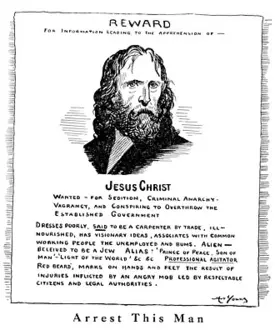
Christian socialism holds that the Gospel's concern for the poor, its condemnation of greed and its picture of shared goods in Acts call for a more cooperative economic order in place of competitive capitalism. It seeks social ownership, cooperatives, strong unions and a welfare state, pursued mainly by democratic persuasion and reform rather than class war. Its adherents range from pacifist and anarchist Christians to Labour-affiliated reformers and liberation theologians, and they are divided on moral and social questions such as abortion and same-sex marriage.
What it stands for
- The state should be barred from executing people convicted of the gravest crimes, such as terrorism.
- Working together internationally should count at least as much as my country's own priorities.
- Distance and nationality do not weaken the duty of the rich to help the poor abroad.
- Countries should maintain only the weapons needed for national safety.
- High earners and the very rich should pay tax at a much higher rate than everyone else.
- Democracy is best even when voters make poor choices.
Key figures
- Frederick Denison Maurice: Coined the term Christian socialism in 1848 and co-founded the British movement.
- Walter Rauschenbusch: Baptist pastor and leading theologian of the Social Gospel.
- R. H. Tawney: Economic historian and Christian socialist critic of the acquisitive society.
Closest ideologies
- Religious socialism (95% match)
- Ethical socialism (94% match)
- Buddhist Socialism (93% match)
- Christian left (92% match)
- Spiritual left (92% match)
People closest to it
- Pope Francis (91% alike)
- Dilma Rousseff (91% alike)
- Luiz Inácio Lula da Silva (89% alike)
- Leo XIV (89% alike)
- Mikhail Gorbachev (89% alike)
Key positions
- Strongly: The state should be barred from executing people convicted of the gravest crimes, such as terrorism.
- Strongly: Working together internationally should count at least as much as my country's own priorities.
- Strongly: Distance and nationality do not weaken the duty of the rich to help the poor abroad.
- Strongly: Countries should maintain only the weapons needed for national safety.
- Strongly: High earners and the very rich should pay tax at a much higher rate than everyone else.
- Strongly: Democracy is best even when voters make poor choices.
- Strongly: Human rights come from the nature that all human beings share.
- Strongly: Workers' pay should be settled in collective bargaining between their union and their employer.
- Strongly: Government should impose strict rules on how corporations operate.
- Strongly: The law should impose no restrictions on strikes.
- Strongly: Workers are better off for having labor unions.
- Strongly: Ethnic diversity does not weaken a society's ability to hold together.
- Strongly: Where they conflict, religious faith should count for at least as much as evidence and reasoning.
- Strongly: Being free requires having the practical resources to act on one's choices, such as an adequate livelihood.
- Strongly: A nation does not need one main ethnic group: it can be made up of people of many ancestries.
- Strongly: Meeting poor people's needs should be the first consideration in public policy.
- Strongly: Publicly honouring a national leader as the personification of the nation is not acceptable.
- Strongly: Constantly seeking additional possessions is harmful overall, despite any benefits it brings.
- Strongly: My country can do without nuclear weapons that it alone controls.
- Strongly: No one is better suited by nature to govern than anyone else.
- Strongly: The state should guarantee health care to everyone, whether it runs the services itself or pays for them.
- Strongly: Other things drive humanity forward at least as much as rivalry and conflict between peoples.
- Strongly: Rulers have a right to rule only because the people they rule have agreed to it.
- Strongly: The existing governing institutions should be retained, even if their personnel, policies or procedures change.
- Strongly: Private ownership is legitimate only insofar as it benefits society.
- Strongly: Racial groups should not each organise to defend distinct political interests of their own.
- Strongly: Very large concentrations of wealth threaten a free society.
- Strongly: Politics should support people's spiritual well-being.
- Strongly: Class struggle does not continue under socialism.
- Strongly: Whatever their circumstances, everyone should be able to count on the state for enough to live decently, through benefits, pensions or public services.
- Strongly: War does not strengthen a nation's character.
- Strongly: Income from useful work should be rewarded ahead of income from merely owning property.
- Strongly: Being powerful does not mean a country should bring more land within its borders.
- Strongly: The government should let its political opponents organise, speak and compete for power.
- Strongly: Rapid economic development does not justify temporary restrictions on political freedom.
- Strongly: A socialist state with hostile neighbours need not build up its state power.
- Strongly: State pensions funded by current workers' contributions should stay in place rather than be replaced by privately managed individual accounts.
- Strongly: Businesses gain too much influence over government policy from their lobbying.
- Strongly: Governments should give no subsidies, licences or protections that favour firms close to them.
- Strongly: The law should treat everyone as an equal, whatever their birth, sex, race or status.
- Strongly: Most of the average difference in ability between racial groups does not come from genes.
- Strongly: An armed minority's actions are incapable of bringing about the conditions for a broader revolutionary uprising.
- Strongly: Workers do not need a disciplined revolutionary party to lead them.
- Strongly: Minority groups are not, as groups, secretly plotting to harm the nation.
- Strongly: Religion does not offer illusory comfort for material suffering.
- Strongly: Looking after your own interests is not a moral good in itself.
- Strongly: News media should decide for themselves what they publish, whoever holds power.
- Strongly: No party's ideology should give it an exclusive right to lead the state.
- Strongly: The armed forces may be controlled by someone other than the governing party's leadership.
- Strongly: Work may stay divided into separate specialized jobs held by different people.
- Strongly: Population growth does not mainly drive lasting poverty.
- Strongly: There is no deliberate plan behind immigration aimed at replacing the native population.
- Strongly: People of different races should not be discouraged from forming a family together, including through marriage and children.
- Strongly: No state may force a minority out of the country, however hostile it judges that minority to be.
- Strongly: Some areas of life should remain outside state direction.
- Strongly: Private owners' choice of whom they deal with should be subject to some restrictions.
- Strongly: The vote keeps a government in check at least as well as being able to leave the country does.
- Strongly: A workers' state does not need to suppress the old ruling class, even for a time.
- Strongly: Society needs government of some kind.
- Strongly: The slaughter of cattle should be legal.
- Strongly: The state should not be managed the way a well-run business is.
- Strongly: Government should have other tasks besides protecting people from physical violence.
- Strongly: Collecting taxes does not in itself amount to stealing people's money.
- Strongly: Public policy should not be used to reduce the passing on of inherited disabilities.
- Strongly: Political authority need not rest on oaths of loyalty sworn to a lord.
- Strongly: Voting should not be limited to members of one ethnic group.
- Strongly: Taking part in politics is at least as good a way to live as living privately away from public affairs.
- Strongly: People without property should also have the right to vote.
- Strongly: State schools need not steer pupils away from belief in God.
- Strongly: Public spaces such as schools and facilities should not be separated by race under the law.
- Strongly: Courts need not be handed over to private businesses.
- Strongly: Final authority over a state's laws need not belong to its most senior religious scholars.
- Strongly: Suspected drug dealers should never be put to death without a trial.
- Strongly: Museums, libraries and other inherited culture should not be destroyed, even when they stand in the way of new creation.
- Strongly: Farmers should have the legal freedom to leave the estates they work.
- Leans: Individual soldiers and conscripts have a duty to refuse to fight in state wars.
- Leans: Society should aim for people to end up with broadly equal material conditions.
- Leans: People should live and work in communities that own land and goods together and govern themselves.
- Leans: At its core, politics is a struggle between spiritual good and evil.
- Leans: In the society we should aim for, a person's needs should determine their share of goods.
- Leans: People should work mainly out of responsibility to society and a shared purpose, with personal material rewards playing a secondary role.
- Leans: Firms should compete in markets, but be owned by the people who work in them.
- Leans: Taxing the value of land, not work or trade, should fund most of government.
- Leans: Changes to society should be introduced a little at a time.
- Leans: The country may allow more immigration than strict limits would permit.
- Leans: People able to work should be eligible for welfare benefits without a work requirement.
- Leans: The nation does not need a radical rebirth to overcome decadence.
- Leans: Trade unions should control their own affairs without state direction.
- Leans: Businesses should belong to the people who work in them, for example as cooperatives.
- Leans: Rich people have an obligation to help those worse off than they are.
- Leans: Property should belong to many people in small holdings.
- Leans: Religious values and institutions should shape laws, schools and public life.
- Leans: Politics should prioritise a single common good identified by reasoning over compromises among organised interests.
- Leans: Society should follow a third course beyond capitalism and communism.
- Leans: Production should be organised to provide what people need, instead of being organised around what yields a profit.
- Leans: Workers in the same industry should organise together regardless of their particular trade, replacing separate craft unions.
- Leans: Industries such as energy, rail and utilities should be owned by the state or public bodies, not private companies.
- Leans: Government should serve people's good while respecting each person as more than an instrument of the state or community.
- Leans: Whether a policy fits an ideology should count independently of its results.
- Leans: Non-citizens should also be eligible for welfare benefits.
- Leans: One worker's pay should cover the living needs of that worker's family, including the worker.
- Leans: Climate change calls for drastic action by governments.
- Leans: Political freedom can last without economic freedom.
- Leans: Countries within one civilization may remain politically separate.
- Leans: Workers' solidarity with workers in other countries should count at least as much as solidarity with their own nation.
- Leans: Public institutions should help minority languages be used in public life, for example through teaching or services in those languages.
- Leans: Some things are right or wrong for everyone, in every culture and era.
- Leans: Nature matters for its own sake, not only because it is useful to people.
- Leans: You can't reach a free, fair society by unfree or unfair means.
- Leans: How someone turns out is shaped more by upbringing, society and experience than by the traits they are born with.
- Leans: Immigrants should qualify for citizenship with less than ten years of residence.
- Leans: Owners' rights to their property need not be protected against being overridden for public goals.
- Leans: Employers and workers should treat each other as partners whose cooperation comes before conflict, even where their interests differ.
- Leans: A country need not treat an excess of exports over imports as something to aim for.
- Leans: A country should not be ready to use military force abroad without UN Security Council authorization.
- Leans: Officials decide what gets made and who gets it at least as well as prices and competition do.
- Leans: The people who own the economy and hold power are not the ones the state mainly serves.
- Leans: Private charity does not help people in poverty better than government programs do.
- Leans: In the long run people should still produce and share using money.
- Leans: Historical change does not come mainly from changes in how society produces and exchanges goods.
- Leans: Being the law gives a rule a moral claim to be obeyed.
- Leans: Restoring a lost social order does not matter more than pursuing progress.
- Leans: Industrial society has done at least as much good as harm to humanity.
- Leans: Public school science classes may teach evolution on its own.
- Leans: Other forces move history at least as much as conflict between classes does.
- Leans: Small, informal, trust-based groups should not take the place of lasting parties, unions and federations in political action.
- Leans: Laws should not be required to follow religious texts.
- Leans: A country may leave other nations to choose their own political systems.
- Leans: Poor countries should retain economic ties with rich countries.
- Leans: Groups have rights of their own.
- Leans: Individual farms should not give way to joint cultivation by groups of farmers.