Political Ideology Atlas · All people · Take the test
Latin America & Caribbean · born 1947
Dilma Rousseff
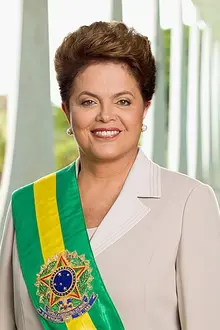
Brazilian president (2011–2016); New Development Bank president (since 2023)
Rousseff advocates social protection, strategic public investment and private enterprise within a developmental economy. She supports democratic institutions, privacy, multilateral cooperation and a low-carbon transition; her record also includes fiscal retrenchment, disputed development projects and shifting social-policy statements.
Closest ideologies
Based on the 53 statements where Dilma Rousseff has a known position.
- Democratic Socialism (94% match)
- Market Socialism (93% match)
- Agrarian Socialism (92% match)
- Eurocommunism (91% match)
- Andalusian nationalism (91% match)
Similar people
- Claudia Sheinbaum (93% alike)
- Luiz Inácio Lula da Silva (92% alike)
- Olof Palme (92% alike)
- Abdul El-Sayed (92% alike)
- Pedro Sánchez (91% alike)
Known positions
- Strongly: The UN should have authority to compel member states to comply with its decisions.
- Strongly: The state should be barred from executing people convicted of the gravest crimes, such as terrorism.
- Strongly: Government should support building nuclear power plants.
- Strongly: Political power should be split among separate branches and levels that can each limit the others.
- Strongly: Some race-based affirmative action should continue.
- Strongly: Government surveillance is not acceptable, even to prevent terrorism.
- Strongly: Democracy is best even when voters make poor choices.
- Strongly: Citizens should have a legal right to see government information.
- Strongly: The government should steer investment into industries it sees as key to the country's future.
- Strongly: Society should take active steps to make up for the harm done by past racial injustices.
- Strongly: Climate change calls for drastic action by governments.
- Strongly: A country should not be ready to use military force abroad without UN Security Council authorization.
- Strongly: People should have a direct role in making decisions where they work, live and study, rather than having those decisions made entirely for them.
- Strongly: The state should guarantee health care to everyone, whether it runs the services itself or pays for them.
- Strongly: World power should be distributed among several independent major powers, without one dominant power.
- Strongly: Whatever their circumstances, everyone should be able to count on the state for enough to live decently, through benefits, pensions or public services.
- Strongly: The government should let its political opponents organise, speak and compete for power.
- Strongly: The law should treat everyone as an equal, whatever their birth, sex, race or status.
- Strongly: News media should decide for themselves what they publish, whoever holds power.
- Strongly: Women should be able to vote and stand for office on the same terms as men.
- Strongly: The ruler should be subject to the country's laws.
- Leans: In the long run people should be free to live and work in any country.
- Leans: Housework and childcare should be provided as public services in place of being done within families.
- Leans: Two people of the same sex can legally marry each other.
- Leans: Government bodies should be specifically responsible for advancing gender equality.
- Leans: Publicly funded services such as hospitals and schools should be run by private companies and charities as well as the state.
- Leans: Major laws should be decided by citizens voting on them themselves.
- Leans: The country may allow more immigration than strict limits would permit.
- Leans: Private businesses and markets should run most of the economy, while the government supports people who cannot meet their basic needs.
- Leans: The farmers who work large estates should take ownership from the landowners, with the transfer compulsory if owners refuse.
- Leans: Governments should answer in law for past abuses by their security forces, including unlawful killings.
- Leans: Outside governments have no entitlement to interfere in another country's internal affairs for any purpose.
- Leans: New oil and gas wells and coal mines should be permitted.
- Leans: Governments should limit how money and investment can be moved across borders.
- Leans: Distance and nationality do not weaken the duty of the rich to help the poor abroad.
- Leans: The public should receive official records showing how government decisions were reached.
- Leans: Full-time work at the legal wage floor should pay enough to meet basic living costs.
- Leans: Laws, institutions and customs still favor men over women.
- Leans: The goods people consume should mainly come from nearby producers.
- Leans: Industries such as energy, rail and utilities should be owned by the state or public bodies, not private companies.
- Leans: Recreational drugs should be illegal for adults.
- Leans: Firms in a market economy need not be owned by the people who work in them.
- Leans: Direct action does not have to take the place of elections and parliament as the way to achieve political change.
- Leans: Ethnic diversity does not weaken a society's ability to hold together.
- Leans: Being free requires having the practical resources to act on one's choices, such as an adequate livelihood.
- Leans: Each country should hold ultimate authority over its natural resources, without foreign interests controlling them.
- Leans: Trade, finance and debt rules should be changed to give poorer countries a fairer share.
- Leans: The law should not assign different roles in public life on the basis of sex.
- Leans: Keeping a nation's inherited culture alive, including its language, customs and traditions, matters.
- Leans: Economic growth should not be limited for the sake of the environment.
- Leans: Poor countries should retain economic ties with rich countries.