Political Ideology Atlas · All ideologies · Take the test
Christian left
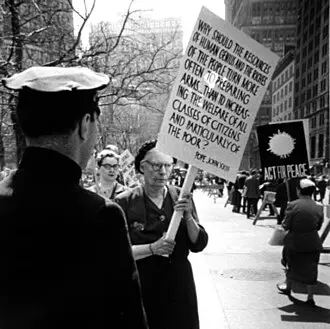
The Christian left reads the gospel as a call to social justice: care for the poor and oppressed, criticism of concentrated wealth, support for welfare and labour, peace-making and, in many strands, a consistent defence of life that also opposes capital punishment. It is a loose family of movements rather than one doctrine, and it divides on sexual ethics, abortion, and how far to adopt socialism or Marxist analysis.
What it stands for
- The state should be barred from executing people convicted of the gravest crimes, such as terrorism.
- Working together internationally should count at least as much as my country's own priorities.
- Distance and nationality do not weaken the duty of the rich to help the poor abroad.
- Making polluters pay a tax protects the environment more than setting rules for them does.
- Prisons should mainly help offenders rejoin society.
- Some race-based affirmative action should continue.
Key figures
- Walter Rauschenbusch: Baptist theologian whose Christianity and the Social Crisis (1907) is the clearest statement of the Social Gospel.
- Gustavo Gutiérrez: Peruvian priest who coined the term liberation theology in 1971.
- Dorothy Day: Co-founder of the Catholic Worker Movement, listed among the Christian left's leading activists.
Closest ideologies
- Spiritual left (96% match)
- Christian Socialism (92% match)
- Religious socialism (92% match)
- Cultural feminism (90% match)
- Ethical socialism (89% match)
People closest to it
- Albert Einstein (89% alike)
- Dilma Rousseff (89% alike)
- Pope Francis (88% alike)
- Tenzin Gyatso (88% alike)
- Mikhail Gorbachev (88% alike)
Key positions
- Strongly: The state should be barred from executing people convicted of the gravest crimes, such as terrorism.
- Strongly: Working together internationally should count at least as much as my country's own priorities.
- Strongly: Distance and nationality do not weaken the duty of the rich to help the poor abroad.
- Strongly: Making polluters pay a tax protects the environment more than setting rules for them does.
- Strongly: Prisons should mainly help offenders rejoin society.
- Strongly: Some race-based affirmative action should continue.
- Strongly: Governments may refuse permission for new oil, gas and coal extraction.
- Strongly: My country may keep a military no stronger than its rivals'.
- Strongly: Technology will not solve most of humanity's problems.
- Strongly: Government should serve people's good while respecting each person as more than an instrument of the state or community.
- Strongly: The foreign debts of poor countries should be written off, ending their obligation to repay them.
- Strongly: A law imposes no moral duty to obey it if the law is unjust.
- Strongly: A country may accept its present border with a neighbour even if it lost land in an old war.
- Strongly: Society should take active steps to make up for the harm done by past racial injustices.
- Strongly: Non-citizens should also be eligible for welfare benefits.
- Strongly: Human rights come from the nature that all human beings share.
- Strongly: Climate change calls for drastic action by governments.
- Strongly: Workers' pay should be settled in collective bargaining between their union and their employer.
- Strongly: Society may hold back technological change that would overturn established institutions.
- Strongly: Ordinary legal protections, such as the right not to be held without trial, should stay in force even in a national emergency.
- Strongly: University-educated people are not especially out of touch with the realities of ordinary life.
- Strongly: Nature matters for its own sake, not only because it is useful to people.
- Strongly: You can't reach a free, fair society by unfree or unfair means.
- Strongly: Defense should not rest with armed ordinary citizens in place of a standing force.
- Strongly: The law should impose no restrictions on strikes.
- Strongly: Religious institutions should be independent of government direction in their internal affairs.
- Strongly: Workers are better off for having labor unions.
- Strongly: Ethnic diversity does not weaken a society's ability to hold together.
- Strongly: A former empire should claim no special ties, leadership or sphere of influence in its old territories.
- Strongly: A nation does not need one main ethnic group: it can be made up of people of many ancestries.
- Strongly: Meeting poor people's needs should be the first consideration in public policy.
- Strongly: Constantly seeking additional possessions is harmful overall, despite any benefits it brings.
- Strongly: No one is better suited by nature to govern than anyone else.
- Strongly: The state should guarantee health care to everyone, whether it runs the services itself or pays for them.
- Strongly: The American Civil War arose mainly from slavery.
- Strongly: The presence of people of its nationality does not give a state a rightful claim to land beyond its borders.
- Strongly: Restoring a lost social order does not matter more than pursuing progress.
- Strongly: Private ownership is legitimate only insofar as it benefits society.
- Strongly: Very large concentrations of wealth threaten a free society.
- Strongly: My country should not send weapons to foreign insurgents, whatever it thinks of the governments they fight.
- Strongly: Politics should support people's spiritual well-being.
- Strongly: Whatever their circumstances, everyone should be able to count on the state for enough to live decently, through benefits, pensions or public services.
- Strongly: War does not strengthen a nation's character.
- Strongly: Being powerful does not mean a country should bring more land within its borders.
- Strongly: The government should let its political opponents organise, speak and compete for power.
- Strongly: Rapid economic development does not justify temporary restrictions on political freedom.
- Strongly: Naturalized citizens may hold public office as well as people born in the country.
- Strongly: A country may leave other nations to choose their own political systems.
- Strongly: A mother country and its colonies may trade with the outside world.
- Strongly: The law should treat everyone as an equal, whatever their birth, sex, race or status.
- Strongly: Most of the average difference in ability between racial groups does not come from genes.
- Strongly: Workers do not need a disciplined revolutionary party to lead them.
- Strongly: Religion does not offer illusory comfort for material suffering.
- Strongly: Looking after your own interests is not a moral good in itself.
- Strongly: No party's ideology should give it an exclusive right to lead the state.
- Strongly: We have a duty to leave the planet in good condition for those who come after us.
- Strongly: Religious conversion should be free of legal restriction.
- Strongly: Population growth does not mainly drive lasting poverty.
- Strongly: There is no deliberate plan behind immigration aimed at replacing the native population.
- Strongly: Some areas of life should remain outside state direction.
- Strongly: Private owners' choice of whom they deal with should be subject to some restrictions.
- Strongly: No society has the right to rule another for its supposed improvement, however advanced it is.
- Strongly: Marriage should retain legal recognition.
- Strongly: Women should be able to vote and stand for office on the same terms as men.
- Strongly: A workers' state does not need to suppress the old ruling class, even for a time.
- Strongly: The slaughter of cattle should be legal.
- Strongly: The state should not be managed the way a well-run business is.
- Strongly: Government should have other tasks besides protecting people from physical violence.
- Strongly: Collecting taxes does not in itself amount to stealing people's money.
- Strongly: Public policy should not be used to reduce the passing on of inherited disabilities.
- Strongly: Belonging to a religious minority is no ground for shoppers to stay away from a shop.
- Strongly: Political authority need not rest on oaths of loyalty sworn to a lord.
- Strongly: Voting should not be limited to members of one ethnic group.
- Strongly: Overseas territories need not be run mainly for the ruling country's economic benefit.
- Strongly: People without property should also have the right to vote.
- Strongly: Public spaces such as schools and facilities should not be separated by race under the law.
- Strongly: Courts need not be handed over to private businesses.
- Strongly: Suspected drug dealers should never be put to death without a trial.
- Strongly: Museums, libraries and other inherited culture should not be destroyed, even when they stand in the way of new creation.
- Strongly: Humanity would gain nothing by going back to living off hunting and gathering.
- Leans: Protecting nature can mean accepting less economic growth.
- Leans: Credit should come from banks owned by their users, charging only the costs of running the service, in place of profit-making banks.
- Leans: In the society we should aim for, a person's needs should determine their share of goods.
- Leans: When people's freedom to do something harms the environment, the law should limit that freedom.
- Leans: Cultures do not rank above one another in overall worth.
- Leans: Firms should compete in markets, but be owned by the people who work in them.
- Leans: Capitalist exchange makes people's economic relationships look like relationships among the goods they trade.
- Leans: Every religious leadership role open to men should be open to women under the same eligibility rules.
- Leans: A poor country should rely on foreign money at least as much as on its own resources.
- Leans: Tackling oppression requires a combined approach to its overlapping forms, such as racism, sexism and class oppression.
- Leans: The country may allow more immigration than strict limits would permit.
- Leans: Private businesses and markets should run most of the economy, while the government supports people who cannot meet their basic needs.
- Leans: Capitalism did not build the productive power and wealth that a better society can rest on.
- Leans: Force is for self-defence alone.
- Leans: The farmers who work large estates should take ownership from the landowners, with the transfer compulsory if owners refuse.
- Leans: Governments should answer in law for past abuses by their security forces, including unlawful killings.
- Leans: People able to work should be eligible for welfare benefits without a work requirement.
- Leans: Wage work cuts people off from the meaning and creativity of what they make.
- Leans: Trade unions should control their own affairs without state direction.
- Leans: Inherited religious teachings should be understood anew in light of present conditions.
- Leans: Rich people have an obligation to help those worse off than they are.
- Leans: Countries should maintain only the weapons needed for national safety.
- Leans: Property should belong to many people in small holdings.
- Leans: Environmental agencies should still regulate pollution, not leave it to compensation lawsuits for proven damage.
- Leans: What things are worth comes from the work put into them.
- Leans: Politics should prioritise a single common good identified by reasoning over compromises among organised interests.
- Leans: Society should follow a third course beyond capitalism and communism.
- Leans: Full-time work at the legal wage floor should pay enough to meet basic living costs.
- Leans: The global economic system keeps poorer countries poor by directing their wealth toward richer countries.
- Leans: Laws, institutions and customs still favor men over women.
- Leans: The goods people consume should mainly come from nearby producers.
- Leans: People should want as few material things as possible.
- Leans: Defeating communism should not take priority over coexistence with it.
- Leans: It is morally acceptable to kill animals for food while minimising their suffering.
- Leans: Within a country, the richer regions grew rich by draining the poorer ones, much as colonial powers drained their colonies.
- Leans: Whoever uses land or resources owes the rest of society a share of their value.
- Leans: One worker's pay should cover the living needs of that worker's family, including the worker.
- Leans: Political freedom can last without economic freedom.
- Leans: Workers' solidarity with workers in other countries should count at least as much as solidarity with their own nation.
- Leans: Government should impose strict rules on how corporations operate.
- Leans: Some things are right or wrong for everyone, in every culture and era.
- Leans: A person loses freedom from being at another person's mercy, even if that power is never exercised.
- Leans: People are entitled to resist a ruler's unconstitutional exercise of power.
- Leans: How someone turns out is shaped more by upbringing, society and experience than by the traits they are born with.
- Leans: No nuclear weapons, ours or an ally's, should be stationed here.
- Leans: Owners' rights to their property need not be protected against being overridden for public goals.
- Leans: Employers and workers should treat each other as partners whose cooperation comes before conflict, even where their interests differ.
- Leans: The law may forbid medical help for terminally ill adults who want to end their lives.
- Leans: A country should not be ready to use military force abroad without UN Security Council authorization.
- Leans: Officials decide what gets made and who gets it at least as well as prices and competition do.
- Leans: Economic accounts should exclude ecosystems from capital valuation.
- Leans: People should have a direct role in making decisions where they work, live and study, rather than having those decisions made entirely for them.
- Leans: Where they conflict, religious faith should count for at least as much as evidence and reasoning.
- Leans: Society needs government of some kind.
- Leans: A country should reject spending cuts demanded in return for loans and set its own course.
- Leans: Being free requires having the practical resources to act on one's choices, such as an adequate livelihood.
- Leans: Private charity does not help people in poverty better than government programs do.
- Leans: Political independence means little unless the economic and property system is also transformed.
- Leans: Nobody should hold a special rank by birth, such as a noble title, a hereditary crown or a caste position, or the special rights attached to one.
- Leans: Animals can suffer, and that suffering counts in how we treat them.
- Leans: In the long run people should still produce and share using money.
- Leans: Work may stay divided into separate specialized jobs held by different people.
- Leans: Spouses should make marital decisions as equals.
- Leans: Families may keep the main responsibility for housework and childcare.
- Leans: A person's right to hold land need not end when they stop using it.
- Leans: Industrial society has done at least as much good as harm to humanity.
- Leans: Public school science classes may teach evolution on its own.
- Leans: The existing governing institutions should be retained, even if their personnel, policies or procedures change.
- Leans: Population growth may be left to run its course.
- Leans: Trade, finance and debt rules should be changed to give poorer countries a fairer share.
- Leans: Racism is still the main obstacle to the advancement of disadvantaged racial groups.
- Leans: The law should not assign different roles in public life on the basis of sex.
- Leans: Racial groups should not each organise to defend distinct political interests of their own.
- Leans: Grown children owe care to parents who need it.
- Leans: Class struggle does not continue under socialism.
- Leans: Income from useful work should be rewarded ahead of income from merely owning property.
- Leans: Local community ownership of the means of production should not replace private or state ownership.
- Leans: A socialist state with hostile neighbours need not build up its state power.
- Leans: An armed minority's actions are incapable of bringing about the conditions for a broader revolutionary uprising.
- Leans: Businesses gain too much influence over government policy from their lobbying.
- Leans: Groups have rights of their own.
- Leans: Individual farms should not give way to joint cultivation by groups of farmers.