Political Ideology Atlas · All people · Take the test
North America · born 1902, historical
Strom Thurmond
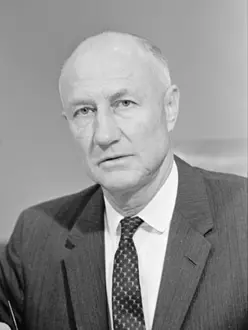
South Carolina governor (1947–1951) and U.S. senator (1954–2003, with a brief interruption in 1956)
Thurmond ran for president in 1948 on a states’ rights and segregationist platform. In the Senate he opposed the landmark civil rights legislation of the 1950s and 1960s, then backed the 1982 Voting Rights Act extension. His later Senate record included support for NATO enlargement, federal capital punishment and a constitutional balanced-budget requirement.
Closest ideologies
Based on the 38 statements where Strom Thurmond has a known position.
- New Right (93% match)
- Anti-communism (92% match)
- Creole nationalism (90% match)
- Cultural conservatism (90% match)
- Trumpism (88% match)
Similar people
- Charles-Maurice de Talleyrand-Périgord (92% alike)
- John Adams (92% alike)
- Sarah Palin (91% alike)
- William F. Buckley Jr. (90% alike)
- Margaret Thatcher (89% alike)
Known positions
- Strongly: Law should require people of different races to use separate public spaces, such as schools and public facilities.
- Strongly: The political goal should be victory over communism ahead of accommodation with it.
- Strongly: My country's military strength should exceed that of its rivals.
- Strongly: A country with nuclear weapons should keep them for as long as its rivals retain theirs.
- Strongly: Heirs to large fortunes may keep most of what they inherit.
- Strongly: The worst crimes can be punished by death.
- Strongly: A country may join permanent military alliances.
- Strongly: The existing governing institutions should be retained, even if their personnel, policies or procedures change.
- Strongly: Political decisions should rest with the smallest local community able to handle them, with wider authorities handling matters that need a wider reach.
- Strongly: Some areas of life should remain outside state direction.
- Strongly: Countries should keep their armed forces.
- Leans: My country should give weapons to foreign insurgents fighting governments it regards as enemies.
- Leans: People of different races should be discouraged from forming a family together, whether through marriage or having children.
- Leans: Countries should be able to decide on military action overseas without first getting the Security Council's authorization.
- Leans: My country should possess its own nuclear arsenal with independent authority over its use.
- Leans: Governments should actively help liberal democracy to spread in other countries.
- Leans: It is acceptable for the government to monitor people when that helps prevent terrorism.
- Leans: My country may join a military alliance led by one of the great powers.
- Leans: Government borrowing should be subject to binding legal limits.
- Leans: Elected politicians should serve only a small number of terms.
- Leans: New oil and gas wells and coal mines should be permitted.
- Leans: Allies are bound to defend one another against armed attack.
- Leans: Farmers should get price floors, state buying or cheap credit to keep them secure.
- Leans: Abortion should be illegal in most cases.
- Leans: Public authorities should help get new facilities built to generate electricity from nuclear energy.
- Leans: The government should be able to require citizens to serve in the military.
- Leans: Some institutional ties between government and religion are acceptable.
- Leans: State schools need not steer pupils away from belief in God.
- Leans: Government should have other tasks besides protecting people from physical violence.
- Leans: Religious values and institutions should shape laws, schools and public life.
- Leans: Keeping a nation's inherited culture alive, including its language, customs and traditions, matters.
- Leans: Marriage should retain legal recognition.
- Leans: The law should not extend marriage to same-sex couples.
- Leans: Schools should cultivate patriotic feeling: loyalty to and pride in the nation, expressed for example through respect for its flag and anthem.
- Leans: The head of state should not be elected directly by the voters.