Political Ideology Atlas · All people · Take the test
South & Southeast Asia · born 1861, historical
Rabindranath Tagore
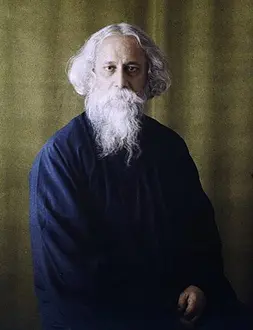
Bengali poet, philosopher and educator (1861-1941)
Tagore, a Bengali poet and educator, opposed British rule over India while rejecting nation-worship, which he called the organised selfishness of a people and a threat to humanity. He held that human relations rest on co-operation and spiritual unity rather than competition and power, favoured village self-help and education through Santiniketan and Sriniketan, and criticised Gandhi's charkha campaign as a blind faith. His recorded positions are mostly about nationalism, empire, race and caste, and education.
Closest ideologies
Based on the 29 statements where Rabindranath Tagore has a known position.
- Đilasism (93% match)
- Cultural feminism (93% match)
- African feminism (93% match)
- Homaranismo (92% match)
- Postcolonial feminism (92% match)
Similar people
- Aldous Huxley (91% alike)
- Martin Luther King Jr. (91% alike)
- Malcolm X (90% alike)
- Allen Ginsberg (90% alike)
- Albert Einstein (89% alike)
Known positions
- Strongly: Schools should not cultivate patriotic feeling, meaning loyalty to and pride in the nation.
- Strongly: Belonging to a nation does not give people's lives enduring meaning through a sacred tie to earlier and later generations.
- Strongly: Working together internationally should count at least as much as my country's own priorities.
- Strongly: Government should serve people's good while respecting each person as more than an instrument of the state or community.
- Strongly: My country may keep a military no stronger than its rivals'.
- Strongly: A nation can be made up of several ethnic groups with none forming most of its people.
- Strongly: Being powerful does not mean a country should bring more land within its borders.
- Strongly: The government should let its political opponents organise, speak and compete for power.
- Strongly: At least one other influence has contributed as much to human progress as rivalry between peoples has.
- Strongly: The law should treat everyone as an equal, whatever their birth, sex, race or status.
- Strongly: Armed conflict does not generally make a people stronger in character.
- Strongly: Politics should support people's spiritual well-being.
- Strongly: An armed minority's actions are incapable of bringing about the conditions for a broader revolutionary uprising.
- Strongly: A mother country and its colonies may trade with the outside world.
- Strongly: Looking after your own interests is not a moral good in itself.
- Strongly: Some areas of life should remain outside state direction.
- Strongly: No society has the right to rule another for its supposed improvement, however advanced it is.
- Strongly: Public spaces such as schools and facilities should not be separated by race under the law.
- Strongly: Overseas territories need not be run mainly for the ruling country's economic benefit.
- Leans: The farmers who work large estates should take ownership from the landowners, with the transfer compulsory if owners refuse.
- Leans: Employers and workers should treat each other as partners whose cooperation comes before conflict, even where their interests differ.
- Leans: Political decisions should rest with the smallest local community able to handle them, with wider authorities handling matters that need a wider reach.
- Leans: When companies press officials for policies they want, they gain more sway over public decisions than they should have.
- Leans: Parties and offices should cut across religious lines.
- Leans: Some things are right or wrong for everyone, in every culture and era.
- Leans: Laws, institutions and customs still favor men over women.
- Leans: Nature matters for its own sake, not only because it is useful to people.
- Leans: You can't reach a free, fair society by unfree or unfair means.
- Leans: Making progress deserves at least as much weight as reviving an earlier way of organizing society.