Political Ideology Atlas · All people · Take the test
Europe · born 1806, historical
John Stuart Mill
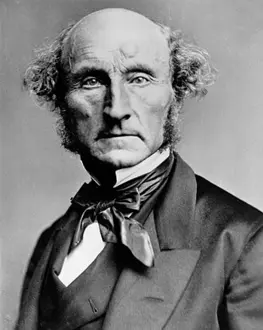
British philosopher, economist and Liberal MP (1806–1873)
Mill was a classical-liberal utilitarian who defended individual liberty limited only by harm to others, representative government with proportional representation, and equal rights for women. In political economy he favoured laisser-faire as a general rule with wide exceptions, taxation of unearned wealth, trade unions and peasant property, and in later life looked to worker co-operatives and open experiments in socialism while rejecting central planning. He also held that benevolent despotism could be legitimate over peoples he deemed barbarians.
Closest ideologies
Based on the 83 statements where John Stuart Mill has a known position.
- Pan-Africanism (87% match)
- Liberalism in the United States (87% match)
- Jewish Autonomism (87% match)
- Andalusian nationalism (87% match)
- Progressivism (87% match)
Similar people
- Justin Trudeau (89% alike)
- Tammy Baldwin (89% alike)
- Victor Hugo (89% alike)
- Howard Dean (89% alike)
- John Rawls (89% alike)
Known positions
- Strongly: Temporary rule by a more developed society is justified when it helps the ruled to progress.
- Strongly: Population growth should be deliberately held down.
- Strongly: Choices that harm no one else should never be crimes.
- Strongly: People should be encouraged to live in ways that differ from social custom.
- Strongly: Communities should be free to choose their own economic arrangements, and a free society has no fixed blueprint for its economy.
- Strongly: Civil servants should be recruited according to their performance in competitive examinations.
- Strongly: The representative legislature should have the final say on legislation.
- Strongly: Fewer tariffs and trade barriers make all countries better off over time.
- Strongly: A party with a fifth of the votes should get about a fifth of the seats.
- Strongly: After members debate and adopt a party decision, those who opposed it should not have to help implement it.
- Strongly: Those who inherit a large fortune should hand over a big share of it in tax.
- Strongly: Businesses should belong to the people who work in them, for example as cooperatives.
- Strongly: Property should belong to many people in small holdings.
- Strongly: The worst crimes can be punished by death.
- Strongly: A person's body belongs entirely to that person.
- Strongly: Laws, institutions and customs still favor men over women.
- Strongly: Ordinary legal protections, such as the right not to be held without trial, should stay in force even in a national emergency.
- Strongly: Hate speech should be legal.
- Strongly: An elected legislature must approve the government's budget before the government spends public money.
- Strongly: The people living in a disputed territory should choose by voting which country it joins.
- Strongly: Spouses should make marital decisions as equals.
- Strongly: The American Civil War arose mainly from slavery.
- Strongly: The law should not assign different roles in public life on the basis of sex.
- Strongly: Private ownership is legitimate only insofar as it benefits society.
- Strongly: An economy directed by a central plan is not capable of working better than one directed by market exchange.
- Strongly: Political violence is sometimes justified.
- Strongly: Income from useful work should be rewarded ahead of income from merely owning property.
- Strongly: The law should treat everyone as an equal, whatever their birth, sex, race or status.
- Strongly: Being the first to use force can be right, depending on what it is meant to achieve.
- Strongly: Most of the average difference in ability between racial groups does not come from genes.
- Strongly: Lending money at interest should be legal.
- Strongly: At least some revolutions have been justified.
- Strongly: Daughters and widows should inherit and own land on the same terms as sons and husbands.
- Strongly: Publicly insulting a religion's sacred beliefs should be left outside the criminal law.
- Strongly: Women should be able to vote and stand for office on the same terms as men.
- Strongly: Society needs government of some kind.
- Strongly: The ruler should be subject to the country's laws.
- Strongly: Collecting taxes does not in itself amount to stealing people's money.
- Strongly: Overseas territories need not be run mainly for the ruling country's economic benefit.
- Leans: Population growth is the leading explanation of persistent poverty.
- Leans: War develops virtues in a nation, such as courage and discipline.
- Leans: Protecting nature can mean accepting less economic growth.
- Leans: The same income-tax percentage should apply across taxable income levels.
- Leans: People should lose their right to a plot of land when they no longer use it.
- Leans: Public education money should follow the child to whichever school the family picks.
- Leans: People should live and work in communities that own land and goods together and govern themselves.
- Leans: Specialists should have more weight in decisions than public opinion.
- Leans: Prices and competition generally decide better than officials what gets made and who gets it.
- Leans: Taxing the value of land, not work or trade, should fund most of government.
- Leans: Adults may legally buy and use drugs such as cannabis, possibly with regulation.
- Leans: Ideas of what men and women are like come mostly from culture, not biology.
- Leans: Governments should answer in law for past abuses by their security forces, including unlawful killings.
- Leans: The legal minimum wage need not be enough for a full-time worker to live on.
- Leans: A country has the right to stop a region becoming independent by using its military.
- Leans: Political power should be split among separate branches and levels that can each limit the others.
- Leans: Tariffs should not be used to protect domestic industry from foreign competition.
- Leans: Industries such as energy, rail and utilities should be owned by the state or public bodies, not private companies.
- Leans: People able to work should get welfare benefits only in return for some work, such as a job or a work scheme.
- Leans: The government should be able to require citizens to serve in the military.
- Leans: Political decisions should rest with the smallest local community able to handle them, with wider authorities handling matters that need a wider reach.
- Leans: Whoever uses land or resources owes the rest of society a share of their value.
- Leans: Democracy is best even when voters make poor choices.
- Leans: Major laws should not be decided by direct votes of citizens.
- Leans: Workers' pay should be settled in collective bargaining between their union and their employer.
- Leans: People are entitled to resist a ruler's unconstitutional exercise of power.
- Leans: How someone turns out is shaped more by upbringing, society and experience than by the traits they are born with.
- Leans: Owners' rights to their property need not be protected against being overridden for public goals.
- Leans: Employers and workers should treat each other as partners whose cooperation comes before conflict, even where their interests differ.
- Leans: Basic local services, such as water, hospitals and local transport, should be publicly owned and run.
- Leans: The law should impose no restrictions on strikes.
- Leans: Workers are better off for having labor unions.
- Leans: Private charity does not help people in poverty better than government programs do.
- Leans: Constantly seeking additional possessions is harmful overall, despite any benefits it brings.
- Leans: We have a duty to leave the planet in good condition for those who come after us.
- Leans: Whatever their circumstances, everyone should be able to count on the state for enough to live decently, through benefits, pensions or public services.
- Leans: Looking after your own interests is not a moral good in itself.
- Leans: A people with a shared national identity is entitled to its own self-governing state.