Political Ideology Atlas · All people · Take the test
North America · born 1800, historical
John Brown
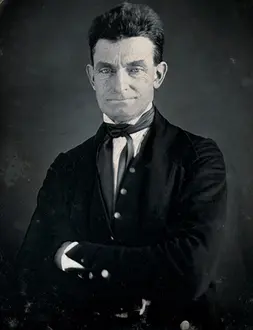
American abolitionist; led the Pottawatomie killings (1856) and the Harpers Ferry raid (1859)
Brown was an evangelical Christian who held that slavery was a war against the enslaved and that it should be ended by force. He led killings in Kansas and an armed raid on a federal armory, and drew up a provisional constitution for a free government of the oppressed. His surviving writings address slavery, religion and the organization of his provisional government, and say little about wider economic or foreign policy.
Closest ideologies
Based on the 34 statements where John Brown has a known position.
- Patriot (American Revolution) (94% match)
- Localism (politics) (92% match)
- Social credit (92% match)
- Pancasila (91% match)
- Communitarianism (90% match)
Similar people
- The Buddha (92% alike)
- Óscar Romero (92% alike)
- Hassan Rouhani (91% alike)
- Aurobindo Ghosh (90% alike)
- Cesar Chavez (90% alike)
Known positions
- Strongly: A woman who has sex outside marriage is doing something wrong.
- Strongly: The law should allow people outside state forces to possess weapons.
- Strongly: The law should treat everyone as an equal, whatever their birth, sex, race or status.
- Strongly: The reassurance people draw from faith in the face of material hardship need not be founded on false hopes.
- Strongly: Police forces should continue to exist.
- Strongly: Countries should keep their armed forces.
- Strongly: The ruler should be subject to the country's laws.
- Strongly: Voting should not be limited to members of one ethnic group.
- Strongly: People without property should also have the right to vote.
- Leans: An armed minority's actions are capable of bringing about conditions that enable a broader revolutionary uprising.
- Leans: Laws should follow religious texts.
- Leans: People of each race should organize politically as a group to stand up for concerns specific to them.
- Leans: The fact that something is law is not, by itself, a moral reason to obey it.
- Leans: Defense should rest with armed ordinary citizens, not a standing force.
- Leans: People seeking political change should act directly—for example, with strikes, boycotts or occupations—instead of pursuing change through elections and parliaments.
- Leans: State schools may teach pupils a religious faith, for example through lessons in its beliefs and practice.
- Leans: Prisons should focus at least as much on punishment as on rehabilitation.
- Leans: The directly elected parliament should be a legislature's only chamber.
- Leans: Political power should be split among separate branches and levels that can each limit the others.
- Leans: Some institutional ties between government and religion are acceptable.
- Leans: The existing governing institutions should be retained, even if their personnel, policies or procedures change.
- Leans: People should want as few material things as possible.
- Leans: Real command of the military may rest with someone other than the head of state.
- Leans: Religious values and institutions should shape laws, schools and public life.
- Leans: An electorate should choose the head of state, either directly or through elected representatives.
- Leans: Owners' rights to their property need not be protected against being overridden for public goals.
- Leans: Where they conflict, religious faith should count for at least as much as evidence and reasoning.
- Leans: Parties and offices should cut across religious lines.
- Leans: A law imposes no moral duty to obey it if the law is unjust.
- Leans: Politics should support people's spiritual well-being.
- Leans: Meeting poor people's needs should be the first consideration in public policy.
- Leans: Constantly seeking additional possessions is harmful overall, despite any benefits it brings.