Political Ideology Atlas · All people · Take the test
Europe · born 1844, historical
Friedrich Nietzsche
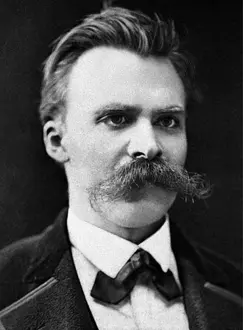
German philosopher and philologist (1844–1900)
Nietzsche attacked democracy, equality of rights, socialism, Christianity and the pity morality as signs of decline, and called for an aristocratic order of rank and new philosophers who would rear a higher type of man. He also scorned German nationalism, the Reich and anti-Semitism, wanted a united Europe of 'good Europeans', and treated war and struggle as sources of strength. His aphorisms are often ironic and ambiguous, so many policy questions have no stated answer.
Closest ideologies
Based on the 58 statements where Friedrich Nietzsche has a known position.
- Positivism (79% match)
- Manifest destiny (78% match)
- Conservatism (77% match)
- Religious anti-Zionism (77% match)
- Dark Enlightenment (77% match)
Similar people
- Auguste Comte (80% alike)
- Elon Musk (78% alike)
- Alexis de Tocqueville (77% alike)
- Marcus Aurelius (77% alike)
- Peter Thiel (77% alike)
Known positions
- Strongly: Women's political rights may differ from men's.
- Strongly: Looking after your own interests is right, not just allowed.
- Strongly: The law may treat people differently according to such things as birth, sex, race and status.
- Strongly: War develops virtues in a nation, such as courage and discipline.
- Strongly: Some people are better suited by nature to govern.
- Strongly: One spouse may have more authority than the other within a marriage.
- Strongly: People should be encouraged to live in ways that differ from social custom.
- Strongly: Special ranks held by birth, such as noble titles and hereditary crowns, may continue to exist.
- Strongly: Schools should not cultivate patriotic feeling, meaning loyalty to and pride in the nation.
- Strongly: Terminally ill adults should be able to get medical help to die.
- Strongly: No moral truths hold across all cultures.
- Strongly: Having a human nature in common is not what gives people their rights.
- Strongly: Democracy is not the best form of government when voters choose badly.
- Strongly: Belonging to the nation does not tie a person's life to a sacred community that goes on after their death.
- Strongly: Working together internationally should count at least as much as my country's own priorities.
- Strongly: Religious values and institutions should not have a major part in shaping laws, schools and public life.
- Strongly: Women's equality can be fully achieved without transforming the economic system.
- Strongly: Ending a marriage should not be possible without proving fault.
- Strongly: Armed forces may sometimes be used for purposes beyond defending the country against attack.
- Strongly: Some cultures are superior to others.
- Strongly: Constantly seeking additional possessions is harmful overall, despite any benefits it brings.
- Strongly: Equality of outcomes should not be society's goal.
- Strongly: The holy scripture of one's faith is not God's own error-free word.
- Strongly: Political violence is sometimes justified.
- Strongly: Being the first to use force can be right, depending on what it is meant to achieve.
- Strongly: Minority groups are not, as groups, secretly plotting to harm the nation.
- Strongly: Some areas of life should remain outside state direction.
- Strongly: Countries should keep their armed forces.
- Strongly: Final authority over a state's laws need not belong to its most senior religious scholars.
- Leans: Living privately away from public affairs is a better way to live than taking part in politics.
- Leans: Public policy, such as sterilization or incentives, should reduce the passing on of inherited disabilities.
- Leans: Industrial society has done more harm than good to humanity.
- Leans: A person's sex should affect the public roles legally assigned to them.
- Leans: Rivalry and conflict between nations or peoples do more than anything else to drive humanity forward.
- Leans: Countries should hand part of their decision-making power to a union of nations, such as the European Union.
- Leans: Freedom does not require the material means to exercise it.
- Leans: Labor unions do not necessarily make workers better off.
- Leans: The country would benefit from a strong leader with the power to act despite deadlock among its political institutions.
- Leans: What gets treated as fact or expert knowledge reflects the interests of whoever has power, not a neutral search for truth.
- Leans: Collective goals can justify treating a person merely as a tool.
- Leans: Wage work cuts people off from the meaning and creativity of what they make.
- Leans: People should want as few material things as possible.
- Leans: The government should be able to require citizens to serve in the military.
- Leans: A healthy society depends on the traditional family, such as a married mother and father raising their children.
- Leans: A nation does not need one main ethnic group: it can be made up of people of many ancestries.
- Leans: Political authority does not ultimately come from God.