Political Ideology Atlas · All people · Take the test
Europe · born 1858, historical
Émile Durkheim
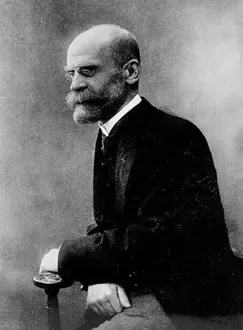
French sociologist and theorist of morality, education and political institutions
Durkheim defended individual dignity through social solidarity, a deliberative state and occupational institutions. He supported secular moral education and criticized conquest, while defending strong marital obligations and opposing divorce by mutual consent.
Closest ideologies
Based on the 44 statements where Émile Durkheim has a known position.
- Jewish Autonomism (93% match)
- Pan-Americanism (92% match)
- Communitarianism (92% match)
- Green Zionism (92% match)
- Pancasila (92% match)
Similar people
- Satyendra Nath Bose (94% alike)
- Rajiv Gandhi (92% alike)
- Tulsi Gabbard (92% alike)
- Robert F. Kennedy (91% alike)
- John Quincy Adams (91% alike)
Known positions
- Strongly: State schools should not teach religion.
- Strongly: What things are worth does not come from the work put into them.
- Strongly: Ending a marriage should not be possible without proving fault.
- Strongly: Government should serve people's good while respecting each person as more than an instrument of the state or community.
- Strongly: A people with a shared national identity is entitled to its own self-governing state.
- Strongly: Being powerful does not mean a country should bring more land within its borders.
- Strongly: The law should treat everyone as an equal, whatever their birth, sex, race or status.
- Strongly: Looking after your own interests is not a moral good in itself.
- Strongly: Work may stay divided into separate specialized jobs held by different people.
- Strongly: Marriage should retain legal recognition.
- Strongly: Society needs government of some kind.
- Strongly: Government should have other tasks besides protecting people from physical violence.
- Leans: Officially recognized bodies representing employers and workers should negotiate wages together.
- Leans: People should gain political representation through social bodies such as families, local communities and occupational associations instead of political parties.
- Leans: Where they conflict, evidence and reasoning should count for more than faith, God, revelation or scripture.
- Leans: Cultures do not rank above one another in overall worth.
- Leans: No moral truths hold across all cultures.
- Leans: Private businesses and markets should run most of the economy, while the government supports people who cannot meet their basic needs.
- Leans: Delegates selected by councils at one level should select officeholders at higher levels.
- Leans: Government should maintain a strict institutional separation from religion.
- Leans: Working together internationally should count at least as much as my country's own priorities.
- Leans: A woman who has sex outside marriage is doing something wrong.
- Leans: Democracy is best even when voters make poor choices.
- Leans: Major laws should not be decided by direct votes of citizens.
- Leans: Government should impose strict rules on how corporations operate.
- Leans: Ordinary legal protections, such as the right not to be held without trial, should stay in force even in a national emergency.
- Leans: You can't reach a free, fair society by unfree or unfair means.
- Leans: Employers and workers should treat each other as partners whose cooperation comes before conflict, even where their interests differ.
- Leans: A healthy society depends on the traditional family, such as a married mother and father raising their children.
- Leans: Being free requires having the practical resources to act on one's choices, such as an adequate livelihood.
- Leans: No society has the right to rule another for its supposed improvement, however advanced it is.
- Leans: Some areas of life should remain outside state direction.
- Leans: The state may restrict what adults do for reasons other than preventing harm to others.
- Leans: Equality of outcomes should not be society's goal.
- Leans: Restoring a lost social order does not matter more than pursuing progress.
- Leans: Rulers have a right to rule only because the people they rule have agreed to it.
- Leans: Keeping a nation's inherited culture alive, including its language, customs and traditions, matters.
- Leans: War does not strengthen a nation's character.
- Leans: Income from useful work should be rewarded ahead of income from merely owning property.
- Leans: The government should let its political opponents organise, speak and compete for power.
- Leans: Laws should not be required to follow religious texts.
- Leans: Religion does not offer illusory comfort for material suffering.
- Leans: A government needs more than fair elections to be democratic.