Political Ideology Atlas · All people · Take the test
Europe · born 1729, historical
Edmund Burke
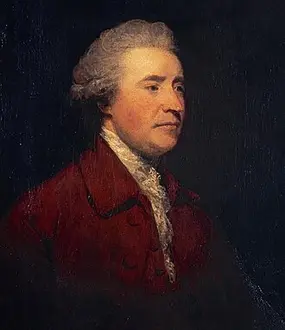
Anglo-Irish statesman, MP and political thinker (1729–1797)
Burke defended the British balanced constitution, an established church, hereditary rank and the security of property, and argued that society is a partnership of the living, the dead and the unborn. He favoured gradual repair over abstract rights, opposed pure democracy and the French Revolution, and backed free commerce, Catholic relief, Irish trade and the impeachment of Warren Hastings for arbitrary power.
Closest ideologies
Based on the 47 statements where Edmund Burke has a known position.
- Dominion theology (87% match)
- Sarmatism (86% match)
- Traditionalist conservatism (86% match)
- Social conservatism (86% match)
- Monarchism in Brazil (85% match)
Similar people
- Ted Cruz (88% alike)
- Pete Hegseth (87% alike)
- Grover Cleveland (87% alike)
- Charles-Maurice de Talleyrand-Périgord (86% alike)
- Matt Gaetz (85% alike)
Known positions
- Strongly: Someone who actually governs a state may hand that power on to their own child, whether as a king or as a republic's leader.
- Strongly: God is the ultimate source of the right to exercise political authority.
- Strongly: A free society can coexist with very large concentrations of wealth.
- Strongly: It is acceptable for a monarch who inherits the throne to be the country's symbolic head while others govern.
- Strongly: Some people are better suited by nature to govern.
- Strongly: Special ranks held by birth, such as noble titles and hereditary crowns, may continue to exist.
- Strongly: The national church is recognised in law above other religions.
- Strongly: The best government combines a governing role for a few with a governing role for the wider population.
- Strongly: Prices and competition generally decide better than officials what gets made and who gets it.
- Strongly: The head of state should not have to be chosen by election.
- Strongly: Owners' rights to their property should almost never be overridden, even for public goals.
- Strongly: Changes to society should be introduced a little at a time.
- Strongly: Democracy is not the best form of government when voters choose badly.
- Strongly: The legal minimum wage need not be enough for a full-time worker to live on.
- Strongly: Besides its directly elected parliament, a legislature should have a second chamber, such as a senate.
- Strongly: Religious values and institutions should shape laws, schools and public life.
- Strongly: Politics should prioritise a single common good identified by reasoning over compromises among organised interests.
- Strongly: Some institutional ties between government and religion are acceptable.
- Strongly: Foreign powers sometimes have a right to intervene in a country's internal affairs.
- Strongly: Large landed estates should not be compulsorily transferred to the people who farm them.
- Strongly: Belonging to the nation ties a person's life to a sacred community that goes on after their death.
- Strongly: Governments should not fix maximum prices for essential foods, even in times of scarcity.
- Strongly: Some things are right or wrong for everyone, in every culture and era.
- Strongly: Rulers must act under lasting, publicly known laws administered by recognised courts.
- Strongly: Equality of outcomes should not be society's goal.
- Strongly: Religion does not offer illusory comfort for material suffering.
- Strongly: Public offices may be filled by methods other than drawing lots.
- Strongly: The ruler should be subject to the country's laws.
- Leans: The state should not promise everyone enough to live decently.
- Leans: The fact that something is law is not, by itself, a moral reason to obey it.
- Leans: Voluntary charitable help does a better job of helping people in poverty than government aid does.
- Leans: The representative legislature should have the final say on legislation.
- Leans: Fewer tariffs and trade barriers make all countries better off over time.
- Leans: Rich people have an obligation to help those worse off than they are.
- Leans: Ending a marriage should not be possible without proving fault.
- Leans: Heirs to large fortunes may keep most of what they inherit.
- Leans: A law imposes no moral duty to obey it if the law is unjust.
- Leans: Major laws should not be decided by direct votes of citizens.
- Leans: A constitution does not have to be drafted by an assembly elected for that purpose.
- Leans: Ordinary legal protections, such as the right not to be held without trial, should stay in force even in a national emergency.
- Leans: People are entitled to resist a ruler's unconstitutional exercise of power.
- Leans: Today's nation is the same people as its ancient and medieval forebears.
- Leans: A healthy society depends on the traditional family, such as a married mother and father raising their children.
- Leans: Keeping a nation's inherited culture alive, including its language, customs and traditions, matters.
- Leans: At least some revolutions have been justified.
- Leans: The law should treat everyone as an equal, whatever their birth, sex, race or status.