Political Ideology Atlas · All ideologies · Take the test
Technological utopianism
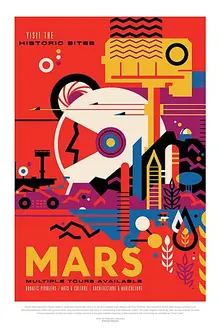
Technological utopianism holds that technology and growth can solve material problems and lead toward abundance. Its market-led strand, in the Californian ideology and in the techno-optimist manifesto, pairs that faith with free markets, hostility to state regulation and rejection of degrowth. The socialist strand that Josephson documents put industry and technology at the centre of a planned, collectivised route to communist plenty, so the strands disagree on the state and on ownership.
What it stands for
- Production should not be reorganised around what people need in place of what yields a profit.
- Spreading humanity into space should be one of the main things civilization works toward.
- Science and technology will in time fix most of what goes wrong for people.
- People may want more than the fewest material things possible.
- Opening markets across borders leaves every trading country better off over time.
- Society should push new technology forward faster, even where it overturns established institutions.
Key works
- The Techno-Optimist Manifesto, Marc Andreessen
Closest ideologies
- Technolibertarianism (92% match)
- Levellers (90% match)
- Classical liberalism (90% match)
- Neoliberalism (90% match)
- Chicago school of economics (90% match)
People closest to it
- Voltaire (89% alike)
- Don Bacon (88% alike)
- María Corina Machado (88% alike)
- Jeremy Bentham (87% alike)
- Milton Friedman (86% alike)
Key positions
- Strongly: Production should not be reorganised around what people need in place of what yields a profit.
- Strongly: Spreading humanity into space should be one of the main things civilization works toward.
- Strongly: Science and technology will in time fix most of what goes wrong for people.
- Strongly: People may want more than the fewest material things possible.
- Strongly: Opening markets across borders leaves every trading country better off over time.
- Strongly: Society should push new technology forward faster, even where it overturns established institutions.
- Strongly: Society does not need a third course beyond capitalism and communism.
- Strongly: Public authorities should help get new facilities built to generate electricity from nuclear energy.
- Strongly: Private businesses and markets should run most of the economy, while the government supports people who cannot meet their basic needs.
- Strongly: Governments may wait for stronger scientific evidence of harm before acting on an environmental risk.
- Strongly: Working for wages should remain a normal way for people to earn a living.
- Strongly: A business owner can earn a profit without taking unfair advantage of employees.
- Strongly: The world's most powerful countries can avoid going to war with one another under capitalism.
- Strongly: Capitalism built the productive power and wealth that later and better societies rest on.
- Strongly: Political decisions should rest with the smallest local community able to handle them, with wider authorities handling matters that need a wider reach.
- Strongly: Population growth may be left to run its course.
- Strongly: Under capitalism, average pay can stay above the minimum workers need to live.
- Strongly: Hate speech should be legal.
- Strongly: Humanity has not been declining since a past golden age.
- Strongly: The state should not give all adults a regular payment unconditionally.
- Strongly: The general public should have at least as much say in policy as experts.
- Strongly: Economic growth should not be limited for the sake of the environment.
- Strongly: The government should let its political opponents organise, speak and compete for power.
- Strongly: Making progress deserves at least as much weight as reviving an earlier way of organizing society.
- Strongly: An economy directed by a central plan is not capable of working better than one directed by market exchange.
- Strongly: Art should not be censored for its effect on people's moral character.
- Strongly: News media should decide for themselves what they publish, whoever holds power.
- Strongly: A mother country and its colonies may trade with the outside world.
- Strongly: Industrial society has done at least as much good as harm to humanity.
- Strongly: Poor countries should retain economic ties with rich countries.
- Strongly: Governments should give no subsidies, licences or protections that favour firms close to them.
- Strongly: Some decisions should bind people who have not consented to them.
- Strongly: Some areas of life should remain outside state direction.
- Strongly: Women should be able to vote and stand for office on the same terms as men.
- Strongly: Adults may marry across religions without legal restriction.
- Strongly: Voting should not be limited to members of one ethnic group.
- Strongly: At least one other factor does as much to keep people in poverty as population growth does.
- Strongly: Humanity would gain nothing by going back to living off hunting and gathering.
- Leans: A government should exist, with protection against physical violence as its only task.
- Leans: The state should be managed the way a well-run business is: watching costs and judged on results.
- Leans: Society would be better off without governments at all.
- Leans: Looking after your own interests is right, not just allowed.
- Leans: The pursuit of ever more possessions does not cause more harm than good overall.
- Leans: Competition or conflict among peoples has done more to improve human life than any other influence.
- Leans: Nature does not have value in itself, apart from its usefulness to humans.
- Leans: Choices that harm no one else should never be crimes.
- Leans: Most goods need not be produced close to their place of consumption.
- Leans: Dealing with global warming need not involve sweeping state measures.
- Leans: Dividing politics into left and right no longer makes sense.
- Leans: Rules on how corporations operate may be light.
- Leans: Prices and competition generally decide better than officials what gets made and who gets it.
- Leans: People should be encouraged to live in ways that differ from social custom.
- Leans: Armaments need not be limited to the minimum needed for national safety.
- Leans: Political change should replace the existing administrative and coercive institutions with new forms of organization, rather than put new leaders in charge of the old apparatus.
- Leans: Capitalism is not bound to suffer a general collapse.
- Leans: Communities should be free to choose their own economic arrangements, and a free society has no fixed blueprint for its economy.
- Leans: My country's military strength should exceed that of its rivals.
- Leans: To keep their political freedoms, people need the freedom to own property, trade and choose their work.
- Leans: Judge policies by what they achieve, independently of whether they match an ideology.
- Leans: Governments should have no right to shut down internet access for public-order reasons.
- Leans: Society may be changed in large, rapid steps.
- Leans: Employers and workers should treat each other as partners whose cooperation comes before conflict, even where their interests differ.
- Leans: When companies press officials for policies they want, they gain more sway over public decisions than they should have.
- Leans: At least one other influence has shaped history as much as conflict between economic classes has.
- Leans: Being powerful does not mean a country should bring more land within its borders.
- Leans: Being allowed to make a choice only counts as freedom if you have the resources to act on it.
- Leans: People should have a direct role in making decisions where they work, live and study, rather than having those decisions made entirely for them.
- Leans: When people's freedom to do something harms the environment, protecting the environment should not take priority over that freedom.