Political Ideology Atlas · All ideologies · Take the test
Localism in Hong Kong
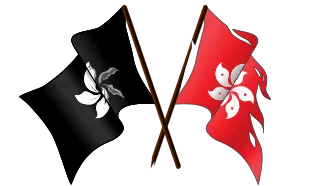
Hong Kong localism is a movement that treats Hong Kong as a distinct community whose institutions, Cantonese culture and way of life must be defended against mainland China, and which puts Hong Kong's own interests first. Strands range from Chin Wan's autonomous city-state to self-determination and open independence, with a nativist wing hostile to mainland immigration and parallel trading and a civic wing defining Hongkongers by values and citizenship. Many adherents scorn the pan-democrats' non-violent, China-focused approach, and radical groups favoured militant street action.
What it stands for
- A people divided by an imposed border may remain in separate states.
- Schools should not cultivate patriotic feeling, meaning loyalty to and pride in the nation.
- A region should be entitled to leave its current country.
- A region should be able to spend most of the tax money it raises on itself.
- Only citizens should be eligible for welfare benefits, including immigrants who have become citizens.
- Governments should answer in law for past abuses by their security forces, including unlawful killings.
Key figures
- Chin Wan: Scholar whose 2011 book On the Hong Kong City-State shaped localism
- Edward Leung: Spokesman of Hong Kong Indigenous who won about 15% in the 2016 by-election
- Chan Ho-tin: Founder of the Hong Kong National Party, advocating independence
Closest ideologies
- Anti-Federalists (91% match)
- Jeffersonian democracy (89% match)
- Artiguism (88% match)
- Rugged individualism (87% match)
- Localism (87% match)
People closest to it
- Alexei Navalny (88% alike)
- Rudolf Steiner (87% alike)
- Hannah Arendt (87% alike)
- Tulsi Gabbard (86% alike)
- Satyendra Nath Bose (86% alike)
Key positions
- Strongly: A people divided by an imposed border may remain in separate states.
- Strongly: Schools should not cultivate patriotic feeling, meaning loyalty to and pride in the nation.
- Strongly: A region should be entitled to leave its current country.
- Strongly: A region should be able to spend most of the tax money it raises on itself.
- Strongly: Only citizens should be eligible for welfare benefits, including immigrants who have become citizens.
- Strongly: Governments should answer in law for past abuses by their security forces, including unlawful killings.
- Strongly: A country should seek ties with the United States at least as close as its ties with China.
- Strongly: A country does not have the right to stop a region becoming independent by using its military.
- Strongly: Government surveillance is not acceptable, even to prevent terrorism.
- Strongly: A president should be limited in how many times he or she may stand for re-election.
- Strongly: Political decisions should rest with the smallest local community able to handle them, with wider authorities handling matters that need a wider reach.
- Strongly: Within a country, the richer regions grew rich by draining the poorer ones, much as colonial powers drained their colonies.
- Strongly: The country should impose strict limits on immigration.
- Strongly: The national legislature should not be able to take back powers given to regions on its own.
- Strongly: Ordinary legal protections, such as the right not to be held without trial, should stay in force even in a national emergency.
- Strongly: The state should not make one language the only common language of government, schooling and public life at the cost of limiting others.
- Strongly: People are entitled to resist a ruler's unconstitutional exercise of power.
- Strongly: The people living in a disputed territory should choose by voting which country it joins.
- Strongly: An electorate should choose the head of state, either directly or through elected representatives.
- Strongly: Peoples who share an ethnic heritage, such as the Slavic peoples, should not come together in one state.
- Strongly: Rulers must act under lasting, publicly known laws administered by recognised courts.
- Strongly: Young people should not be organised into uniformed, drilled groups that prepare them to serve the nation.
- Strongly: Publicly honouring a national leader as the personification of the nation is not acceptable.
- Strongly: Voting in local elections should be reserved for citizens.
- Strongly: The presence of people of its nationality does not give a state a rightful claim to land beyond its borders.
- Strongly: Rulers have a right to rule only because the people they rule have agreed to it.
- Strongly: A national language may keep the foreign loanwords it has.
- Strongly: Most people in political office look after themselves first and the public second.
- Strongly: A people with a shared national identity is entitled to its own self-governing state.
- Strongly: Being powerful does not mean a country should bring more land within its borders.
- Strongly: The government should let its political opponents organise, speak and compete for power.
- Strongly: Rapid economic development does not justify temporary restrictions on political freedom.
- Strongly: Protecting the constitution should be left to civilian institutions, not the armed forces.
- Strongly: Political authority does not ultimately come from God.
- Strongly: A socialist state with hostile neighbours need not build up its state power.
- Strongly: Businesses gain too much influence over government policy from their lobbying.
- Strongly: School history should mostly tell the story of the student's own nation.
- Strongly: Individual farms should not give way to joint cultivation by groups of farmers.
- Strongly: Someone who actually governs a state should not hand that power on to their own child.
- Strongly: Workers do not need a disciplined revolutionary party to lead them.
- Strongly: News media should decide for themselves what they publish, whoever holds power.
- Strongly: No party's ideology should give it an exclusive right to lead the state.
- Strongly: Countries may keep controls on who enters and settles, even in the long run.
- Strongly: A state with a state-owned planned economy should not be defended against capitalist restoration under a ruling bureaucracy.
- Strongly: Keeping a nation's inherited culture alive, including its language, customs and traditions, matters.
- Strongly: The armed forces may be controlled by someone other than the governing party's leadership.
- Strongly: Work may stay divided into separate specialized jobs held by different people.
- Strongly: In the long run people should still produce and share using money.
- Strongly: Publicly insulting a religion's sacred beliefs should be left outside the criminal law.
- Strongly: Some areas of life should remain outside state direction.
- Strongly: No society has the right to rule another for its supposed improvement, however advanced it is.
- Strongly: A market economy is incompatible with socialism under communist-party leadership.
- Strongly: A workers' state does not need to suppress the old ruling class, even for a time.
- Strongly: Adults may marry across religions without legal restriction.
- Strongly: Society needs government of some kind.
- Strongly: The slaughter of cattle should be legal.
- Strongly: The ruler should be subject to the country's laws.
- Strongly: Public policy should not be used to reduce the passing on of inherited disabilities.
- Strongly: Great powers should have no right to send troops against allied governments' wishes for the purpose of preserving those countries' political systems.
- Strongly: Political authority need not rest on oaths of loyalty sworn to a lord.
- Strongly: Voters of different religious communities may all vote in the same elections.
- Strongly: Voting should not be limited to members of one ethnic group.
- Strongly: Killing another person can be right in self-defence or in defence of others.
- Strongly: Overseas territories need not be run mainly for the ruling country's economic benefit.
- Strongly: Failure to govern under religious law does not justify armed overthrow of a ruler.
- Strongly: The holder of the highest state office need not be treated as holy.
- Strongly: People without property should also have the right to vote.
- Strongly: State schools need not steer pupils away from belief in God.
- Strongly: Public spaces such as schools and facilities should not be separated by race under the law.
- Strongly: Women may go out in public without any legal duty to cover fully.
- Strongly: Final authority over a state's laws need not belong to its most senior religious scholars.
- Strongly: The Holocaust happened as historians describe it.
- Strongly: Museums, libraries and other inherited culture should not be destroyed, even when they stand in the way of new creation.
- Strongly: Humanity would gain nothing by going back to living off hunting and gathering.
- Strongly: Farmers should have the legal freedom to leave the estates they work.
- Leans: Only people born in the country should hold public office.
- Leans: Political leadership should belong to the country's original peoples.
- Leans: The country's majority national group should have the leading role in controlling economic life.
- Leans: A country may let foreign allies keep troops and bases on its land.
- Leans: Towns and cities should link through councils whose delegates coordinate and administer what local assemblies decide, without making policy themselves.
- Leans: The fact that something is law is not, by itself, a moral reason to obey it.
- Leans: Public service media should receive government funding without government officials deciding their editorial content.
- Leans: Stopping outside powers from dividing the country is not something national policy must put first.
- Leans: Western political institutions are suitable for every civilization.
- Leans: A society holds together less well when its members belong to different ethnic groups.
- Leans: A nation's identity does not run in unbroken continuity from its ancient origins to the present.
- Leans: Voters themselves should elect the head of state, without an intermediary body selecting the officeholder.
- Leans: Elected politicians should serve only a small number of terms.
- Leans: The representative legislature should have the final say on legislation.
- Leans: Newcomers should adopt the host nation's culture in place of their original culture.
- Leans: Dividing politics into left and right no longer makes sense.
- Leans: A local authority should be permitted to reserve home purchases in its area for people who already live there.
- Leans: My country may join a military alliance led by one of the great powers.
- Leans: Parties that seek to abolish a country's constitutional order should be free to organize.
- Leans: The political goal should be victory over communism ahead of accommodation with it.
- Leans: Only children of citizens should be citizens at birth: being born in the country should not be enough.
- Leans: The state should not restrict money that foreign donors give to charities, campaign groups, the press and universities.
- Leans: Settlers from abroad who displace a land's people and found a state there are carrying out colonialism.
- Leans: Government should be bound by written guarantees of basic rights protected against easy amendment by ordinary majorities.
- Leans: Governments need not restrict how money and investment move across borders.
- Leans: Sharing a language is not sufficient for people to constitute one nation.
- Leans: When national priorities conflict with working together internationally, my country should choose its own priorities.
- Leans: The nation has decayed and must be reborn.
- Leans: The goods people consume should mainly come from nearby producers.
- Leans: Foreign powers sometimes have a right to intervene in a country's internal affairs.
- Leans: Indigenous peoples should control their traditional territories.
- Leans: A government must obtain the resident nation's agreement before rewriting or ending their treaty.
- Leans: Democracy is best even when voters make poor choices.
- Leans: Joining a larger state should leave a region free to keep its existing economic arrangements.
- Leans: A country may accept its present border with a neighbour even if it lost land in an old war.
- Leans: Real command of the military may rest with someone other than the head of state.
- Leans: Tackling oppression does not require a combined approach to its overlapping forms, such as racism, sexism and class oppression.
- Leans: Separate national currencies are at least as good for countries as a single shared one.
- Leans: A government should officially declare that the past mass killing of a people was genocide.
- Leans: Society may be changed in large, rapid steps.
- Leans: Countries within one civilization may remain politically separate.
- Leans: Workers' solidarity with workers in other countries should count at least as much as solidarity with their own nation.
- Leans: Public institutions should help minority languages be used in public life, for example through teaching or services in those languages.
- Leans: Countries that had colonies should not have to compensate the countries they colonized.
- Leans: Land that a state declares its own against its people's will is still illegally occupied by that state.
- Leans: An elected legislature must approve the government's budget before the government spends public money.
- Leans: Defense should not rest with armed ordinary citizens in place of a standing force.
- Leans: Belonging to a religious minority is no ground for shoppers to stay away from a shop.
- Leans: Renting out housing should be permitted in at least some circumstances.
- Leans: Recruitment to the civil service should not depend on competitive examinations.
- Leans: Social duty should not take the place of material rewards as the main reason people work.
- Leans: Gathering all the people in the homeland should have at least as much priority as supporting diaspora culture.
- Leans: Government should rely at least as much on legal enforcement as on its rulers' moral example.
- Leans: A country should not be ready to use military force abroad without UN Security Council authorization.
- Leans: Collecting taxes does not in itself amount to stealing people's money.
- Leans: Today, nobody is bound by a colonial-era treaty that divided a people without asking them.
- Leans: Profit made from owning businesses does not come from exploiting the workers who produce it.
- Leans: People should have a direct role in making decisions where they work, live and study, rather than having those decisions made entirely for them.
- Leans: The state should not be managed the way a well-run business is.
- Leans: Capitalism does not inevitably cause wars between great powers.
- Leans: People who give their lives for the nation deserve to be remembered as martyrs, with reverence beyond ordinary thanks.
- Leans: Police forces should continue to exist.
- Leans: Public offices may be filled by methods other than drawing lots.
- Leans: A country may keep all its decisions in its own hands rather than pooling them with other nations.
- Leans: The general public should have at least as much say in policy as experts.
- Leans: Private charity does not help people in poverty better than government programs do.
- Leans: No state may force a minority out of the country, however hostile it judges that minority to be.
- Leans: People of different races should not be discouraged from forming a family together, including through marriage and children.
- Leans: Historical change does not come mainly from changes in how society produces and exchanges goods.
- Leans: There is no deliberate plan behind immigration aimed at replacing the native population.
- Leans: Population growth does not mainly drive lasting poverty.
- Leans: Public institutions should have the power to constrain a national majority's decisions in a liberal democracy.
- Leans: No one is better suited by nature to govern than anyone else.
- Leans: Population growth may be left to run its course.
- Leans: Even a purely ceremonial head of state should not hold the position by birth.
- Leans: Very large concentrations of wealth threaten a free society.
- Leans: An economy directed by a central plan is not capable of working better than one directed by market exchange.
- Leans: At least some revolutions have been justified.
- Leans: Political violence is sometimes justified.
- Leans: Minority groups are not, as groups, secretly plotting to harm the nation.
- Leans: A country may leave other nations to choose their own political systems.
- Leans: Most of the average difference in ability between racial groups does not come from genes.
- Leans: Poor countries should retain economic ties with rich countries.
- Leans: Groups have rights of their own.
- Leans: The law should treat everyone as an equal, whatever their birth, sex, race or status.