Political Ideology Atlas · All people · Take the test
Europe · born 1925, historical
Tony Benn
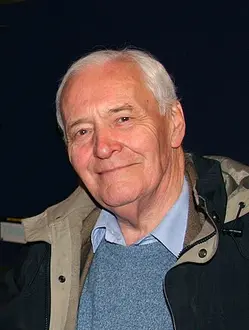
British Labour MP, Cabinet minister and left-wing figure (1950-2001); President of the Stop the War Coalition (2001-2014)
A democratic socialist and Christian socialist who moved left after serving in Labour cabinets, Benn argued for public ownership, industrial democracy, planning and import and capital controls, and for a republican, secular constitution with an end to the House of Lords and Crown prerogative. He opposed EEC membership, nuclear weapons and military action without UN authority, and worked within Parliament and the Labour movement rather than for revolution.
Closest ideologies
Based on the 54 statements where Tony Benn has a known position.
- Socialism of the 21st century (90% match)
- Left-Wing Populism (90% match)
- Alter-globalization (89% match)
- Camilism (89% match)
- Bennism (89% match)
Similar people
- Salvador Allende (88% alike)
- W. E. B. Du Bois (88% alike)
- John Dewey (88% alike)
- Alexandria Ocasio-Cortez (88% alike)
- Hasan Piker (87% alike)
Known positions
- Strongly: Binding composition rules should ensure that public bodies have approximately equal numbers of women and men.
- Strongly: The representative legislature should have the final say on legislation.
- Strongly: Jews, as a people, are entitled to a country of their own in the Land of Israel.
- Strongly: Government should maintain a strict institutional separation from religion.
- Strongly: A country with nuclear weapons may give them up even while its rivals keep theirs.
- Strongly: Governments should limit how money and investment can be moved across borders.
- Strongly: Employees should have voting rights in the management of large companies.
- Strongly: Businesses should belong to the people who work in them, for example as cooperatives.
- Strongly: Countries should maintain only the weapons needed for national safety.
- Strongly: Government should not back the building of new nuclear power plants.
- Strongly: High earners and the very rich should pay tax at a much higher rate than everyone else.
- Strongly: Industries such as energy, rail and utilities should be owned by the state or public bodies, not private companies.
- Strongly: Defeating communism should not take priority over coexistence with it.
- Strongly: Democracy is best even when voters make poor choices.
- Strongly: Citizens should have a legal right to see government information.
- Strongly: Real command of the military may rest with someone other than the head of state.
- Strongly: The government should steer investment into industries it sees as key to the country's future.
- Strongly: Workers' pay should be settled in collective bargaining between their union and their employer.
- Strongly: Separate national currencies are at least as good for countries as a single shared one.
- Strongly: Government should impose strict rules on how corporations operate.
- Strongly: A country can get through deadlock among its institutions without a leader who overrides them.
- Strongly: No nuclear weapons, ours or an ally's, should be stationed here.
- Strongly: The law should impose no restrictions on strikes.
- Strongly: A country should not be ready to use military force abroad without UN Security Council authorization.
- Strongly: Officials decide what gets made and who gets it at least as well as prices and competition do.
- Strongly: Workers are better off for having labor unions.
- Strongly: People should have a direct role in making decisions where they work, live and study, rather than having those decisions made entirely for them.
- Strongly: In law, a country's traditional national church should rank no higher than other religious bodies.
- Strongly: A country may keep all its decisions in its own hands rather than pooling them with other nations.
- Strongly: Nobody should hold a special rank by birth, such as a noble title, a hereditary crown or a caste position, or the special rights attached to one.
- Strongly: A people split by an imposed border should be brought together in a single state.
- Strongly: My country can do without nuclear weapons that it alone controls.
- Strongly: Rulers have a right to rule only because the people they rule have agreed to it.
- Strongly: The existing governing institutions should be retained, even if their personnel, policies or procedures change.
- Strongly: Even a purely ceremonial head of state should not hold the position by birth.
- Strongly: Whatever their circumstances, everyone should be able to count on the state for enough to live decently, through benefits, pensions or public services.
- Strongly: Businesses gain too much influence over government policy from their lobbying.
- Strongly: The law should not punish consenting adults for same-sex relations.
- Strongly: Publicly insulting a religion's sacred beliefs should be left outside the criminal law.
- Strongly: A workers' state does not need to suppress the old ruling class, even for a time.
- Leans: An economy whose production is directed by a central plan is capable of working better than an economy directed by market exchange.
- Leans: The UN should have authority to compel member states to comply with its decisions.
- Leans: An assembly elected by the people for that purpose should draft the constitution.
- Leans: Major laws should be decided by citizens voting on them themselves.
- Leans: Women can legally choose to end most pregnancies.
- Leans: Taxes on imports should shield domestic producers from foreign competition.
- Leans: Government should not be bound by a written bill of rights protected against easy amendment by ordinary majorities.
- Leans: Government surveillance is not acceptable, even to prevent terrorism.
- Leans: Seats may be allocated in ways that do not follow parties' shares of the vote closely.
- Leans: Animals can suffer, and that suffering counts in how we treat them.
- Leans: Most people in political office look after themselves first and the public second.
- Leans: Very large concentrations of wealth threaten a free society.
- Leans: A people with a shared national identity is entitled to its own self-governing state.