Political Ideology Atlas · All people · Take the test
Europe · born 1866, historical
Ramsay MacDonald
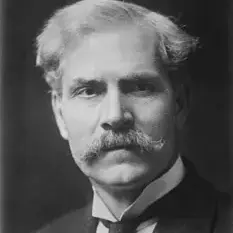
British prime minister (1924, 1929–1935), first Labour premier and leader of the National Government
Ramsay MacDonald was a gradualist parliamentary socialist of the Independent Labour Party who rejected class war, economic determinism, syndicalism and the dictatorship of the proletariat, and held that property is justified only by social service. He opposed Britain's role in the First World War, led two Labour minority governments, and in 1931 formed the cross-party National Government, which split his party.
Closest ideologies
Based on the 30 statements where Ramsay MacDonald has a known position.
- Industrial democracy (93% match)
- Liberal socialism (92% match)
- Egalitarianism (92% match)
- Human rights (91% match)
- Market socialism (91% match)
Similar people
- Satyendra Nath Bose (91% alike)
- Benazir Bhutto (90% alike)
- Hakeem Jeffries (90% alike)
- Nelson Mandela (89% alike)
- Jacques Chirac (89% alike)
Known positions
- Strongly: A country can move toward socialism by winning elections and governing through parliament.
- Strongly: Changes to society should be introduced a little at a time.
- Strongly: Government should maintain a strict institutional separation from religion.
- Strongly: An assembly elected by the people for that purpose should draft the constitution.
- Strongly: Democracy is best even when voters make poor choices.
- Strongly: The directly elected parliament should be a legislature's only chamber.
- Strongly: State schools should not teach religion.
- Strongly: A country does not have the right to stop a region becoming independent by using its military.
- Strongly: Direct action does not have to take the place of elections and parliament as the way to achieve political change.
- Strongly: Employers and workers should treat each other as partners whose cooperation comes before conflict, even where their interests differ.
- Strongly: Owners' rights to their property need not be protected against being overridden for public goals.
- Strongly: Countries should accept binding international arbitration of their disputes.
- Strongly: Political representation should not come through social bodies such as families, local communities and occupational associations instead of political parties.
- Strongly: In law, a country's traditional national church should rank no higher than other religious bodies.
- Strongly: Religious institutions should be independent of government direction in their internal affairs.
- Strongly: At least one other factor explains as much of history as changes in how economies are organized do.
- Strongly: At least one other influence has shaped history as much as conflict between economic classes has.
- Strongly: Workers in the same industry should organise together regardless of their particular trade, replacing separate craft unions.
- Strongly: Equality of outcomes should not be society's goal.
- Strongly: Armed conflict does not generally make a people stronger in character.
- Strongly: Owning things privately is justified only if it benefits society as a whole.
- Strongly: Political power may rest on something other than workplace-elected councils.
- Strongly: No party's ideology should give it an exclusive right to lead the state.
- Strongly: A workers' state does not need to suppress the old ruling class, even for a time.
- Strongly: No society has the right to rule another for its supposed improvement, however advanced it is.
- Strongly: Overseas territories need not be run mainly for the ruling country's economic benefit.
- Leans: Taxes on imports should shield domestic producers from foreign competition.
- Leans: A country can miss out on lasting gains when barriers to international commerce come down.
- Leans: Indigenous peoples should control their traditional territories.
- Leans: A people with a shared national identity is entitled to its own self-governing state.