Political Ideology Atlas · All people · Take the test
Africa · born 1918, historical
Nelson Mandela
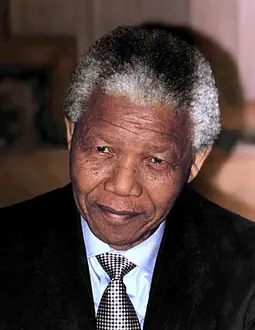
South African anti-apartheid leader, ANC president and first democratically elected president of South Africa (1994-1999)
Mandela was an African nationalist and democrat who held that apartheid had to be replaced by a non-racial, universal-franchise democracy. He accepted limited armed struggle from 1961 once peaceful protest was barred, then led negotiations and reconciliation, and as president ran a government of national unity with a mixed market economy. He admired parliamentary democracy and entrenched rights, and in his later years he campaigned on HIV/AIDS treatment and nuclear disarmament and criticised unilateral Western military action.
Closest ideologies
Based on the 123 statements where Nelson Mandela has a known position.
- Eurocommunism (92% match)
- Pro-Europeanism (92% match)
- Secular humanism (90% match)
- Social Democracy (90% match)
- Regionalism (89% match)
Similar people
- Willy Brandt (93% alike)
- Benazir Bhutto (93% alike)
- Jacques Chirac (91% alike)
- Hakeem Jeffries (90% alike)
- Dilma Rousseff (90% alike)
Known positions
- Strongly: Each main community should have a guaranteed place in government, even against a numerical majority.
- Strongly: Government bodies should be specifically responsible for advancing gender equality.
- Strongly: A poor country should rely on foreign money at least as much as on its own resources.
- Strongly: An assembly elected by the people for that purpose should draft the constitution.
- Strongly: A country with nuclear weapons may give them up even while its rivals keep theirs.
- Strongly: Government should be bound by written guarantees of basic rights protected against easy amendment by ordinary majorities.
- Strongly: Political power should be split among separate branches and levels that can each limit the others.
- Strongly: Some race-based affirmative action should continue.
- Strongly: Defeating communism should not take priority over coexistence with it.
- Strongly: Democracy is best even when voters make poor choices.
- Strongly: Citizens should have a legal right to see government information.
- Strongly: Society should take active steps to make up for the harm done by past racial injustices.
- Strongly: Public institutions should help minority languages be used in public life, for example through teaching or services in those languages.
- Strongly: The state should not make one language the only common language of government, schooling and public life at the cost of limiting others.
- Strongly: The law should impose no restrictions on strikes.
- Strongly: An electorate should choose the head of state, either directly or through elected representatives.
- Strongly: Ethnic diversity does not weaken a society's ability to hold together.
- Strongly: Political independence means little unless the economic and property system is also transformed.
- Strongly: A nation does not need one main ethnic group: it can be made up of people of many ancestries.
- Strongly: My country can do without nuclear weapons that it alone controls.
- Strongly: Rulers have a right to rule only because the people they rule have agreed to it.
- Strongly: The existing governing institutions should be retained, even if their personnel, policies or procedures change.
- Strongly: Trade, finance and debt rules should be changed to give poorer countries a fairer share.
- Strongly: Art should not be censored for its effect on people's moral character.
- Strongly: The law should not assign different roles in public life on the basis of sex.
- Strongly: In war, the enemy's civilians are not legitimate targets.
- Strongly: Racial groups should not each organise to defend distinct political interests of their own.
- Strongly: War does not strengthen a nation's character.
- Strongly: Political violence is sometimes justified.
- Strongly: Being powerful does not mean a country should bring more land within its borders.
- Strongly: The government should let its political opponents organise, speak and compete for power.
- Strongly: Descendants of settlers need not be led politically by the country's original peoples.
- Strongly: Political authority does not ultimately come from God.
- Strongly: The leader should not bypass political intermediaries in dealing with the people.
- Strongly: God has not chosen any people to be superior to all other peoples.
- Strongly: The law should treat everyone as an equal, whatever their birth, sex, race or status.
- Strongly: Poor countries should retain economic ties with rich countries.
- Strongly: Most of the average difference in ability between racial groups does not come from genes.
- Strongly: News media should decide for themselves what they publish, whoever holds power.
- Strongly: Political power may rest on something other than workplace-elected councils.
- Strongly: No party's ideology should give it an exclusive right to lead the state.
- Strongly: We have a duty to leave the planet in good condition for those who come after us.
- Strongly: The law should not punish consenting adults for same-sex relations.
- Strongly: Religious conversion should be free of legal restriction.
- Strongly: Central banks should keep a role in controlling the money supply.
- Strongly: Members of other ethnic groups should be free to stay in the country.
- Strongly: Population growth does not mainly drive lasting poverty.
- Strongly: People of different races should not be discouraged from forming a family together, including through marriage and children.
- Strongly: Publicly insulting a religion's sacred beliefs should be left outside the criminal law.
- Strongly: No state may force a minority out of the country, however hostile it judges that minority to be.
- Strongly: Some areas of life should remain outside state direction.
- Strongly: Private owners' choice of whom they deal with should be subject to some restrictions.
- Strongly: Women should be able to vote and stand for office on the same terms as men.
- Strongly: The vote keeps a government in check at least as well as being able to leave the country does.
- Strongly: Some decisions should bind people who have not consented to them.
- Strongly: A workers' state does not need to suppress the old ruling class, even for a time.
- Strongly: Police forces should continue to exist.
- Strongly: Society needs government of some kind.
- Strongly: Countries should keep their armed forces.
- Strongly: The ruler should be subject to the country's laws.
- Strongly: Government should have other tasks besides protecting people from physical violence.
- Strongly: Collecting taxes does not in itself amount to stealing people's money.
- Strongly: Voters of different religious communities may all vote in the same elections.
- Strongly: Voting should not be limited to members of one ethnic group.
- Strongly: Killing another person can be right in self-defence or in defence of others.
- Strongly: Overseas territories need not be run mainly for the ruling country's economic benefit.
- Strongly: Taking part in politics is at least as good a way to live as living privately away from public affairs.
- Strongly: People without property should also have the right to vote.
- Strongly: Public spaces such as schools and facilities should not be separated by race under the law.
- Strongly: Courts need not be handed over to private businesses.
- Strongly: Suspected drug dealers should never be put to death without a trial.
- Strongly: Farmers should have the legal freedom to leave the estates they work.
- Leans: Elected governments should leave central banks free to make monetary-policy decisions within their legal mandates.
- Leans: Speech that attacks groups for who they are can be punished by law.
- Leans: The representative legislature should have the final say on legislation.
- Leans: Fewer tariffs and trade barriers make all countries better off over time.
- Leans: Foreign buyers may be allowed to take over firms in strategic industries.
- Leans: Private businesses and markets should run most of the economy, while the government supports people who cannot meet their basic needs.
- Leans: Judge policies by what they achieve, independently of whether they match an ideology.
- Leans: The farmers who work large estates should take ownership from the landowners, with the transfer compulsory if owners refuse.
- Leans: Industries such as energy, rail and utilities do not need to be publicly owned.
- Leans: The state should be barred from executing people convicted of the gravest crimes, such as terrorism.
- Leans: Working together internationally should count at least as much as my country's own priorities.
- Leans: Besides its directly elected parliament, a legislature should have a second chamber, such as a senate.
- Leans: Distance and nationality do not weaken the duty of the rich to help the poor abroad.
- Leans: Countries should maintain only the weapons needed for national safety.
- Leans: Tariffs should not be used to protect domestic industry from foreign competition.
- Leans: Governments need not restrict how money and investment move across borders.
- Leans: The global economic system keeps poorer countries poor by directing their wealth toward richer countries.
- Leans: Laws, institutions and customs still favor men over women.
- Leans: Government should serve people's good while respecting each person as more than an instrument of the state or community.
- Leans: Governments should not borrow heavily, spending much more than they collect in taxes, to boost the economy.
- Leans: The foreign debts of poor countries should be written off, ending their obligation to repay them.
- Leans: My country should stay neutral and join neither of the opposing great-power alliances.
- Leans: A law imposes no moral duty to obey it if the law is unjust.
- Leans: After members debate and adopt a party decision, every member should have to help implement it, including those who opposed it.
- Leans: One worker's pay should cover the living needs of that worker's family, including the worker.
- Leans: Human rights come from the nature that all human beings share.
- Leans: Workers' pay should be settled in collective bargaining between their union and their employer.
- Leans: Some things are right or wrong for everyone, in every culture and era.
- Leans: Employers and workers should treat each other as partners whose cooperation comes before conflict, even where their interests differ.
- Leans: Profit made from owning businesses does not come from exploiting the workers who produce it.
- Leans: Workers are better off for having labor unions.
- Leans: People should have a direct role in making decisions where they work, live and study, rather than having those decisions made entirely for them.
- Leans: People who give their lives for the nation deserve to be remembered as martyrs, with reverence beyond ordinary thanks.
- Leans: A country may keep a region that wants to leave.
- Leans: Private charity does not help people in poverty better than government programs do.
- Leans: Rulers must act under lasting, publicly known laws administered by recognised courts.
- Leans: Meeting poor people's needs should be the first consideration in public policy.
- Leans: The state should guarantee health care to everyone, whether it runs the services itself or pays for them.
- Leans: Other things drive humanity forward at least as much as rivalry and conflict between peoples.
- Leans: Very large concentrations of wealth threaten a free society.
- Leans: Small, informal, trust-based groups should not take the place of lasting parties, unions and federations in political action.
- Leans: An economy directed by a central plan is not capable of working better than one directed by market exchange.
- Leans: World power should be distributed among several independent major powers, without one dominant power.
- Leans: Economic growth should not be limited for the sake of the environment.
- Leans: Whatever their circumstances, everyone should be able to count on the state for enough to live decently, through benefits, pensions or public services.
- Leans: At least some revolutions have been justified.
- Leans: Looking after your own interests is not a moral good in itself.
- Leans: A people with a shared national identity is entitled to its own self-governing state.
- Leans: Workers do not need a disciplined revolutionary party to lead them.
- Leans: Being the first to use force can be right, depending on what it is meant to achieve.
- Leans: Individual farms should not give way to joint cultivation by groups of farmers.