Political Ideology Atlas · All people · Take the test
Latin America & Caribbean · born 1936, historical
Mario Vargas Llosa
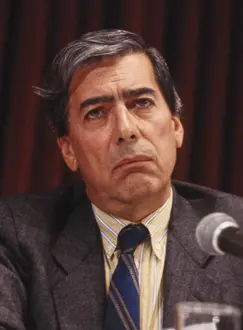
Peruvian-Spanish novelist, liberal political essayist and presidential candidate (1990)
Vargas Llosa moved from revolutionary socialism to democratic liberalism, defending markets, civil liberties and constitutional restraints. His mature views combined social liberalism and open migration with opposition to authoritarian government and qualified support for intervention against tyranny.
Closest ideologies
Based on the 49 statements where Mario Vargas Llosa has a known position.
- Liberalism (91% match)
- Cultural liberalism (91% match)
- Transhumanist politics (91% match)
- Freiwirtschaft (90% match)
- Secular liberalism (90% match)
Similar people
- Jesse Ventura (91% alike)
- Destiny (89% alike)
- Arnold Schwarzenegger (88% alike)
- Nandan Nilekani (88% alike)
- John Hickenlooper (87% alike)
Known positions
- Strongly: Two people of the same sex can legally marry each other.
- Strongly: Prices and competition generally decide better than officials what gets made and who gets it.
- Strongly: Terminally ill adults should be able to get medical help to die.
- Strongly: Free citizens need the freedom to own property, trade and choose work, or political freedom cannot last.
- Strongly: Adults may legally buy and use drugs such as cannabis, possibly with regulation.
- Strongly: The country may allow more immigration than strict limits would permit.
- Strongly: Government should maintain a strict institutional separation from religion.
- Strongly: The state should be barred from executing people convicted of the gravest crimes, such as terrorism.
- Strongly: Democracy is best even when voters make poor choices.
- Strongly: A country may keep a region that wants to leave.
- Strongly: Historical change does not come mainly from changes in how society produces and exchanges goods.
- Strongly: An economy directed by a central plan is not capable of working better than one directed by market exchange.
- Strongly: The government should let its political opponents organise, speak and compete for power.
- Strongly: Rapid economic development does not justify temporary restrictions on political freedom.
- Strongly: A mother country and its colonies may trade with the outside world.
- Strongly: No party's ideology should give it an exclusive right to lead the state.
- Strongly: Industrial society has done at least as much good as harm to humanity.
- Strongly: No state may force a minority out of the country, however hostile it judges that minority to be.
- Strongly: The ruler should be subject to the country's laws.
- Strongly: Humanity would gain nothing by going back to living off hunting and gathering.
- Leans: Keeping a nation's inherited culture alive, including its language, customs and traditions, is not important.
- Leans: In the long run people should be free to live and work in any country.
- Leans: Retirement benefits should come from each worker's own privately managed savings account in place of a state scheme using current contributions to pay current retirees.
- Leans: The UN should have authority to compel member states to comply with its decisions.
- Leans: Choices that harm no one else should never be crimes.
- Leans: Countries should hand part of their decision-making power to a union of nations, such as the European Union.
- Leans: Fewer tariffs and trade barriers make all countries better off over time.
- Leans: Changes to society should be introduced a little at a time.
- Leans: Judge policies by what they achieve, independently of whether they match an ideology.
- Leans: The farmers who work large estates should take ownership from the landowners, with the transfer compulsory if owners refuse.
- Leans: Governments should answer in law for past abuses by their security forces, including unlawful killings.
- Leans: Industries such as energy, rail and utilities do not need to be publicly owned.
- Leans: Women can legally choose to end most pregnancies.
- Leans: Property should belong to many people in small holdings.
- Leans: Political power should be split among separate branches and levels that can each limit the others.
- Leans: Foreign powers sometimes have a right to intervene in a country's internal affairs.
- Leans: Military intervention abroad is sometimes necessary to protect human rights.
- Leans: Government should serve people's good while respecting each person as more than an instrument of the state or community.
- Leans: Armed forces may sometimes be used for purposes beyond defending the country against attack.
- Leans: People are entitled to resist a ruler's unconstitutional exercise of power.
- Leans: Great powers should have no right to send troops against allied governments' wishes for the purpose of preserving those countries' political systems.
- Leans: Government should have other tasks besides protecting people from physical violence.
- Leans: Ethnic diversity does not weaken a society's ability to hold together.
- Leans: Society needs government of some kind.
- Leans: A nation does not need one main ethnic group: it can be made up of people of many ancestries.
- Leans: Public institutions should have the power to constrain a national majority's decisions in a liberal democracy.
- Leans: A national language may keep the foreign loanwords it has.
- Leans: Being powerful does not mean a country should bring more land within its borders.
- Leans: Businesses gain too much influence over government policy from their lobbying.