Political Ideology Atlas · All people · Take the test
Europe · born 1899, historical
Friedrich Hayek
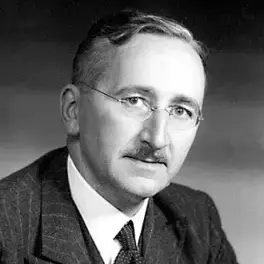
Austrian-British economist and political philosopher, Nobel laureate in economics (1974)
Hayek argues that knowledge is dispersed, so competition and prices coordinate economic life better than central planning, and that collectivism of every kind leads toward totalitarian control. He wants government bound by general rules, a safety net and public goods but no "social justice" redistribution, a market order with competing private currencies, and a constitution that separates rule-making from administration. He prefers limited democracy but ranked liberal institutions above democratic form, as his 1981 Chile remarks show.
Key figure of
Closest ideologies
Based on the 60 statements where Friedrich Hayek has a known position.
- Fortuynism (92% match)
- Democratic capitalism (91% match)
- Ordoliberalism (91% match)
- Neoliberalism (91% match)
- Eco-capitalism (90% match)
Similar people
- Clarence Thomas (92% alike)
- María Corina Machado (91% alike)
- Alexis de Tocqueville (90% alike)
- Voltaire (90% alike)
- Rudy Giuliani (90% alike)
Known positions
- Strongly: Central banks should give way to a market in which people choose the money they use without a central bank controlling its supply.
- Strongly: There should be no central bank.
- Strongly: Lacking the resources to act on a choice does not by itself make you unfree.
- Strongly: Owners' rights to their property should almost never be overridden, even for public goals.
- Strongly: Once wealth was acquired fairly, how much each person ends up with has no bearing on the fairness of its distribution.
- Strongly: Prices and competition generally decide better than officials what gets made and who gets it.
- Strongly: Opening markets across borders leaves every trading country better off over time.
- Strongly: The work of making a product is not what gives it economic value.
- Strongly: Money creation should not be reserved exclusively to public institutions.
- Strongly: Industries such as energy, rail and utilities do not need to be publicly owned.
- Strongly: The government may leave it to investors to decide which industries receive investment.
- Strongly: Society does not need a third course beyond capitalism and communism.
- Strongly: Private businesses and markets should run most of the economy, while the government supports people who cannot meet their basic needs.
- Strongly: Besides its directly elected parliament, a legislature should have a second chamber, such as a senate.
- Strongly: To keep their political freedoms, people need the freedom to own property, trade and choose their work.
- Strongly: Communist one-party regimes should be condemned as severely as fascist regimes.
- Strongly: Farmers should not be given state protection against swings in the prices they receive.
- Strongly: A business owner can earn a profit without taking unfair advantage of employees.
- Strongly: Separate national currencies are at least as good for countries as a single shared one.
- Strongly: Government should serve people's good while respecting each person as more than an instrument of the state or community.
- Strongly: Tariffs should not be used to protect domestic industry from foreign competition.
- Strongly: Governments should not fix maximum prices for essential foods, even in times of scarcity.
- Strongly: A nation can be made up of several ethnic groups with none forming most of its people.
- Strongly: Population growth may be left to run its course.
- Strongly: At least one other influence has shaped history as much as conflict between economic classes has.
- Strongly: Rents should be left uncapped by law in areas of housing shortage.
- Strongly: Wages need not be set through negotiating bodies that the state officially recognizes.
- Strongly: Rulers must act under lasting, publicly known laws administered by recognised courts.
- Strongly: Equality of outcomes should not be society's goal.
- Strongly: Making progress deserves at least as much weight as reviving an earlier way of organizing society.
- Strongly: The law should treat everyone as an equal, whatever their birth, sex, race or status.
- Strongly: An economy directed by a central plan is not capable of working better than one directed by market exchange.
- Strongly: Public institutions should have the power to constrain a national majority's decisions in a liberal democracy.
- Strongly: No party's ideology should give it an exclusive right to lead the state.
- Strongly: Governments should give no subsidies, licences or protections that favour firms close to them.
- Strongly: Some areas of life should remain outside state direction.
- Strongly: Society needs government of some kind.
- Strongly: The ruler should be subject to the country's laws.
- Strongly: Collecting taxes does not in itself amount to stealing people's money.
- Strongly: At least one other factor does as much to keep people in poverty as population growth does.
- Strongly: Government should have other tasks besides protecting people from physical violence.
- Leans: The same income-tax percentage should apply across taxable income levels.
- Leans: Public education money should follow the child to whichever school the family picks.
- Leans: The government should pay all adults a regular sum with no strings attached.
- Leans: Countries should hand part of their decision-making power to a union of nations, such as the European Union.
- Leans: Rules on how corporations operate may be light.
- Leans: A national emergency sometimes justifies temporarily withdrawing normal legal safeguards against people the government regards as internal enemies, such as protections against detention without trial.
- Leans: Wealthy countries have no duty to give substantial aid to the world's poor abroad.
- Leans: Tax rates should not rise steeply with income.
- Leans: Government should be bound by written guarantees of basic rights protected against easy amendment by ordinary majorities.
- Leans: Heirs to large fortunes may keep most of what they inherit.
- Leans: Political power should be split among separate branches and levels that can each limit the others.
- Leans: Democracy is not the best form of government when voters choose badly.
- Leans: The government should be able to require citizens to serve in the military.
- Leans: The government should keep some form of income tax.
- Leans: A government needs more than fair elections to qualify as democratic.
- Leans: Private charity does not help people in poverty better than government programs do.
- Leans: Whatever their circumstances, everyone should be able to count on the state for enough to live decently, through benefits, pensions or public services.