Political Ideology Atlas · All people · Take the test
Europe · born 1916, historical
Edward Heath
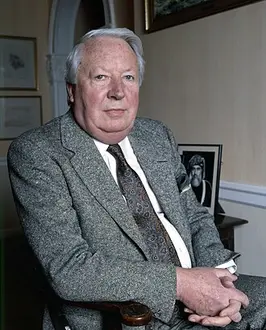
UK Prime Minister (1970–1974), Conservative leader (1965–1975)
Heath was a One Nation Conservative who took Britain into the European Community and remained a committed European to the end. His government mixed tax cuts and union reform with statutory pay and price controls. He opposed the death penalty and later criticised privatisation.
Closest ideologies
Based on the 32 statements where Edward Heath has a known position.
- Federalism (90% match)
- Centrism (89% match)
- Neo-Ottomanism (89% match)
- Jewish secularism (88% match)
- Progressive conservatism (88% match)
Similar people
- Shinzō Abe (91% alike)
- John Kerry (90% alike)
- Justin Trudeau (90% alike)
- The Buddha (90% alike)
- Benjamin Franklin (90% alike)
Known positions
- Strongly: My country should possess its own nuclear arsenal with independent authority over its use.
- Strongly: Countries should hand part of their decision-making power to a union of nations, such as the European Union.
- Strongly: Countries are better off sharing one currency than each having its own.
- Strongly: The state should be barred from executing people convicted of the gravest crimes, such as terrorism.
- Strongly: A country may join permanent military alliances.
- Strongly: Either spouse can leave a marriage without showing wrongdoing by the other.
- Strongly: Laws should not be required to follow religious texts.
- Leans: Legal limits on how far prices, including pay, may rise are a good way to fight inflation.
- Leans: It is acceptable for a monarch who inherits the throne to be the country's symbolic head while others govern.
- Leans: There should be legal limits on strike action.
- Leans: Each main community should have a guaranteed place in government, even against a numerical majority.
- Leans: My country may join a military alliance led by one of the great powers.
- Leans: A country's constitution should not automatically take precedence over international law.
- Leans: A national emergency sometimes justifies temporarily withdrawing normal legal safeguards against people the government regards as internal enemies, such as protections against detention without trial.
- Leans: Industries such as energy, rail and utilities do not need to be publicly owned.
- Leans: Tax rates should not rise steeply with income.
- Leans: Allies are bound to defend one another against armed attack.
- Leans: Private businesses and markets should run most of the economy, while the government supports people who cannot meet their basic needs.
- Leans: A country with nuclear weapons should keep them for as long as its rivals retain theirs.
- Leans: Besides its directly elected parliament, a legislature should have a second chamber, such as a senate.
- Leans: Defeating communism should not take priority over coexistence with it.
- Leans: Major laws should not be decided by direct votes of citizens.
- Leans: Distance and nationality do not weaken the duty of the rich to help the poor abroad.
- Leans: The country should impose strict limits on immigration.
- Leans: Publicly funded services such as hospitals and schools should not be run by private companies and charities.
- Leans: Political decisions should rest with the smallest local community able to handle them, with wider authorities handling matters that need a wider reach.
- Leans: The people living in a disputed territory should choose by voting which country it joins.
- Leans: A national development strategy should not accept some regions growing wealthy ahead of the rest.
- Leans: The state should guarantee health care to everyone, whether it runs the services itself or pays for them.
- Leans: Meeting poor people's needs should be the first consideration in public policy.
- Leans: The law should treat everyone as an equal, whatever their birth, sex, race or status.
- Leans: An economy directed by a central plan is not capable of working better than one directed by market exchange.