Political Ideology Atlas · All people · Take the test
Europe · born 1953
Diane Abbott
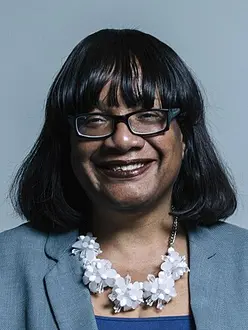
British MP for Hackney North and Stoke Newington (since 1987), former shadow home secretary
Abbott supports public services, public ownership, progressive taxation and migrants’ rights, alongside opposition to nuclear weapons and party leadership policies she considers excessively market-oriented. Her civil-liberties positions coexist with support for additional police officers; she supports abortion rights and transgender inclusion, while expressing serious reservations about assisted-dying legislation.
Closest ideologies
Based on the 56 statements where Diane Abbott has a known position.
- Market Socialism (92% match)
- Democratic Socialism (91% match)
- Pashtun nationalism (90% match)
- Radical democracy (89% match)
- Camilism (89% match)
Similar people
- Abdul El-Sayed (94% alike)
- Zohran Mamdani (94% alike)
- Jesse Jackson (92% alike)
- Alexandria Ocasio-Cortez (92% alike)
- Dilma Rousseff (91% alike)
Known positions
- Strongly: Two people of the same sex can legally marry each other.
- Strongly: Binding composition rules should ensure that public bodies have approximately equal numbers of women and men.
- Strongly: Transgender people's legal gender should match their gender identity.
- Strongly: Currency trades and similar international financial deals should carry a small tax of their own.
- Strongly: Schools should teach pupils about sex.
- Strongly: Women can legally choose to end most pregnancies.
- Strongly: The state should be barred from executing people convicted of the gravest crimes, such as terrorism.
- Strongly: A country with nuclear weapons may give them up even while its rivals keep theirs.
- Strongly: Distance and nationality do not weaken the duty of the rich to help the poor abroad.
- Strongly: High earners and the very rich should pay tax at a much higher rate than everyone else.
- Strongly: Industries such as energy, rail and utilities should be owned by the state or public bodies, not private companies.
- Strongly: Political decisions should rest with the smallest local community able to handle them, with wider authorities handling matters that need a wider reach.
- Strongly: Students should pay no tuition to attend public higher education institutions.
- Strongly: The law should impose no restrictions on strikes.
- Strongly: Workers are better off for having labor unions.
- Strongly: Private charity does not help people in poverty better than government programs do.
- Strongly: My country can do without nuclear weapons that it alone controls.
- Strongly: The state should guarantee health care to everyone, whether it runs the services itself or pays for them.
- Strongly: Racism is still the main obstacle to the advancement of disadvantaged racial groups.
- Strongly: Whatever their circumstances, everyone should be able to count on the state for enough to live decently, through benefits, pensions or public services.
- Strongly: The law should treat everyone as an equal, whatever their birth, sex, race or status.
- Strongly: Police forces should continue to exist.
- Strongly: Society needs government of some kind.
- Leans: A policy whose results are unequal between racial groups counts as discriminatory, whatever was intended.
- Leans: Public service media should receive government funding without government officials deciding their editorial content.
- Leans: The law limits how much landlords can charge where homes are scarce.
- Leans: A region should be able to spend most of the tax money it raises on itself.
- Leans: The country may allow more immigration than strict limits would permit.
- Leans: The state should offer public work to anyone who wants a job and cannot find one.
- Leans: Besides its directly elected parliament, a legislature should have a second chamber, such as a senate.
- Leans: Countries should maintain only the weapons needed for national safety.
- Leans: Making polluters pay a tax protects the environment more than setting rules for them does.
- Leans: Political power should be split among separate branches and levels that can each limit the others.
- Leans: People should have the right to vote in person without presenting photo ID.
- Leans: Military intervention abroad is sometimes necessary to protect human rights.
- Leans: Society should take active steps to make up for the harm done by past racial injustices.
- Leans: A country may join permanent military alliances.
- Leans: Climate change calls for drastic action by governments.
- Leans: Publicly funded services such as hospitals and schools should not be run by private companies and charities.
- Leans: Seats may be allocated in ways that do not follow parties' shares of the vote closely.
- Leans: Government should impose strict rules on how corporations operate.
- Leans: Ordinary legal protections, such as the right not to be held without trial, should stay in force even in a national emergency.
- Leans: Voters should be able to remove elected officials before their terms end.
- Leans: A country can get through deadlock among its institutions without a leader who overrides them.
- Leans: The law may forbid medical help for terminally ill adults who want to end their lives.
- Leans: Basic local services, such as water, hospitals and local transport, should be publicly owned and run.
- Leans: A country should not be ready to use military force abroad without UN Security Council authorization.
- Leans: Officials decide what gets made and who gets it at least as well as prices and competition do.
- Leans: Nobody should hold a special rank by birth, such as a noble title, a hereditary crown or a caste position, or the special rights attached to one.
- Leans: Publicly insulting a religion's sacred beliefs should be left outside the criminal law.
- Leans: The law should not assign different roles in public life on the basis of sex.
- Leans: Countries may keep controls on who enters and settles, even in the long run.
- Leans: The government should let its political opponents organise, speak and compete for power.