Political Ideology Atlas · All people · Take the test
Europe · born 1948
Charles III
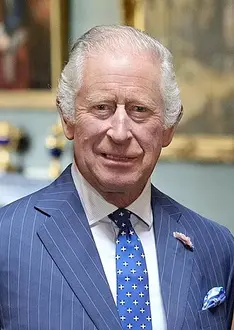
King of the United Kingdom and the other Commonwealth realms (since 2022); Prince of Wales 1958-2022
Charles III is a constitutional monarch who, as Prince of Wales, publicly campaigned on organic and sustainable farming, climate and nature, traditional architecture and urbanism, integrated medicine and interfaith understanding. His own speeches combine a precautionary, spiritually grounded environmentalism with respect for tradition and heritage, support for diversity, and market-based climate action led by the private sector. As king he is constitutionally neutral and says he will not campaign, so his recorded views come mainly from his earlier speeches and letters.
Closest ideologies
Based on the 59 statements where Charles III has a known position.
- Progressivism (88% match)
- Sahrawi nationalism (88% match)
- Pan-Americanism (87% match)
- Poporanism (87% match)
- Green Zionism (86% match)
Similar people
- Soong May-ling (89% alike)
- Robert F. Kennedy (89% alike)
- Péter Magyar (89% alike)
- Hassan Sheikh Mohamud (89% alike)
- Harry S. Truman (89% alike)
Known positions
- Strongly: Economic accounts should record ecosystems as assets whose depletion counts as a loss.
- Strongly: The nation's figurehead should be non-partisan and belong to everyone.
- Strongly: Working together internationally should count at least as much as my country's own priorities.
- Strongly: Lack of full certainty is no reason to delay protective action.
- Strongly: Allies are bound to defend one another against armed attack.
- Strongly: A country may join permanent military alliances.
- Strongly: Genetically engineered crops need not be welcomed as a tool for sustainable farming.
- Strongly: Climate change calls for drastic action by governments.
- Strongly: Immigrants should not be expected to replace their original culture with the national culture.
- Strongly: Nature matters for its own sake, not only because it is useful to people.
- Strongly: Society should use modern technology together with revived values inherited from its ancestors.
- Strongly: Ethnic diversity does not weaken a society's ability to hold together.
- Strongly: Where they conflict, religious faith should count for at least as much as evidence and reasoning.
- Strongly: Constantly seeking additional possessions is harmful overall, despite any benefits it brings.
- Strongly: Politics should support people's spiritual well-being.
- Strongly: The holy scripture of one's faith is not God's own error-free word.
- Strongly: Religion does not offer illusory comfort for material suffering.
- Strongly: Islam is compatible with Western values.
- Strongly: Daughters and widows should inherit and own land on the same terms as sons and husbands.
- Strongly: We have a duty to leave the planet in good condition for those who come after us.
- Strongly: Keeping a nation's inherited culture alive, including its language, customs and traditions, matters.
- Strongly: Women should be able to vote and stand for office on the same terms as men.
- Strongly: Museums, libraries and other inherited culture should not be destroyed, even when they stand in the way of new creation.
- Strongly: Humanity would gain nothing by going back to living off hunting and gathering.
- Leans: Protecting nature can mean accepting less economic growth.
- Leans: Behind their different forms, the great religions point to one shared truth.
- Leans: Population growth should be deliberately held down.
- Leans: A former empire may keep a special relationship with its old territories.
- Leans: The national church is recognised in law above other religions.
- Leans: The representative legislature should have the final say on legislation.
- Leans: Changes to society should be introduced a little at a time.
- Leans: Distance and nationality do not weaken the duty of the rich to help the poor abroad.
- Leans: Entertainment produced for mass audiences tends to weaken people's willingness to challenge the established social order.
- Leans: Rich people have an obligation to help those worse off than they are.
- Leans: Property should belong to many people in small holdings.
- Leans: Making polluters pay a tax protects the environment more than setting rules for them does.
- Leans: Farmers should get price floors, state buying or cheap credit to keep them secure.
- Leans: Religious values and institutions should shape laws, schools and public life.
- Leans: Some institutional ties between government and religion are acceptable.
- Leans: People should want as few material things as possible.
- Leans: Technology will not solve most of humanity's problems.
- Leans: Political decisions should rest with the smallest local community able to handle them, with wider authorities handling matters that need a wider reach.
- Leans: It is morally acceptable to kill animals for food while minimising their suffering.
- Leans: Indigenous peoples should control their traditional territories.
- Leans: What you owe your community matters more than your personal rights.
- Leans: The government should steer investment into industries it sees as key to the country's future.
- Leans: Society should take active steps to make up for the harm done by past racial injustices.
- Leans: Society may hold back technological change that would overturn established institutions.
- Leans: Government should impose strict rules on how corporations operate.
- Leans: Free trade does not benefit everyone in the long run.
- Leans: Some things are right or wrong for everyone, in every culture and era.
- Leans: People should have a direct role in making decisions where they work, live and study, rather than having those decisions made entirely for them.
- Leans: Animals can suffer, and that suffering counts in how we treat them.
- Leans: Meeting poor people's needs should be the first consideration in public policy.
- Leans: Other things drive humanity forward at least as much as rivalry and conflict between peoples.
- Leans: Looking after your own interests is not a moral good in itself.