Political Ideology Atlas · All ideologies · Take the test
Hutu Power
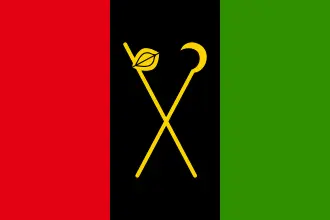
Hutu Power is an ethnic supremacist ideology of Rwanda and Burundi that claims the Hutu majority has the right to rule and to dominate the Tutsi and Twa, portraying Tutsi as foreign invaders and a common enemy. It was the main ideology of the Third Republic and fed the 1994 genocide, with Hutu who opposed it also targeted. It combined majority-rule rhetoric with a one-party state, anti-feudal fear of Tutsi restoration and calls for segregation.
What it stands for
- Only members of one racial or ethnic group should have the right to vote.
- Shoppers should choose to stay away from shops whose owners belong to a particular religious minority.
- The law may limit or closely check marriages between people of different religions.
- People of different races should be discouraged from forming a family together, whether through marriage or having children.
- A minority group is working in secret to harm the nation.
- The law may treat people differently according to such things as birth, sex, race and status.
Key figures
- Grégoire Kayibanda: Co-author of the Bahutu Manifesto and first elected president of Rwanda.
- Juvénal Habyarimana: President of Rwanda 1973-1994 who led the one-party MRND state.
- Hassan Ngeze: Editor of Kangura who published the Hutu Ten Commandments.
Closest ideologies
- Fascism (88% match)
- Racial nationalism (88% match)
- Volksgemeinschaft (87% match)
- Neo-Nazism (87% match)
- Neo-fascism (87% match)
People closest to it
- Jorge Rafael Videla (86% alike)
- Viktor Orbán (85% alike)
- Stephen Miller (85% alike)
- Wilhelm Frick (85% alike)
- Nick Fuentes (84% alike)
Key positions
- Strongly: Only members of one racial or ethnic group should have the right to vote.
- Strongly: Shoppers should choose to stay away from shops whose owners belong to a particular religious minority.
- Strongly: The law may limit or closely check marriages between people of different religions.
- Strongly: People of different races should be discouraged from forming a family together, whether through marriage or having children.
- Strongly: A minority group is working in secret to harm the nation.
- Strongly: The law may treat people differently according to such things as birth, sex, race and status.
- Strongly: The government should stop its political opponents from organising, speaking or competing for power.
- Strongly: The country's majority national group should have the leading role in controlling economic life.
- Strongly: Members of every racial group should organise politically around interests specific to their group.
- Strongly: It is acceptable to praise a national leader openly as the one who stands for the whole nation.
- Strongly: A nation should be mainly one ethnic people.
- Strongly: A society holds together less well when its members belong to different ethnic groups.
- Strongly: A right to return to former homes should not apply to all refugees displaced during a conflict.
- Strongly: A national emergency sometimes justifies temporarily withdrawing normal legal safeguards against people the government regards as internal enemies, such as protections against detention without trial.
- Strongly: A government may decline to officially call a past mass killing of a people genocide.
- Strongly: Having a human nature in common is not what gives people their rights.
- Strongly: Collective goals can justify treating a person merely as a tool.
- Strongly: Armaments need not be limited to the minimum needed for national safety.
- Strongly: Having wealth does not by itself create a duty to help those who are worse off.
- Strongly: Emigrating to establish a homeland should take at least as much priority as seeking equal rights where persecuted minorities live.
- Strongly: Sharing a language is not sufficient for people to constitute one nation.
- Strongly: Cultural life inside a state should not be placed under the control of each national minority.
- Strongly: Tackling oppression does not require a combined approach to its overlapping forms, such as racism, sexism and class oppression.
- Strongly: Workers may be represented through the parties already in place.
- Strongly: Elected representatives may serve out their terms without voters being able to remove them early.
- Strongly: Some cultures are superior to others.
- Strongly: Recruitment to the civil service should not depend on competitive examinations.
- Strongly: Deeply divided societies should not guarantee every major community a share of executive power.
- Strongly: Racial categories are not merely social constructs without a scientific basis.
- Strongly: Nobody should hold a special rank by birth, such as a noble title, a hereditary crown or a caste position, or the special rights attached to one.
- Strongly: It is legitimate to take pride in the racial group one belongs to.
- Strongly: Governments are under no obligation to fund media that decide their own editorial content.
- Strongly: The state may restrict what adults do for reasons other than preventing harm to others.
- Strongly: The existing governing institutions should be retained, even if their personnel, policies or procedures change.
- Strongly: Even a purely ceremonial head of state should not hold the position by birth.
- Strongly: Unequal results between racial groups do not by themselves make a policy discriminatory.
- Strongly: Political violence is sometimes justified.
- Strongly: Groups have rights of their own.
- Strongly: Individual farms should not give way to joint cultivation by groups of farmers.
- Strongly: Being the first to use force can be right, depending on what it is meant to achieve.
- Strongly: A country may make its laws with no formal advisory role for traditional chiefs.
- Strongly: At least some revolutions have been justified.
- Strongly: Political power may rest on something other than workplace-elected councils.
- Strongly: Countries may keep controls on who enters and settles, even in the long run.
- Strongly: In a war between great powers, workers need not seek their own government's defeat.
- Strongly: Work may stay divided into separate specialized jobs held by different people.
- Strongly: In the long run people should still produce and share using money.
- Strongly: Marriage should retain legal recognition.
- Strongly: Some decisions should bind people who have not consented to them.
- Strongly: A workers' state does not need to suppress the old ruling class, even for a time.
- Strongly: Public offices may be filled by methods other than drawing lots.
- Strongly: Police forces should continue to exist.
- Strongly: Society needs government of some kind.
- Strongly: Countries should keep their armed forces.
- Strongly: Government should have other tasks besides protecting people from physical violence.
- Strongly: Political authority need not rest on oaths of loyalty sworn to a lord.
- Strongly: Killing another person can be right in self-defence or in defence of others.
- Strongly: Taking part in politics is at least as good a way to live as living privately away from public affairs.
- Strongly: State schools need not steer pupils away from belief in God.
- Strongly: Humanity would gain nothing by going back to living off hunting and gathering.
- Strongly: Farmers should have the legal freedom to leave the estates they work.
- Leans: Law should require people of different races to use separate public spaces, such as schools and public facilities.
- Leans: Every part of life should be subject to state direction.
- Leans: A state may force a minority it sees as hostile to leave the country.
- Leans: One ideologically correct party should hold state leadership without competing parties having a right to replace it.
- Leans: The people in power should decide what the country's news media publish.
- Leans: Most of the average difference in ability between racial groups comes from genes.
- Leans: Governments may give special advantages to firms close to them.
- Leans: Only people born in the country should hold public office.
- Leans: A person's sex should affect the public roles legally assigned to them.
- Leans: Rivalry and conflict between nations or peoples do more than anything else to drive humanity forward.
- Leans: Recovering how society used to be matters more than moving forward.
- Leans: Some people are better suited by nature to govern.
- Leans: Once the national majority has decided, public institutions, including courts and independent bodies, should not limit its decision.
- Leans: Government should depend more on leaders setting a good example than on enforcing laws with penalties.
- Leans: Owners' rights to their property should almost never be overridden, even for public goals.
- Leans: Innate nature shapes a person's character at least as much as their environment does.
- Leans: Defense should rest with armed ordinary citizens, not a standing force.
- Leans: A ruler's unconstitutional acts do not give people a right to resist.
- Leans: A free, fair society can be reached through methods that fall short of being free and fair.
- Leans: The country would benefit from a strong leader with the power to act despite deadlock among its political institutions.
- Leans: Real authority to command the military should rest with the head of state.
- Leans: Whether citizens may see government information can be left to the government to decide.
- Leans: Many political decisions should rest with national or wider authorities, even where a smaller community could handle them.
- Leans: The political goal should be victory over communism ahead of accommodation with it.
- Leans: Outside governments have no entitlement to interfere in another country's internal affairs for any purpose.
- Leans: Only children of citizens should be citizens at birth: being born in the country should not be enough.
- Leans: It is acceptable for the government to monitor people when that helps prevent terrorism.
- Leans: Settlers from abroad who displace a land's people and found a state there are carrying out colonialism.
- Leans: Property should belong to many people in small holdings.
- Leans: Women's equality can be fully achieved without transforming the economic system.
- Leans: Trade unions may be subject to state direction of their affairs.
- Leans: Government should not be bound by a written bill of rights protected against easy amendment by ordinary majorities.
- Leans: Living in the countryside does more for a person's moral wellbeing than living in a city.
- Leans: Religious values and institutions should shape laws, schools and public life.
- Leans: Some institutional ties between government and religion are acceptable.
- Leans: People outside state forces should also be allowed to bear arms.
- Leans: Belonging to the nation ties a person's life to a sacred community that goes on after their death.
- Leans: Indigenous peoples should control their traditional territories.
- Leans: Whether a policy fits an ideology should count independently of its results.
- Leans: A head of state may take a side in party politics.
- Leans: What you owe your community matters more than your personal rights.
- Leans: The government should steer investment into industries it sees as key to the country's future.
- Leans: Society should take active steps to make up for the harm done by past racial injustices.
- Leans: Society may be changed in large, rapid steps.
- Leans: The holder of the highest state office need not be treated as holy.
- Leans: Seats may be allocated in ways that do not follow parties' shares of the vote closely.
- Leans: An ancestral bond to a land gives a people a claim that outweighs the claims of other peoples who now live there.
- Leans: Hate speech should be legal.
- Leans: A person loses freedom from being at another person's mercy, even if that power is never exercised.
- Leans: Employers and workers should treat each other as partners whose cooperation comes before conflict, even where their interests differ.
- Leans: Owning a gun should not face strict legal limits.
- Leans: Today's nation is the same people as its ancient and medieval forebears.
- Leans: An electorate should choose the head of state, either directly or through elected representatives.
- Leans: Profit made from owning businesses does not come from exploiting the workers who produce it.
- Leans: Capitalism does not inevitably cause wars between great powers.
- Leans: Schools should cultivate patriotic feeling: loyalty to and pride in the nation, expressed for example through respect for its flag and anthem.
- Leans: Political independence means little unless the economic and property system is also transformed.
- Leans: Society need not promote ways of living that differ from custom.
- Leans: Private owners' choice of whom they deal with should be subject to some restrictions.
- Leans: Being the law gives a rule a moral claim to be obeyed.
- Leans: Rulers have a right to rule only because the people they rule have agreed to it.
- Leans: Other forces move history at least as much as conflict between classes does.
- Leans: Member states should keep the final decision on whether to follow UN decisions.
- Leans: Small, informal, trust-based groups should not take the place of lasting parties, unions and federations in political action.
- Leans: Keeping a nation's inherited culture alive, including its language, customs and traditions, matters.
- Leans: Looking after your own interests is not a moral good in itself.
- Leans: A people with a shared national identity is entitled to its own self-governing state.
- Leans: Being powerful does not mean a country should bring more land within its borders.
- Leans: Workers do not need a disciplined revolutionary party to lead them.
- Leans: Lending money at interest should be legal.
- Leans: Belonging to the nation does not go with sharing its religion.
- Leans: School history should mostly tell the story of the student's own nation.